

 The Home Growns
Garden Design Tips to Make Your Small Space Look Stunning
I have a confession to make.
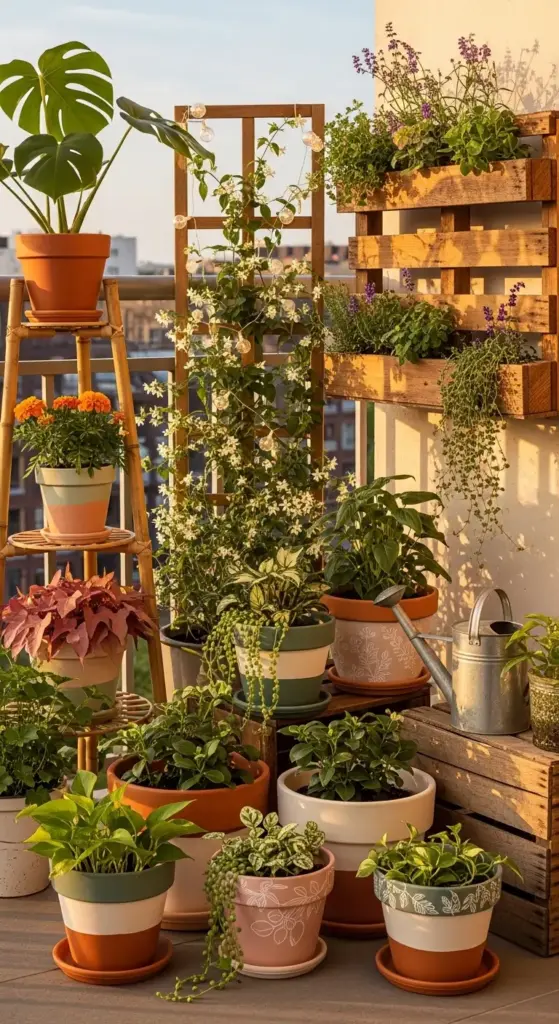
For the first year of my gardening journey, my little balcony garden looked like a hot mess. Mismatched pots in every size and color, plants crammed together with zero thought, a sad little trellis leaning against the wall at a weird angle, and fairy lights I’d strung up haphazardly that honestly made the whole thing look more chaotic than cozy.
It was not the vibe I was going for. 😅
But here’s what I eventually figured out: a beautiful garden isn’t about having the most plants or the fanciest pots. It’s about intention. It’s about making deliberate choices that reflect your style and create a space that feels cohesive, calm, and completely you.
And once I understood that? Everything changed. 🌿
Start With Your Aesthetic: What’s Your Garden Style?
Before you buy a single planter or string a single light, ask yourself this one question.
What feeling do I want this space to give me?
That question is more important than any design tip I could give you. Because your garden aesthetic should flow naturally from the answer — and it should connect seamlessly to your home decor style indoors.
Here are the most popular garden aesthetics right now and exactly how to achieve them:
The Boho Garden 🌸
Boho gardens are lush, layered, and beautifully imperfect — and they’re everywhere on Pinterest right now for good reason.
Think terracotta pots in varying sizes, macramé plant hangers, trailing plants spilling over the edges of shelves and railings, dried pampas grass, and an overall feeling of organized wildness.
Color palette: Warm terracotta, dusty rose, sage green, cream, and natural wood tones.
Key plants for a boho aesthetic: Trailing pothos, string of pearls, lavender, rosemary, wildflowers, and ornamental grasses.
The beauty of boho is that imperfection is part of the design. Mismatched pots actually work here — as long as they’re in the same warm color family.
The Minimalist Modern Garden 🤍
Clean lines. Neutral tones. Intentional negative space.
This aesthetic is about less being more — a few carefully chosen plants in sleek white or matte black ceramic pots, arranged with breathing room between them. No clutter, no chaos.
Color palette: White, black, charcoal, concrete gray, and deep forest green.
Key plants for a minimalist aesthetic: Architectural plants like snake plants, ZZ plants, olive trees in large statement pots, and neatly trimmed boxwood topiaries.
The trick with minimalist gardens is that every single element needs to be intentional. One beautiful oversized pot with a sculptural plant makes more of a statement than ten mismatched ones.
The Cottagecore Garden 🌼
Cottagecore is romantic, whimsical, and absolutely dreamy — and it translates beautifully to small spaces.
Think overflowing window boxes, climbing roses on a small trellis, vintage-style watering cans used as planters, wildflowers mixed with herbs, and that general feeling of a secret English garden tucked into a tiny corner.
Color palette: Soft pinks, lavender, butter yellow, sage green, and antique white.
Key plants for cottagecore: Lavender, roses, chamomile, sweet peas, nasturtiums, and climbing vines.
This is honestly one of the easiest aesthetics to achieve on a budget because the “imperfect and overgrown” look is literally the goal.
The Urban Jungle 🌿
More plants. Always more plants. That’s basically the entire philosophy.
The urban jungle aesthetic is about creating a dense, lush, tropical-feeling space — layering plants at different heights, mixing textures and leaf shapes, and making your space feel like you’ve been transported somewhere green and wild.
Color palette: Every shade of green, with pops of deep burgundy, bright yellow, and tropical orange.
Key plants for urban jungle: Monstera, pothos, ferns, bird of paradise, snake plants, and trailing philodendron.
This aesthetic works incredibly well for apartment dwellers in cities like New York and Chicago who want to bring the outdoors in.
Vertical Gardening Ideas to Maximize Every Inch
If there’s one design strategy that completely transformed my small space, it was going vertical.
Vertical gardening is the single best way to maximize a small space — it draws the eye upward, creates visual interest, and lets you grow significantly more plants without taking up any additional floor space.
Here are the best vertical gardening ideas for small spaces:
Wall-Mounted Planter Pockets
Fabric or felt planter pockets mounted on a wall or fence are one of the most affordable and effective vertical gardening solutions out there.
A standard 20-pocket vertical planter costs about $15-$25 on Amazon and can hold 20 individual herb or flower plants in a space that’s roughly 3 feet wide by 4 feet tall. That’s an incredible amount of growing space for such a small footprint.
They work beautifully for herbs, lettuce, strawberries, and small flowering plants — anything with a shallow root system.
DIY Pallet Gardens
A wooden pallet garden is one of the most popular DIY garden projects right now — and it costs almost nothing if you can find a free pallet.
Check Facebook Marketplace, Craigslist, or local hardware stores — free pallets are surprisingly easy to find. Sand it down, add a coat of outdoor paint or wood stain, staple landscape fabric to the back, fill with potting mix, and plant your herbs or flowers in the slats.
The result looks incredibly intentional and stylish — especially with a coat of white or sage green paint. It leans beautifully against a fence, balcony wall, or exterior house wall.
Total cost: $0-$20 depending on whether you find a free pallet.
Tiered Plant Stands
A tiered plant stand is probably the easiest way to add vertical dimension to a balcony or patio without mounting anything to a wall.
Look for 3-5 tier outdoor plant stands in metal, wood, or bamboo — they range from about $25-$60 and can hold anywhere from 6 to 15 pots depending on the size.
Style tip: Place your tallest, most architectural plant on the top tier, medium plants in the middle, and trailing plants on the bottom so they can spill downward naturally. This creates a beautiful cascading effect.
Trellis Walls
A trellis is one of those garden elements that’s both functional and gorgeous at the same time.


You can use a trellis to support climbing plants like sweet peas, climbing roses, jasmine, or even small cucumber varieties — and the result is a living wall of greenery that looks absolutely stunning.
DIY option: Build a simple trellis using wooden dowels and twine for about $10-$15 in materials. Hammer two vertical stakes into a large container, string horizontal lines of twine between them, and guide your climbing plant up as it grows.
Ready-made option: Metal or wooden trellis panels are available at Home Depot and Lowe’s for about $15-$30 and can be placed directly in a large container or mounted to a wall.
Color Coordination and Plant Pairing
This is the part that takes a garden from “nice” to “wow.” 🎨
Color coordination in a garden works exactly like it does in interior design — and if you love home decor, you’re going to pick this up fast.
The Rule of Three Colors
Stick to a maximum of three colors in your garden palette — one dominant color, one secondary color, and one accent color.
For example: Green (dominant) + White (secondary) + Lavender purple (accent). Or Green + Terracotta orange + Dusty pink.
More than three colors starts to feel chaotic — especially in a small space where everything is close together.
Contrast Textures, Not Just Colors
Mixing different leaf textures creates visual interest even when you’re working with a limited color palette.
Pair broad, flat leaves (like basil or hostas) with fine, feathery foliage (like dill or fennel) and spiky, architectural plants (like rosemary or lavender). The contrast in texture makes each plant stand out and gives the whole arrangement a designed quality.
This is the trick professional garden designers use constantly — and it works just as well in a window box as it does in a full landscape.
Thriller, Filler, Spiller
This is the classic container planting formula used by professional gardeners — and once you know it, you’ll see it everywhere.
Thriller: One tall, dramatic plant in the center or back of the container. Examples: ornamental grass, tall basil, a small pepper plant.
Filler: Medium-height plants that fill in around the thriller. Examples: marigolds, compact herbs, lettuce.
Spiller: Trailing plants that spill over the edges of the container. Examples: trailing nasturtiums, sweet potato vine, string of pearls.
This formula works for literally every container arrangement — from a single large pot to a whole balcony setup. It’s foolproof.
DIY Garden Decor Ideas That Actually Look Good
Okay, this is my favorite part. 🎉
Because a garden isn’t just about plants — it’s about creating a space you want to spend time in. And the right decor details make all the difference.
Painted Pots
Painting your own terracotta pots is one of the easiest and most satisfying DIY projects you can do — and the results look genuinely high-end.
Use outdoor acrylic paint (it’s weather-resistant and costs about $3-$5 per bottle at craft stores) and seal with a clear outdoor sealant when you’re done.
Popular styles right now:
Color blocking — paint the bottom two-thirds of the pot in a solid color and leave the top terracotta exposed. Looks incredibly chic.
Abstract brushstroke designs — loose, gestural brushstrokes in two or three colors. Very boho, very Pinterest-worthy.
Minimalist line art — simple geometric patterns or botanical line drawings in black paint on a white-painted pot. Stunning for a modern aesthetic.
Fairy Lights
Done right, fairy lights in a garden are magical. Done wrong, they look like a tangled mess. 😄
The key is to use warm white LED string lights (not cool white — warm white is much more flattering and cozy) and to drape them intentionally rather than just throwing them around.
Wrap them around a trellis. Drape them along a balcony railing. Weave them through a vertical planter. Hang them in a loose canopy overhead using small hooks.
Solar-powered fairy lights are perfect for balconies and patios — no outlet needed, they charge during the day and turn on automatically at night. A 33-foot strand costs about $12-$18 on Amazon.
Stepping Stones and Pathway Markers
Even in a small patio or balcony garden, a few decorative stepping stones add a sense of intentional design and make the space feel more like a destination than just a collection of pots.
You can DIY your own stepping stones using a concrete mold kit (about $20 at craft stores) and press leaves, mosaic tiles, or handprints into the wet concrete for a personalized touch. Kids absolutely love this project.
Vintage and Thrifted Decor Elements
Some of the most beautiful garden spaces I’ve ever seen were styled almost entirely with thrifted and vintage finds.
An old wooden ladder used as a plant stand. A vintage watering can repurposed as a planter. Mismatched antique plates mounted on a fence as wall art. A weathered wooden crate used as a raised planter box.
Check your local thrift stores, estate sales, and Facebook Marketplace before buying anything new. You’ll find incredible pieces for a fraction of the cost — and they add a layer of character and personality that brand-new items just can’t replicate.
Bringing It All Together: Indoor-Outdoor Flow
Here’s the design principle that really elevates a small space garden — and most people never think about it.
Your garden should feel like a natural extension of your indoor space.
If your living room has warm wood tones, cream textiles, and a boho aesthetic — your balcony garden should echo that. Warm terracotta pots, natural wood plant stands, trailing plants in woven baskets.
If your interior is modern and minimal with white walls and black accents — your garden should reflect that too. Sleek white ceramic pots, architectural plants, clean lines.
The visual connection between your indoor and outdoor spaces makes both feel larger, more intentional, and more cohesive. It’s the difference between a garden that looks like an afterthought and one that looks like it was designed.
And you don’t need a designer to achieve it. You just need to look at your indoor space, identify three to five key elements — colors, materials, textures — and carry them outside.
That’s it. That’s the whole secret. 🌿
Your garden is looking gorgeous — now let’s make sure it stays that way. Hit Next below and we’re diving into garden care made simple — the exact watering schedules, fertilizing routines, and troubleshooting tips that keep your plants healthy and thriving all season long, even if you’re a total beginner with a busy schedule. 🌱 This one is a must-read. 👇

GIPHY App Key not set. Please check settings