

 The Home Growns
Essential Gardening Supplies You Actually Need (And What to Skip)
I still cringe thinking about my first trip to the garden center.
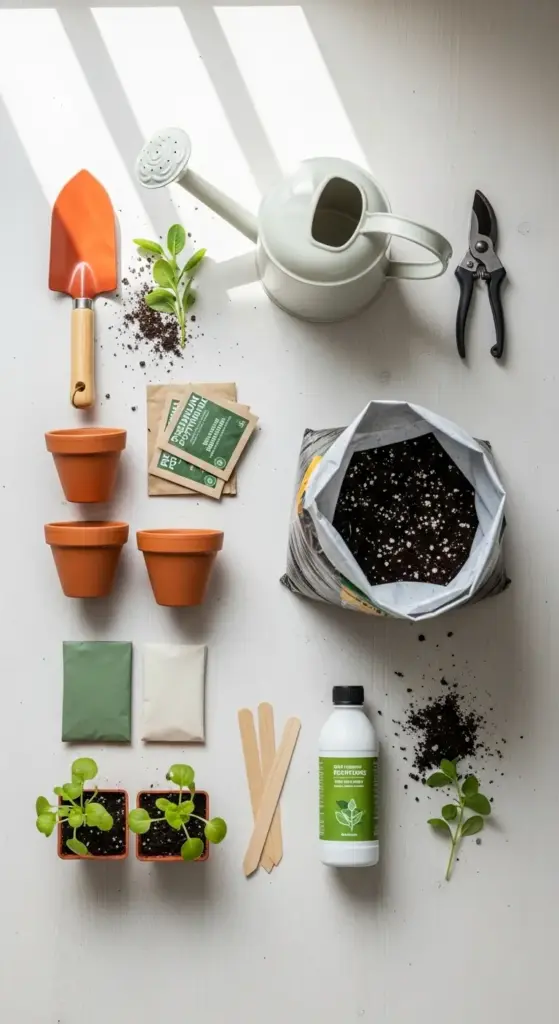
I walked in for “just a few pots and some soil” and walked out $200 later with a cart full of stuff I thought I needed — a fancy soil pH meter, three different types of fertilizer, a set of copper garden tools that were honestly more decorative than functional, and a watering can so big I could barely lift it.
Used maybe half of it. The rest collected dust in a closet.
Here’s the truth nobody tells you: you don’t need much to start a successful small space garden. You need the right things. And I’m going to save you that $200 lesson right now. 😄
The Beginner’s Shopping List: What You Actually Need
Let’s keep this simple. These are the non-negotiables — the things you genuinely cannot skip.
Pots and Containers 🪴
The size of your pot matters more than almost anything else.
This is the mistake I see beginners make constantly — buying cute little pots that are way too small for what they’re trying to grow. A tomato plant in a 4-inch pot is basically a slow death sentence for that tomato. Been there.
Here’s a simple size guide to follow:
Herbs (basil, mint, chives): Minimum 6-inch pot. They’re small but their roots still need room.
Lettuce and salad greens: 6-8 inch depth is plenty — lettuce has shallow roots.
Peppers and dwarf tomatoes: Minimum 5-gallon container — that’s roughly a 12-inch pot.
Larger vegetables (full-size tomatoes, cucumbers): 10-15 gallon containers — don’t go smaller.
Always make sure your pots have drainage holes. Always. A pot without drainage is basically a slow-drowning machine for your plants.
Potting Mix (Not Garden Soil!) 🌱
This one trips up so many beginners — and it tripped me up too.
Do not use regular garden soil in containers. I know it seems like the obvious choice, but garden soil compacts in pots, suffocates roots, and drains terribly. It’s made for the ground, not for containers.
What you want is a high-quality potting mix — sometimes labeled “potting soil” — which is specifically formulated to be light, airy, and well-draining in containers.
Look for a mix that contains perlite (those little white specks) — it improves drainage and aeration significantly. Miracle-Gro Potting Mix and FoxFarm Ocean Forest are two solid options that are widely available and genuinely work well for beginners.
A 2-cubic-foot bag runs about $12-$15 at Home Depot or Lowe’s and will fill several medium-sized containers.
Seeds vs. Starter Plants 🌿
Okay, so here’s the honest breakdown:
Seeds are cheaper — a packet of basil seeds costs about $2-$3 and contains enough seeds to grow dozens of plants. But they take longer and require a little more attention upfront.
Starter plants (the small plants already growing in little pots at the nursery) are more expensive — usually $3-$6 each — but they give you a head start of several weeks and are much more forgiving for beginners.
My honest advice? Start with starter plants for vegetables like tomatoes and peppers, and seeds for herbs and lettuce. Herbs and lettuce germinate quickly and easily, so seeds make sense. Tomatoes and peppers take forever from seed and are worth the extra few dollars as starters.
Basic Tools 🛠️
You need exactly three tools to start. That’s it.
A hand trowel — for scooping soil, transplanting seedlings, and mixing in fertilizer. Get one with a comfortable grip. Doesn’t need to be fancy. A basic one from Amazon or Walmart runs about $8-$12.
A watering can with a rose head — that’s the sprinkler attachment that breaks the water into a gentle shower. It prevents you from blasting your seedlings out of the soil. A 1-2 liter size is perfect for small space gardens. About $10-$15.
A pair of pruning snips or herb scissors — for harvesting herbs, deadheading flowers, and trimming plants. These get used constantly. A decent pair costs about $10.
That’s genuinely all you need to start. Everything else is optional.
Fertilizer 🌾
Here’s where people way overcomplicate things.
If you’re using a good quality potting mix, you won’t need to fertilize for the first 4-6 weeks — most mixes come with nutrients already mixed in.
After that, a simple balanced liquid fertilizer is all you need. Look for something labeled 10-10-10 or 5-5-5 — those numbers represent the ratio of nitrogen, phosphorus, and potassium (NPK). Balanced ratios work well for most beginner gardens.
Miracle-Gro All Purpose Liquid Plant Food is widely available, easy to use, and costs about $10-$12 for a bottle that lasts an entire season. It works. Simple as that.
For a more natural option, fish emulsion fertilizer is fantastic for edible gardens and runs about $15 for a concentrate that lasts all season.
Fertilize every 2 weeks during the growing season. Not more, not less.
Must-Have vs. Nice-to-Have: The Honest Breakdown
Let me save you some money with this list. 💸
Must-Have ✅
Drainage trays — to catch water runoff and protect your floors and balcony. About $2-$5 each.
Plant labels or markers — sounds silly, but when you have six pots of seedlings that all look identical, you will forget what’s what. Popsicle sticks work perfectly and cost nothing.
A spray bottle — for misting seedlings and humidity-loving plants. $3-$5 at any dollar store.


Nice-to-Have (But Not Urgent) 🤔
A moisture meter — tells you when your soil actually needs water. Helpful, but your finger works just as well. Stick it an inch into the soil — if it feels dry, water. If it feels moist, wait.
Grow lights — genuinely useful if you have low-light conditions indoors, but not necessary if you have a decent sunny window or outdoor space. A basic LED grow light runs about $25-$40 on Amazon.
A garden kneeling pad — nice for raised beds and outdoor gardens, but not really needed for small container setups.
Skip It ❌
Soil pH meters under $20 — the cheap ones are notoriously inaccurate. Not worth it for a beginner container garden.
Copper or decorative tool sets — they look gorgeous on Instagram and are basically useless in practice. Hard pass.
Oversized watering cans — heavy, awkward, and overkill for small spaces. Stick to 1-2 liters.
Specialty fertilizers for every single plant — you do not need a separate fertilizer for tomatoes, herbs, flowers, and vegetables when you’re just starting out. One good all-purpose fertilizer is enough.
Stylish Planters That Double as Home Decor
Because your garden should look as good as it grows. 🌸
Terracotta Pots
Terracotta is the classic for a reason — it’s affordable, breathable, and looks beautiful in almost any home aesthetic.
The breathability is actually a functional benefit too — terracotta allows excess moisture to evaporate through the walls, which helps prevent overwatering. Perfect for herbs like rosemary and lavender that hate wet roots.
A set of three terracotta pots in graduating sizes costs about $15-$25 at Home Depot and looks stunning grouped together on a windowsill or shelf.
White Ceramic Pots
For a modern, minimalist aesthetic — think clean lines, neutral tones, Scandinavian-inspired interiors — white ceramic pots are everything.
They photograph beautifully, they’re widely available, and they make green plants pop in the most satisfying way. IKEA, Target, and Amazon all carry affordable options starting at around $8-$15.
Woven Basket Planters with Liners
These are huge in the boho and cottagecore home decor world right now — and for good reason.
Woven seagrass or rattan basket planters add warmth and texture to any space. They’re not waterproof on their own, so they usually come with a plastic liner insert — make sure yours has one before you put soil in it.
Target’s Threshold collection and Amazon both have gorgeous options in the $15-$30 range.
Self-Watering Planters
Okay, these are a game changer for busy women — and I wish I’d discovered them sooner.
Self-watering planters have a built-in reservoir at the bottom that holds water and releases it slowly to the roots as needed. You fill the reservoir every few days instead of watering daily.
They’re perfect for tomatoes, peppers, and herbs — plants that need consistent moisture. Lechuza makes beautiful self-watering planters that look like high-end home decor pieces. They start around $30-$40 but are absolutely worth it.
Best Apps and Resources to Track Your Garden
Yes, there are apps for this — and some of them are genuinely helpful. 📱
Planta App
Planta is probably the most popular plant care app right now — and it deserves the hype.
It identifies plants from photos, creates a personalized watering and fertilizing schedule based on your specific plants and location, and sends you reminders when it’s time to water. It’s like having a plant babysitter on your phone.
The free version is solid. The premium version (about $30/year) adds light meter tools and more detailed care guides.
Garden Answers
Garden Answers is a plant identification app that’s incredibly accurate and fast.
Point your camera at any plant or pest and it identifies it within seconds. Super useful when you notice something weird growing in your pot and have no idea if it’s a weed, a seedling, or something to worry about.
Free to download with in-app purchase options.
The Old Farmer’s Almanac Website
Old school but gold. The Old Farmer’s Almanac (almanac.com) has a free planting calendar tool where you enter your zip code and it tells you exactly when to plant every vegetable and herb in your specific location.
This is the tool I recommend to every single beginner. It takes the guesswork completely out of timing.
Pinterest and Instagram
Okay, I know these aren’t “garden apps” technically — but hear me out.
Pinterest is genuinely one of the best gardening resources available for visual learners. Search “small balcony garden ideas” or “container herb garden” and you’ll find thousands of real setups, DIY tutorials, and planting guides.
Create a dedicated garden board and save ideas as you go. It helps you stay inspired and organized — especially when you’re planning your layout and aesthetic.
Your Starter Budget Breakdown
Let’s put it all together. Here’s what a solid beginner setup actually costs:
| Item | Estimated Cost |
|---|---|
| 3-4 medium pots with drainage | $15-$25 |
| Potting mix (2 cu ft bag) | $12-$15 |
| Starter plants or seeds | $10-$20 |
| Hand trowel | $8-$12 |
| Watering can | $10-$15 |
| Pruning snips | $10 |
| Liquid fertilizer | $10-$12 |
| Drainage trays | $8-$10 |
| Total | $83-$119 |
You can absolutely do it for less if you shop at dollar stores, use recycled containers, or catch sales at Home Depot or Lowe’s. I’ve seen women put together a beautiful starter garden for under $50 by being creative with containers and buying seeds instead of starter plants.
It doesn’t have to be expensive. It just has to be yours. 🌿
Now that your supply list is sorted, it’s time for the really fun part. Hit Next below and we’re getting into garden design — how to style your small space into something that looks intentional and beautiful, from color coordination and plant pairing to DIY decor ideas that’ll make your garden look straight out of a magazine. 🎨 Trust me, this section is going to inspire you. 👇

GIPHY App Key not set. Please check settings