

 The Home Growns
What Sellers Rarely Show You in Product Photos
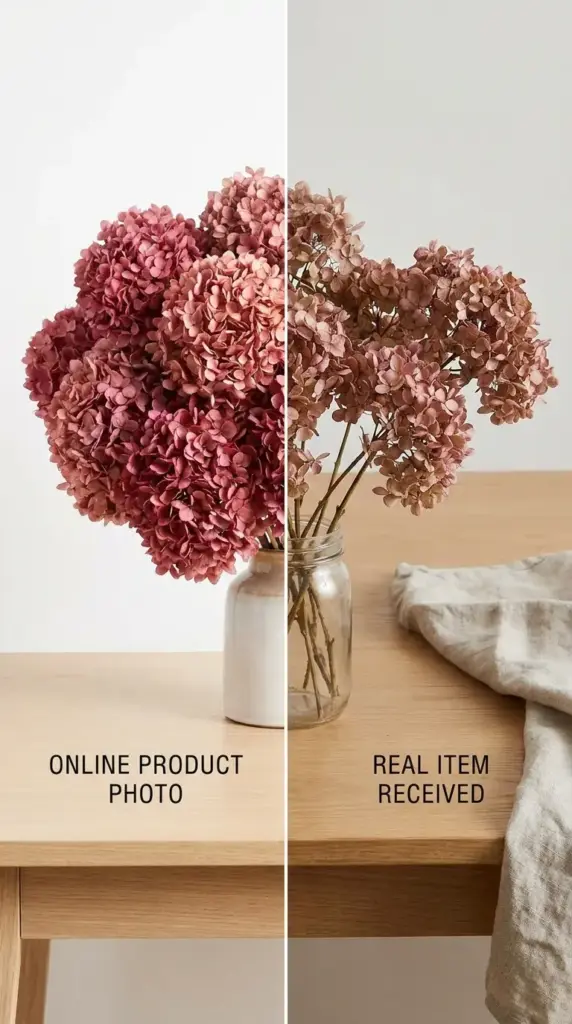
Lighting can totally change the real color
A bouquet labeled blush hydrangea bouquet may arrive looking beige, dusty mauve, or even light brown. Warm editing, sunset lighting, and filters can make white dried hydrangeas look creamier and blue dried hydrangea decor look richer than real life.
This is extra true with antique hydrangea tones, which naturally shift and are hard to photograph honestly. I’ve seen listings where the bouquet looked rosy online and oatmeal-colored in person.
Product photos often exaggerate size
A close-up shot can make a small bouquet look lush and oversized. Unless you check dimensions, that “full centerpiece” might be better suited to a bedside table.
This is why bouquet size guide details matter more than the hero image. If the listing doesn’t show the arrangement in a hand, on a table, or next to a vase, I get suspicious fast.
Styled photos hide the rough stuff
A propped-up bouquet in a perfect farmhouse centerpiece setup doesn’t show loose stems, flattened blooms, or gaps at the back. Sellers usually style the best angle, not the everyday angle.
That doesn’t mean they’re dishonest, exactly. It just means you need to remember you’re buying an object, not a photo set.
Stem condition and shedding are easy to hide
The prettiest top-down image tells you nothing about brittle stems or petal drop hydrangea issues. A listing can look premium while hiding that the lower stems are thin, taped, or uneven.
If you can’t see stem length, tie points, or side views, assume you are not seeing the full story. Hit the next button below, because the next mistake buyers make is not knowing whether they’re ordering dried, preserved, or faux at all.


GIPHY App Key not set. Please check settings