

 The Home Growns
How to Add Personal Style and Home Decor Touches to Your Garden
Here’s something I genuinely believe with my whole heart.
Your garden should feel like you.
Not like a Pinterest board. Not like your neighbor’s yard. Not like the display garden at your local nursery — as gorgeous as that is. Like you. Your taste, your personality, your aesthetic, your vibe.
And honestly? This is the part of garden design that most guides completely skip over. They tell you where to plant things and how to water them and when to fertilize. But nobody talks about how to make it feel like home.
That changes right now. Let’s get into it. 🌸
Bringing Your Indoor Aesthetic Outdoors
The single most powerful thing you can do to make your garden feel cohesive and intentional is to treat it like an extension of your interior design.
Think about how your home looks inside. What’s your style? What colors do you gravitate toward? What materials make you feel at home? Now take that same energy outside.
This isn’t just a design philosophy — it’s a practical strategy. When your outdoor space shares a visual language with your indoor space, the whole property feels larger, more cohesive, and more intentional. It’s the difference between a house with a yard and a home with an outdoor living space.
Boho Garden Aesthetic
The bohemian garden style is having a serious moment right now — and it’s perfect for the creative, free-spirited woman who loves layered textures, global influences, and a slightly wild, romantic feel.
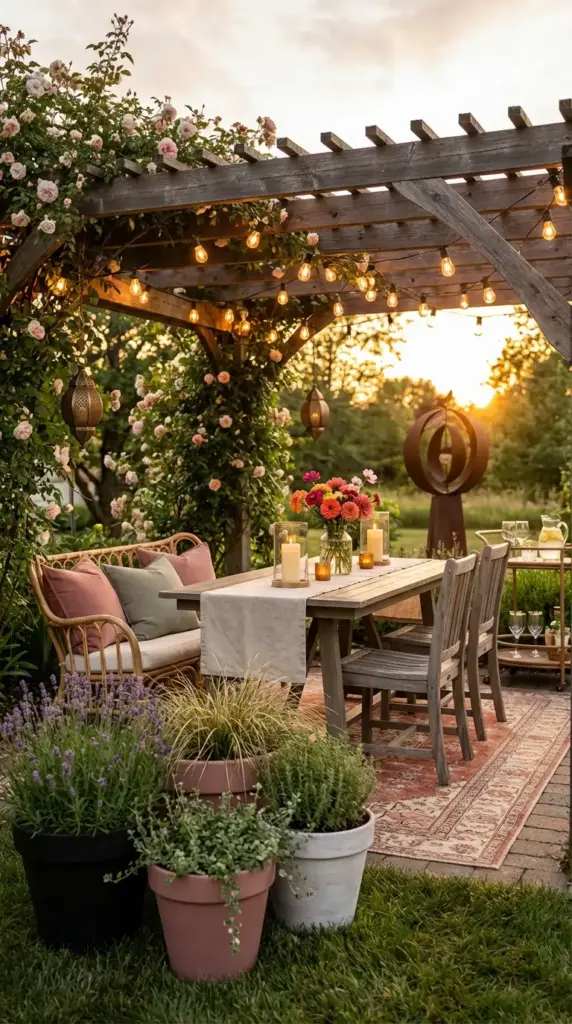
Think macramé plant hangers on a wooden pergola. Mismatched ceramic pots in earthy terracotta, sage green, and dusty rose. Moroccan-inspired lanterns hanging from tree branches. A vintage rug under an outdoor seating area. Wildflower meadow plantings that spill over their borders in the most beautiful, intentional-looking way.
Key plants for a boho garden: ornamental grasses, cosmos, zinnias, dahlias, climbing roses, lavender, and lots of trailing plants that soften hard edges. The boho garden loves abundance — more is more, as long as it’s tied together with a consistent color palette.
Key materials: natural wood, rattan, jute, terracotta, hammered metal, and woven textiles. Anything that looks like it has a story fits perfectly in a boho garden.
Modern Garden Aesthetic
The modern garden style is clean, architectural, and incredibly sophisticated. It’s the aesthetic that photographs beautifully in black and white — all strong lines, restrained color palettes, and carefully chosen statement pieces.
Think large-format concrete pavers with ground cover plants growing in the gaps. Sleek black metal raised beds. A single, dramatic ornamental grass as a focal point. Minimal clutter, maximum impact.
Key plants for a modern garden: ornamental grasses like Karl Foerster and blue oat grass, architectural succulents, boxwood spheres, Japanese maples, and ground covers like creeping thyme or mondo grass. The modern garden uses plants almost like sculptures — chosen for their form and texture as much as their flowers.
Key materials: concrete, black powder-coated steel, weathered wood, gravel, and large-format stone. Restraint is the whole aesthetic — every element should earn its place.
Farmhouse Garden Aesthetic
The farmhouse garden style is warm, welcoming, and deeply rooted in function-meets-beauty. It’s the aesthetic that makes you want to slow down, sit on the porch, and stay a while.
Think galvanized metal planters overflowing with herbs and flowers. Raised cedar beds with a kitchen garden vibe. A wooden potting bench styled with vintage tools and terracotta pots. Climbing roses on a white picket fence. A chalkboard plant marker in a window box full of basil and marigolds.
Key plants for a farmhouse garden: sunflowers, zinnias, dahlias, lavender, herbs of every kind, climbing roses, hollyhocks, and heirloom vegetables. The farmhouse garden is productive and pretty — it should look like something is always growing and always being harvested.
Key materials: weathered wood, galvanized metal, white-painted surfaces, mason jars, vintage crates, and natural fiber textiles. Patina and imperfection are features, not flaws in a farmhouse garden.
Cottage Garden Aesthetic
The cottage garden style is romantic, abundant, and gloriously impractical in the best possible way.
It’s the garden that looks like it grew itself — overflowing flower borders, climbing roses on a wooden trellis, a winding stone pathway through layers of blooms, a little bench tucked into a corner surrounded by lavender and foxgloves.
Key plants for a cottage garden: roses, peonies, foxgloves, delphiniums, sweet peas, hollyhocks, lavender, catmint, and any heirloom flower variety you can get your hands on. The cottage garden loves old-fashioned plants with fragrance and charm.
Key materials: natural stone, aged brick, weathered wood, wrought iron, and vintage-inspired accessories. Moss on a stone path is a feature. A slightly crooked gate is charming. Imperfection is the whole point.
Outdoor Lighting Ideas That Make Your Garden Magical at Night
Okay, can we talk about outdoor lighting for a minute? Because this is the most underutilized design element in almost every backyard I’ve ever seen.
During the day, your garden is beautiful. At night, with the right lighting, it can be absolutely magical. And the difference between a backyard that goes dark at sunset and one that glows warmly into the evening is honestly just a few intentional lighting choices.
The Three Layers of Garden Lighting
Just like layering plants by height, great outdoor lighting uses three layers — and understanding this framework changes everything.
Layer one — ambient lighting. This is your overall illumination — the light that makes the whole space feel warm and inviting. String lights are the most popular choice for good reason — they’re affordable, easy to install, and create an instantly magical atmosphere. Drape them overhead between pergola posts, along a fence line, or through tree branches. A set of warm white LED string lights (2700K color temperature) costs around $20 to $40 and transforms a space completely.
Solar-powered path lights along garden pathways provide gentle ambient light that guides movement through the space and looks beautiful from inside the house. Look for warm white solar lights — cool white or blue-toned lights feel harsh and clinical in a garden setting.
Layer two — accent lighting. This is directional light used to highlight specific features — a beautiful tree, a focal point planter, a water feature, a garden sculpture. Uplighting — placing a spotlight at the base of a plant or structure and directing light upward — creates dramatic shadows and makes plants look incredibly lush and dimensional at night.
Spike spotlights that push into the ground near focal point plants are easy to install and incredibly effective. A set of four solar spike spotlights costs around $25 to $40 and can be repositioned as your garden evolves.
Layer three — task lighting. This is functional light for specific areas — your outdoor dining table, your cooking area, your reading nook. Pendant lights hung from a pergola over a dining table create an outdoor dining room feel that is genuinely stunning. Plug-in outdoor pendant lights start around $30 to $50 and require nothing more than an outdoor outlet and a hook.
Candles, Lanterns, and Fire Features
Never underestimate the power of flame in a garden.
A cluster of pillar candles in hurricane lanterns on an outdoor dining table creates an intimacy and warmth that no electric light can fully replicate. Use citronella candles in summer for the added bonus of mosquito deterrence — functional and beautiful.
Moroccan-style lanterns hung from tree branches or pergola posts add an exotic, romantic touch that works beautifully in boho and cottage garden styles. You can find gorgeous options on Etsy for $20 to $60 that look like they cost three times as much.
A fire pit is the ultimate garden lighting feature — it creates warmth, light, ambiance, and a natural gathering point all in one. Even a simple cast iron fire bowl (around $60 to $100) placed in your relaxation zone transforms how you use your outdoor space in the evenings.
DIY Garden Decor Projects That Actually Look Good
I want to be honest with you about DIY garden decor.
Some of it looks amazing. Some of it looks like a craft project gone wrong. The difference is usually in the execution — using quality materials, taking your time, and choosing projects that fit your overall aesthetic rather than just whatever’s trending on Pinterest this week.
Here are the DIY projects I actually recommend — ones that look genuinely beautiful and are achievable for most skill levels.
Painted Pots
This is one of the easiest and most impactful DIY garden decor projects you can do.
A plain terracotta pot painted in the right color becomes a design statement. The key is choosing colors that fit your garden’s palette — not just whatever paint you have leftover in the garage.
For a modern garden, try painting pots in matte black, charcoal, or deep forest green. The contrast against bright foliage is stunning.
For a boho garden, try a color-blocking technique — paint the bottom two-thirds of the pot in a warm terracotta or dusty rose, and the top third in cream or white. Simple, graphic, and incredibly chic.
For a farmhouse garden, a simple whitewash technique — diluting white paint 50/50 with water and brushing it over an unglazed terracotta pot — creates a beautiful aged, chalky finish that looks like it came from a French farmhouse. Costs about $3 in paint and takes 10 minutes.
Important tip: always use exterior-grade paint on garden pots and seal with a clear exterior sealer. Pots live outside in rain, sun, and frost — interior paint will peel within one season.
Mosaic Stepping Stones
This is a project that sounds intimidating but is actually really accessible — and the results are genuinely stunning.
You need: a concrete stepping stone mold (around $8 to $12 at a craft store), a bag of concrete mix (around $6), and broken tiles, glass gems, or mosaic pieces in your garden’s color palette.
Mix the concrete, pour it into the mold, and press your mosaic pieces into the surface before it sets. Let it cure for 48 hours and you have a completely custom stepping stone that looks like something from a boutique garden shop.
The key to making these look intentional rather than crafty: stick to your garden’s color palette. If your Color Anchor Strategy uses deep pink, white, and purple — use those colors in your mosaic. Cohesion is everything.
Upcycled Planters
This is where your creativity — and your eye for design — really gets to shine.
Almost anything that holds soil and has drainage can be a planter. And the most interesting gardens I’ve ever seen use unexpected containers in ways that feel completely intentional.
Vintage colanders — the metal kind with holes already built in for drainage — make gorgeous hanging planters for herbs or trailing flowers. Find them at thrift stores for $2 to $5.
Old wooden wine crates lined with landscape fabric and filled with potting mix make beautiful rustic planters for herbs, succulents, or seasonal flowers. Stack two or three at different heights for an instant tiered display.
Galvanized metal buckets, watering cans, and even old boots — yes, boots — can become charming planters in a cottage or farmhouse garden. The key is planting them well — use the thriller-filler-spiller formula and they’ll look intentional rather than kitschy.
An old wooden ladder leaned against a fence or wall with potted plants placed on each rung creates a gorgeous vertical display that costs nothing if you already have the ladder. This is one of my all-time favorite garden styling tricks — it adds height, visual interest, and a ton of personality.
Incorporating Art, Sculptures, and Statement Pieces
This is the element that takes a garden from nice to memorable.


Art in the garden does what art does anywhere — it creates an emotional response, tells a story, and reveals something about the person who lives there. And it doesn’t have to be expensive or precious. Some of the most beautiful garden art I’ve ever seen cost almost nothing.
Choosing the Right Scale
The most common mistake with garden art is going too small.
A tiny sculpture in a large garden bed disappears. It looks like an afterthought rather than a statement. When in doubt, go bigger than you think you need to. A large ceramic urn, a bold metal sculpture, or an oversized garden mirror makes a statement that reads from across the yard.
For a focal point sculpture, look for something that’s at least 18 to 24 inches tall for a medium-sized garden. Larger is usually better — you can always add plants around the base to soften it, but you can’t make a too-small piece feel significant.
Types of Garden Art That Work Beautifully
Metal garden sculptures — abstract forms, botanical shapes, or figurative pieces — work in almost any garden style. Weathering steel (also called Corten steel) develops a gorgeous rust patina over time that looks incredibly beautiful against green foliage. Prices range from $50 for simple decorative pieces to several hundred for statement sculptures — check local art fairs and Etsy for unique, affordable options.
Ceramic garden art — glazed pots used as pure decoration, ceramic garden stakes, or sculptural ceramic pieces — adds color, texture, and a handmade quality that feels warm and personal. A large glazed ceramic pot used as a focal point rather than a planter is a sophisticated design move that always gets compliments.
Garden mirrors are one of the most underused design tricks in outdoor spaces. A large outdoor mirror mounted on a fence or wall reflects light, creates the illusion of depth, and makes a small garden feel significantly larger. Use a mirror specifically designed for outdoor use — standard mirrors will deteriorate quickly in outdoor conditions. Outdoor garden mirrors start around $60 to $80.
Found object art — a collection of interesting stones arranged in a pattern, a piece of driftwood used as a natural sculpture, vintage garden tools mounted on a fence as wall art — adds personality and tells a story. This kind of art is free and completely unique to you.
Seasonal Decor Swaps to Keep Your Garden Fresh Year-Round
Here’s a habit that keeps your garden looking intentional and Instagram-worthy through every season — and it takes less effort than you’d think.
Think of your garden like your home interior. You probably swap out throw pillows, candles, and decorative objects with the seasons. Your garden deserves the same treatment.
Spring Refresh
Swap out any winter decor — evergreen branches, pinecone arrangements, winter lanterns — for fresh spring elements.
Potted spring bulbs — tulips, hyacinths, and daffodils in bloom — placed at your front door, on your patio, or at the entrance to your garden beds create an instant seasonal refresh. Buy them already in bloom from a garden center for immediate impact.
Pastel-colored accessories — a new outdoor cushion in soft pink or lavender, a fresh wreath on the garden gate, a new set of colorful plant markers — signal the season change and make the whole space feel renewed.
Summer Styling
Summer is peak garden season — let the plants do most of the work and keep your decor accessories simple and functional.
Outdoor textiles — a new outdoor rug, fresh cushion covers in your garden’s color palette, a linen tablecloth for the dining area — make your outdoor entertaining space feel polished and put-together. Look for Sunbrella fabric or other UV-resistant outdoor textiles that won’t fade in summer sun.
A simple herb display near your outdoor dining area — a wooden tray with three or four potted herbs in matching terracotta pots — is both decorative and functional. Snip fresh herbs directly into your cooking while entertaining. It’s the kind of detail that makes guests feel like they’re at a restaurant.
Fall Transformation
Fall is honestly one of the most fun seasons for garden styling — the palette practically does the work for you.
Pumpkins, gourds, and ornamental corn arranged at your garden entrance or on your patio steps create instant seasonal impact. Mix sizes and textures — a large white pumpkin, a few small orange ones, and some interesting gourds in unusual shapes looks far more sophisticated than a row of identical orange pumpkins.
Mums and ornamental kale in your garden’s color palette replace summer annuals in containers and window boxes. Deep burgundy mums with purple ornamental kale is a combination that looks stunning and lasts well into November in most climates.
Lanterns with battery-operated candles, dried corn stalks tied to fence posts, and a cozy outdoor throw blanket draped over a chair signal the season change and make your outdoor space feel warm and inviting even as temperatures drop.
Winter Magic
Don’t abandon your garden in winter. With a few simple touches, it can be just as beautiful — and just as inviting — as it is in summer.
Evergreen arrangements in your outdoor containers — branches of pine, cedar, holly, and eucalyptus — keep your pots looking full and intentional through the cold months. Add some birch branches, pinecones, and red berry stems for a seasonal arrangement that looks like it came from a florist.
Outdoor string lights left up through winter transform bare branches and garden structures into something genuinely magical. Warm white lights wrapped around a dormant climbing rose or draped through a bare pergola create a cozy, romantic atmosphere that makes winter evenings in the garden actually enjoyable.
A bird feeding station — a simple shepherd’s hook with a quality bird feeder and a suet cage — adds life and movement to a winter garden and honestly brings so much joy. Watching birds visit your garden on a cold winter morning is one of those simple pleasures that makes the whole season feel different.
How to Style an Outdoor Entertaining Area
This is the section for the woman who loves to host — and wants her outdoor space to be as beautiful as her indoor spaces.
Because here’s the thing: an outdoor entertaining area isn’t just a patio with some furniture. It’s a room. And it deserves the same thoughtful styling attention you’d give any room in your home.
Start With an Outdoor Rug
This is the single most transformative thing you can add to an outdoor entertaining space.
An outdoor rug defines the dining or seating area, adds color and pattern, and instantly makes the space feel like a designed room rather than just a patio. It anchors the furniture arrangement the same way an area rug anchors a living room.
Look for rugs made from polypropylene or other synthetic outdoor-safe materials — they’re UV-resistant, easy to clean (just hose them down), and come in gorgeous patterns and colors. Sizes start around $40 to $60 for a 5×7 and go up from there. Go bigger than you think you need — a rug that’s too small makes the space feel cramped.
Layer Your Seating
The most inviting outdoor entertaining areas have multiple types of seating — not just a matching patio set.
A dining table and chairs for meals. A couple of lounge chairs or a loveseat for relaxed conversation. Maybe a hammock or a swing for the more casual moments. Layering seating types creates a space that works for different occasions and different moods — and it looks incredibly intentional.
Outdoor cushions and throw pillows in your garden’s color palette tie the seating together and add the kind of softness and comfort that makes people want to linger. Replace cushion covers seasonally for an easy refresh that keeps the space feeling current.
Create an Outdoor “Tablescape”
If you love styling your indoor dining table, take that same energy outside.
A simple outdoor tablescape — a linen runner, a few pillar candles in hurricane lanterns, a small vase of fresh-cut flowers from your garden, and some simple place settings — transforms an outdoor dining area into something genuinely special.
Cut flowers from your own garden for the table centerpiece. This is one of those details that feels incredibly luxurious but costs nothing if you’ve planned your garden with cutting flowers in mind. Zinnias, dahlias, cosmos, and sunflowers are all prolific cut flower producers that look stunning in simple arrangements.
Add a Beverage Station
This is a practical styling detail that also looks incredibly chic.
A small outdoor bar cart, a vintage dresser repurposed as a beverage station, or even a simple wooden crate on a side table stocked with glasses, a pitcher of water or lemonade, and a few bottles creates a self-serve station that makes entertaining effortless and looks beautiful in photos.
Style it like you would a bar cart inside — a few bottles, some glassware, a small plant or vase of flowers, maybe a candle. Functional and gorgeous.
The Final Touch: Fragrance
This is the detail that most people never think about — and it’s the one that makes your garden unforgettable.
Scent is the most powerful sense tied to memory. A garden that smells incredible creates an emotional experience that goes far beyond what it looks like.
Plant fragrant plants near your entertaining area — lavender, rosemary, jasmine, gardenia, sweet alyssum, and scented geraniums all release fragrance when brushed or warmed by the sun. Place them close enough to your seating area that guests can smell them without having to go looking.
Add scented candles or incense in the evening — citronella for function, but choose a scent that complements your garden’s natural fragrance. A garden that smells like lavender and warm wood and fresh herbs on a summer evening is an experience people remember for years.
Making It Yours
Here’s the thing I want you to remember as you close this section — and this guide.
Your garden doesn’t have to look like anyone else’s. It doesn’t have to match a trend or fit a style category or look good on Instagram (although it absolutely will).
It just has to feel like you.
The boho touches that make you smile. The string lights that make you want to stay outside after dinner. The painted pot you made on a rainy Saturday afternoon. The sculpture you found at a local art fair that nobody else would understand but you love completely. Those are the details that turn a garden into a sanctuary.
And that — more than any layout hack or planting strategy or design principle — is what makes a garden truly beautiful.
It’s yours. Make it feel like it. 🌸
Conclusion
Your dream backyard isn’t as far away as you think — it starts with a solid layout and a little creative vision.
From choosing the right garden type to mastering your planting strategy and keeping up with garden care, every step you take brings you closer to that stunning outdoor space you’ve been pinning for years.
And with those 3 easy hacks in your back pocket? You’re already ahead of the game.
So grab your gardening gloves, sketch out your zones, and start small — because even the most gorgeous gardens began with a single seed of an idea. 🌱
Ready to transform your backyard?
Save this guide, share it with a friend who needs the inspo, and let’s make your outdoor space the most beautiful room in your home!

GIPHY App Key not set. Please check settings