

 The Home Growns
Must-Have Gardening Supplies for Your DIY Landscape Project
Let me paint you a picture of my first trip to a garden center.
I walked in with a vague list and walked out $200 lighter with a cart full of stuff I didn’t need — and without half the things I actually did. A decorative watering can that was way too small to be useful. Three different types of fertilizer I didn’t understand. A “garden tool set” in a cute tote bag that fell apart by July.
It was a whole thing.
Now, after years of trial and error — and honestly, a lot of wasted money — I know exactly what’s worth buying, what’s worth splurging on, and what you can skip entirely. Let me save you the headache. 🌿
Essential Tools Every DIY Gardener Needs Before Breaking Ground
Here’s the non-negotiable starter kit. These are the tools you will reach for every single time you go outside.
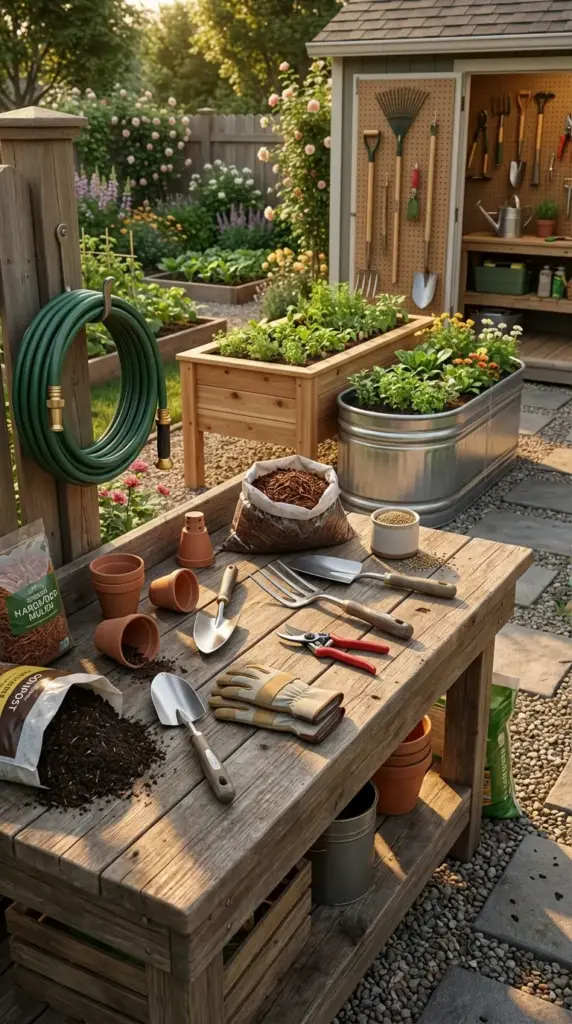
A quality hand trowel is the single most-used tool in any gardener’s arsenal. Don’t cheap out on this one. A flimsy trowel bends the first time you hit clay soil and it’s beyond frustrating. Look for stainless steel with a comfortable ergonomic grip — the Fiskars Ergo Trowel (around $15) and the Radius Garden Hand Trowel (around $20) are both excellent and will last for years.
A digging spade — not a shovel, a spade. There’s a difference. A spade has a flat, square blade designed for edging beds, dividing perennials, and digging clean planting holes. A shovel is rounded and better for moving loose material. You need both eventually, but start with the spade.
A garden fork is essential for loosening compacted soil and working amendments into your beds. If you only buy one large tool to start, honestly — make it the garden fork. It does more jobs than almost anything else in your shed.
A quality pair of pruning shears will get used constantly — deadheading flowers, trimming shrubs, cutting back perennials. The Felco F-2 (around $55) is the gold standard and worth every penny. I’ve had mine for six years and they still cut like new.
A garden hose with an adjustable nozzle — sounds basic, but a good hose matters. Look for a kink-resistant, rubber hose in the length you actually need. Buying a 100-foot hose when you need 50 feet just means more hose to manage and store. The Flexzilla Garden Hose is a favorite for a reason — lightweight, flexible, and incredibly durable.
The Tools You Can Wait On
Okay, real talk. You do not need all the things.
A rototiller? Rent one when you need it — don’t buy. A leaf blower? Nice to have, not essential for a garden project. Those long-handled cultivators with the spinning tines? I’ve owned three and barely used any of them.
Start lean. Add tools as you identify actual gaps in what you have. Your wallet will thank you.
Budget-Friendly vs. Investment-Worthy Gardening Supplies
Here’s my personal framework for deciding what to spend money on.
Spend more on: anything with moving parts, anything you’ll use every single week, and anything that directly contacts soil or plants. Quality matters most where wear and tear is highest.
Save money on: decorative items, plant markers, basic stakes and ties, seed starting trays, and anything you’ll replace seasonally anyway.
Specifically — invest in good gloves. I know, it sounds silly. But cheap garden gloves are genuinely one of the most frustrating things in gardening. They tear within a week, they don’t protect against thorns, and they get soaked through immediately. The Foxgloves Original Garden Gloves (around $28) or Atlas Nitrile Touch Gloves (around $12 for a 3-pack) are both worth it. Your hands will thank you.
Save money on watering cans if you have a hose. A basic plastic watering can for seedlings and containers is fine — you don’t need the gorgeous copper one from the boutique garden shop. As cute as it is. (I own it. I use it maybe twice a year.)
Soil Amendments, Mulch, and Fertilizers That Make a Visible Difference
This is the category where so many gardeners underinvest — and it shows in their results.
Your plants are only as good as the soil they’re growing in. Full stop.
Compost is the single best thing you can add to almost any garden soil. It improves drainage in clay soils, improves water retention in sandy soils, adds nutrients, and feeds beneficial soil microbes. It basically fixes everything. Bagged compost from a garden center works great — look for aged compost or composted manure rather than “garden soil” blends, which are often mostly peat and not very nutritious.
A 3-inch layer of compost worked into your beds before planting makes a visible difference within one growing season. I’ve seen side-by-side comparisons that are genuinely shocking — same plants, same care, dramatically different results based on soil prep alone.
Mulch is non-negotiable for a polished-looking garden that’s also low maintenance. A 2 to 3-inch layer of shredded hardwood mulch suppresses weeds, retains moisture, regulates soil temperature, and makes your beds look finished and intentional. It’s one of the highest-impact, lowest-cost things you can do for your garden.
For a 100-square-foot bed, you’ll need roughly 1 cubic yard of mulch for a 3-inch layer. Most garden centers sell it by the bag (around $5 to $7 per bag) or by the cubic yard in bulk (much cheaper if you have a truck or can arrange delivery).
Fertilizer is where people tend to overcomplicate things. For most home gardens, a balanced slow-release granular fertilizer like Osmocote (10-10-10 or 14-14-14) applied once in spring is genuinely all you need. For vegetables, a slightly higher nitrogen formula like a 5-10-10 supports leafy growth early in the season. For flowering plants, switch to a low-nitrogen, high-phosphorus formula once buds start forming to encourage blooms over foliage.
A Word on Organic vs. Synthetic Fertilizers
I get asked about this constantly. Here’s my honest take.
Organic fertilizers — like fish emulsion, bone meal, blood meal, and worm castings — feed the soil ecosystem as well as the plants. They release nutrients slowly and build long-term soil health. They’re my preference for vegetable gardens and anywhere kids or pets play.
Synthetic fertilizers work faster and are more precise in their nutrient ratios. They’re great for correcting specific deficiencies quickly. Just don’t over-apply — synthetic fertilizer burn is a real thing and it’s not pretty.
For most home gardeners? A combination of both works beautifully. Organic compost and mulch as your foundation, with targeted synthetic fertilizer when plants need a boost.


Raised Bed Kits, Edging Materials, and Planters That Double as Decor
This is the fun part. Let’s talk about the stuff that makes your garden look gorgeous.
Raised bed kits have gotten so much better in the last few years. You no longer have to choose between cheap and ugly or expensive and beautiful. Some favorites worth knowing about:
The Vego Garden 17-inch Metal Raised Bed (around $120 to $180 depending on size) is a serious investment but absolutely stunning — the powder-coated steel comes in beautiful colors and will last 20+ years. Worth every penny if you’re committed to raised bed gardening.
For a more budget-friendly option, cedar raised bed kits from Gardener’s Supply Company start around $60 to $80 and are genuinely beautiful. Cedar is naturally rot-resistant and looks incredible in almost any backyard aesthetic.
Galvanized metal stock tanks — the kind originally made for livestock — have become one of the most popular DIY raised bed options, and for good reason. They’re incredibly durable, have a cool industrial-farmhouse look, and cost around $80 to $150 depending on size. Drill drainage holes in the bottom and you’ve got an instant raised bed that doubles as a serious design statement.
Edging Materials Worth Knowing About
Steel landscape edging gives the cleanest, most professional look for garden bed borders. It’s flexible enough to create curves, durable enough to last decades, and practically invisible once installed. Expect to pay around $1 to $2 per linear foot for basic steel edging.
Natural stone edging — using fieldstone, river rock, or flagstone — creates a beautiful organic border that works especially well with cottage and naturalistic garden styles. You can often find free or cheap stone on Facebook Marketplace or Craigslist from people doing renovation projects.
Brick edging is classic, durable, and works with almost any home style. Reclaimed bricks give a gorgeous aged look and are often available cheaply from salvage yards or online marketplaces.
Planters That Double as Decor
If you’re in a small urban backyard or want to add visual interest to a patio or deck, the right planters are everything.
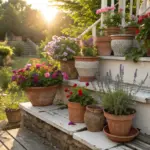
Large ceramic or terracotta pots in the 16 to 24-inch range are the workhorses of container gardening. Go big — small pots dry out too fast and look cluttered. A few large, well-planted containers always look more intentional than a dozen small ones scattered around.
Wooden crates and wine barrels add instant warmth and a farmhouse feel. Half wine barrels (around $30 to $50) are especially popular and hold enough soil volume to grow almost anything — including small fruit trees and large perennials.
Hanging planters and wall-mounted pocket planters are perfect for vertical gardening in small spaces. A simple wooden pallet turned into a vertical planter can hold 20 to 30 small plants and costs almost nothing to make.
Where to Shop Smart
Okay, let’s talk strategy. Because where you buy matters almost as much as what you buy.
Local independent nurseries are always my first recommendation for plants. The staff actually knows what they’re talking about, the plants are usually better quality and better acclimated to your local climate, and you’re supporting a small business. Yes, prices are sometimes slightly higher — but the survival rate of nursery plants vs. big box store plants is noticeably better in my experience.
Big box stores (Home Depot, Lowe’s) are great for tools, soil, mulch, edging materials, and hardscape supplies. Their plant selection is hit or miss and the care is inconsistent, but for supplies and materials, the prices are hard to beat.
Online favorites worth bookmarking:
- Gardener’s Supply Company — excellent raised beds, tools, and garden accessories
- High Mowing Organic Seeds — incredible seed selection for vegetable and flower gardeners
- American Meadows — wildflower seeds and native plants at great prices
- Etsy — seriously underrated for unique planters, handmade garden decor, and custom plant markers
- Facebook Marketplace — this one is a game changer for finding used tools, pots, edging materials, and even plants from gardeners who are dividing perennials
Organizing Your Gardening Supplies for Easy Access
Here’s the thing about garden organization that nobody talks about enough.
A disorganized shed means you buy duplicates of things you already own. I have four pairs of garden gloves because I could never find the ones I had. Three trowels. Two sets of pruning shears. It adds up fast.
A few simple systems that actually work:
A pegboard on your shed wall for hanging tools is the single highest-impact organization upgrade you can make. Everything visible, everything accessible, nothing piled on the floor. Basic pegboard costs around $20 to $30 for a 4×4 section and the hooks are a few dollars more.
A dedicated “grab and go” basket or tote with your most-used small tools — trowel, pruners, gloves, plant markers, and twine — means you can grab everything you need in one trip. This sounds small but it genuinely changes how often you get out in the garden.
Clear stackable bins for storing seeds, fertilizers, and small supplies are a game changer. Label everything. Future you will be so grateful.
For soil and mulch storage, a simple plastic storage bin with a lid keeps bags dry and pest-free between uses. Nothing worse than opening a bag of potting mix in spring and finding it’s been colonized by something over winter.
The Bottom Line on Gardening Supplies
You don’t need to spend a fortune to have an incredible garden. But you do need the right things.
Invest in quality tools that will last. Build your soil before you plant anything. Use mulch generously. And shop smart — local nurseries for plants, big box stores for materials, and online for specialty items and deals.
Start with the essentials, add as you go, and keep your supplies organized so you actually use what you have.
🌿 Coming up next — and this one is SO satisfying. We’re getting into garden care tips that keep your backyard looking flawless all year long. From building a simple seasonal maintenance routine to the exact watering, mulching, and pruning habits that make the biggest difference — this section is basically your garden care cheat sheet. Hit that Next button below and let’s keep that garden thriving! 🌸✨

GIPHY App Key not set. Please check settings