

 The Home Growns
Planting Strategies That Make Your Garden Layout Come Alive
Here’s the truth nobody tells you when you’re starting out.
You can have the most beautifully designed backyard layout in the world — perfect zones, gorgeous pathways, a stunning focal point — and it can still fall completely flat if your planting strategy is off.
I know because I’ve been there. Twice.
The first time, I planted everything at the same height. My garden looked like a flat green carpet with some flowers sprinkled on top. Not exactly the lush, layered look I was going for. The second time, I ignored seasonal succession and ended up with a garden that looked incredible in June and completely dead by August.
Both times, totally fixable. Once you know what you’re doing.
Choosing Plants Based on Your Layout Zones and Sun Conditions
Before you buy a single plant, go back to your zone map.
Each zone in your backyard has different conditions — and your plant choices need to match those conditions, not fight them. This sounds obvious, but it’s the mistake I see most often.
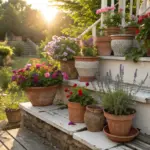
Your dining and entertaining zone is probably paved or graveled, which means container plants and potted arrangements. Choose plants that can handle reflected heat from hardscape — lavender, rosemary, ornamental grasses, and dwarf citrus all thrive in these conditions.
Your garden zone is where sun exposure becomes critical. Pull out that sun map you made during your assessment. Full sun beds — 6+ hours of direct light — open up a world of options: roses, coneflowers, black-eyed Susans, tomatoes, peppers, most herbs. Partial shade zones are perfect for hostas, astilbe, ferns, and impatiens. Deep shade? Go with hellebores, bleeding heart, and sweet woodruff.
The One Rule That Changes Everything
Here it is, simple and straightforward.
Right plant, right place. That’s it. That’s the whole philosophy.
A plant growing in its ideal conditions needs less water, less fertilizer, less intervention, and less of your time. It just grows. A plant struggling against its environment will drain your energy, your budget, and your enthusiasm faster than anything else in gardening.
Layering Plants by Height: The Three-Tier Method
This is the technique that transforms a flat, boring garden bed into something that looks genuinely professional.
Think of your garden bed in three tiers — and yes, this works for beds of any size.
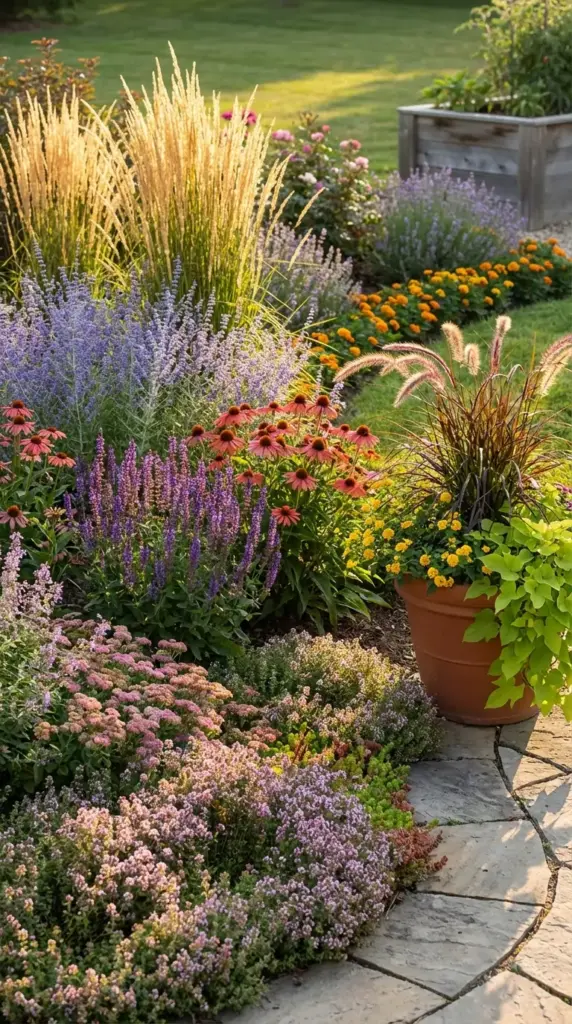
Tier one — the canopy layer: These are your tallest plants, placed at the back of the border or the center of an island bed. Think ornamental grasses like Karl Foerster feather reed grass (grows 4 to 6 feet tall), Joe Pye weed, tall garden phlox, or shrub roses. These create the backdrop and the drama.
Tier two — the mid-level layer: This is the heart of your garden. Plants in the 18-inch to 3-foot range go here — coneflowers, salvia, catmint, Russian sage, and dahlias are all perfect mid-level performers. This layer is where most of your color and seasonal interest lives.
Tier three — the ground level: Low-growing plants that hug the front edge of your bed and spill slightly onto pathways. Creeping thyme, sedum, alyssum, and ajuga are workhorses here. They suppress weeds, soften hard edges, and make the whole bed look finished.
Don’t Forget the Filler-Thriller-Spiller Formula
This one’s specifically for container gardens and raised planters — but it works in beds too.
Thriller = the tall, dramatic centerpiece plant. Filler = medium, bushy plants that fill in the gaps. Spiller = trailing plants that cascade over the edge. Put all three together and you’ve got a container that looks like it belongs in a magazine.
Try this combo: purple fountain grass (thriller) + yellow lantana (filler) + sweet potato vine (spiller). Stunning, low-maintenance, and works in almost any climate.
Seasonal Planting Tips for Year-Round Garden Interest
This is where a lot of gardeners — including past me — drop the ball.
A garden that only looks good in summer isn’t a well-designed garden. It’s a summer garden. And there’s a difference.
The goal is four-season interest — something beautiful happening in your garden in every single month of the year. Here’s how to think about it:
Spring is for bulbs and early bloomers. Plant tulips, daffodils, alliums, and hyacinths in fall for a spectacular spring show. Add bleeding heart and hellebores for early season color in shadier spots.
Summer is the easy season — almost everything blooms. The trick is staggering your bloom times so you’re not left with a gap in July when your spring flowers are done and your fall asters haven’t started yet. Coneflowers, black-eyed Susans, rudbeckia, and dahlias bridge that mid-summer gap beautifully.
Fall is honestly one of the most underrated garden seasons. Asters, sedums, ornamental grasses, and Japanese anemones come into their own in September and October. Add some ornamental kale and mums for instant fall color that lasts until frost.


Winter is about structure. Evergreen shrubs, ornamental grasses left standing, seed heads, and berry-producing shrubs like winterberry holly keep your garden looking intentional even under snow.
Best Plants for Each U.S. Region
Okay, let’s get specific — because what works in Atlanta absolutely does not work in Minneapolis.
Pacific Northwest (Seattle area — Zone 8b): The Pacific Northwest is a gardener’s paradise with its mild, wet winters and dry summers. Rhododendrons, ferns, astilbe, and Japanese maples thrive here like nowhere else. For summer color, agapanthus, crocosmia, and lavender are stunning. The challenge is the dry summer — deep watering and mulching are essential from July through September.
Midwest (Minneapolis, Chicago — Zones 4b to 6a): Midwest gardeners deal with brutal winters and hot, humid summers. Tough, cold-hardy plants are non-negotiable here. Coneflowers, black-eyed Susans, prairie dropseed grass, and native asters are built for this climate. For spring, tulips and daffodils are reliable performers. Avoid plants rated below Zone 5 if you’re in Minneapolis — you’ll lose them every winter without fail.
Southeast (Atlanta — Zone 7b to 8a): Heat, humidity, and occasional drought define Southeast gardening. Crape myrtles, gardenias, knockout roses, and lantana are practically bulletproof here. Native plants like beautyberry, native azaleas, and switchgrass are even better — they evolved for exactly these conditions. The key challenge in Atlanta is summer heat stress — mulch heavily and water deeply but infrequently to encourage deep root growth.
Northeast (New York, Philadelphia — Zones 6a to 7a): The Northeast has four distinct seasons, which is actually a gift for gardeners. Hydrangeas absolutely thrive here — panicle hydrangeas and Annabelle hydrangeas are especially reliable. Hostas, astilbe, and ferns are perfect for the shady urban backyards common in New York and Philadelphia. For sun, coneflowers, rudbeckia, and ornamental grasses are low-maintenance stars.
Companion Planting Basics
This is one of those topics that sounds complicated but is actually really simple once you get the basics down.
Companion planting is just the practice of growing certain plants near each other because they benefit one another. It improves garden health, deters pests, and honestly makes your garden look more lush and layered at the same time.
The most famous companion planting combination is the Three Sisters — corn, beans, and squash. The corn provides a trellis for the beans, the beans fix nitrogen in the soil, and the squash leaves shade the ground to retain moisture. Native American farmers figured this out centuries ago. It still works.
For ornamental gardens, try these proven combinations:
Roses + lavender — lavender repels aphids, which are roses’ biggest enemy. Plus the color combination is absolutely gorgeous.
Tomatoes + basil — basil is said to repel thrips and improve tomato flavor. Whether the flavor thing is fully proven or not, they look beautiful together in a kitchen garden and you’ll use both in the same recipes anyway.
Marigolds + almost everything — marigolds repel nematodes, aphids, and whiteflies. Plant them as a border around your vegetable garden and they’ll work as a natural pest barrier all season long.
Creating a Planting Calendar for Your City
This is the practical tool that ties everything together — and most gardeners never bother making one.
A planting calendar tells you exactly when to start seeds indoors, when to transplant outside, and when to expect blooms or harvests based on your specific location. Here’s how to build a simple one:
Step one: Find your average last frost date. For New York City, that’s around April 1st. Chicago is around April 22nd. Atlanta is around March 13th. Seattle is around March 15th. Minneapolis is around May 3rd — one of the latest in the country, which is why Midwest gardeners have to be strategic.
Step two: Count backwards from your last frost date to determine when to start seeds indoors. Most vegetables need 6 to 8 weeks of indoor growing time before transplanting. So if you’re in Chicago with an April 22nd last frost, you’re starting tomato seeds indoors around early March.
Step three: Count forward from your last frost date to plan your outdoor planting schedule. Cool-season crops like lettuce, spinach, and peas can go out 2 to 4 weeks before your last frost date. Warm-season crops like tomatoes, peppers, and basil go out after your last frost date when nighttime temps are consistently above 50°F.
Step four: Plan your fall garden by counting backwards from your first fall frost date. In Minneapolis, that’s around October 1st. In Atlanta, it’s around November 15th. That’s a huge difference — Atlanta gardeners get almost six more weeks of growing season in fall.
The Planting Strategy Mindset Shift
Here’s what I want you to take away from all of this.
Great planting isn’t about buying the most plants or the most expensive ones. It’s about choosing the right plants for your specific conditions, layering them thoughtfully, and planning for interest across all four seasons.
Start with three or four anchor plants that you know will thrive in your climate. Build your layers around them. Add companion plants that support each other. Then fill in the gaps with seasonal color as you go.
Your garden will look more intentional, require less maintenance, and honestly — it’ll make you so much happier every time you look out your back window.
🌿 Next up — and this one is super practical. We’re talking about all the must-have gardening supplies for your DIY landscape project. From the tools worth splurging on to the ones you absolutely don’t need, plus where to shop smart and save money without sacrificing quality. If you’ve ever stood in the garden center feeling completely overwhelmed, this section is going to be your new best friend. Hit that Next button — let’s get you set up for success! 🛒✨

GIPHY App Key not set. Please check settings