

 The Home Growns
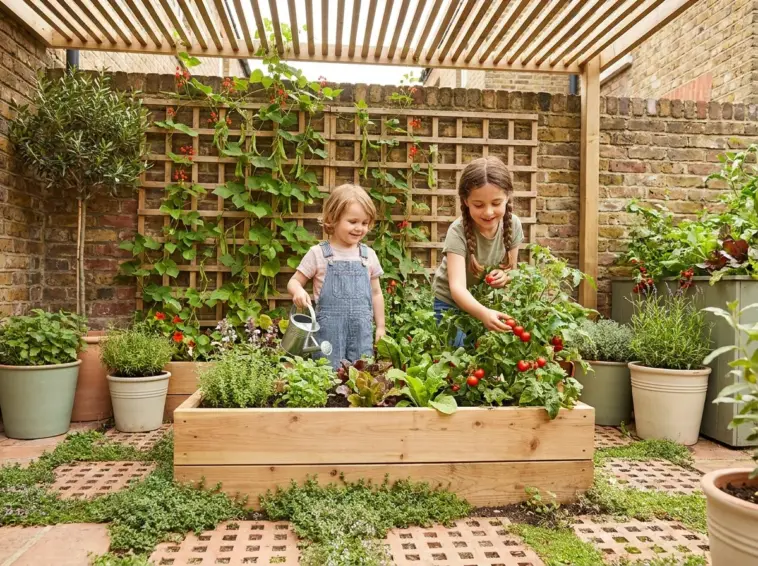
Have you ever looked at your tiny backyard and wondered how on earth you’re supposed to create a magical outdoor space for your kids without it turning into a chaotic mud pit?
It is beyond frustrating to scroll through Pinterest and see nothing but sprawling homesteads and massive wooden playgrounds that simply won’t fit in your small space. I see you, city dwellers and small-lot parents, because feeling like your kids are missing out on nature just because of square footage is a heavy kind of parent-guilt.
A few years ago, right around the time I first launched The Home Growns, I tried forcing my four kids to share one tiny patio planter, and it was a complete disaster. There was endless bickering, dirt tracked all over my clean floors, and zero actual plants survived their aggressive “help” that weekend.
But then, standing in the middle of that sweeping dirt pile, it hit me like a ton of bricks. Kids don’t actually need a massive kid zone or an empty lawn to run wild; they just need highly focused, interactive micro-zones that they can easily reach and manipulate.
That total failure forced me to completely rethink my approach to small garden ideas for children. I started engineering bite-sized, hands-on garden spaces that actually thrive in compact areas, and it entirely transformed how my family plays outside.
The setups I’m about to share aren’t just cute; they are literal sanity-savers that will keep your little ones deeply engaged for hours. Stick with me until the very end, because the last idea on this list is a literal bedtime game-changer that you can pull off this weekend.
The Dedicated Dirt and Digging Zone
Let me confess my biggest gardening sin: I used to totally lose my cool when I’d find my prized hostas uprooted by toy dump trucks.
It took me way too long to realize that kids are hardwired to dig, and fighting that natural instinct is simply a losing battle.
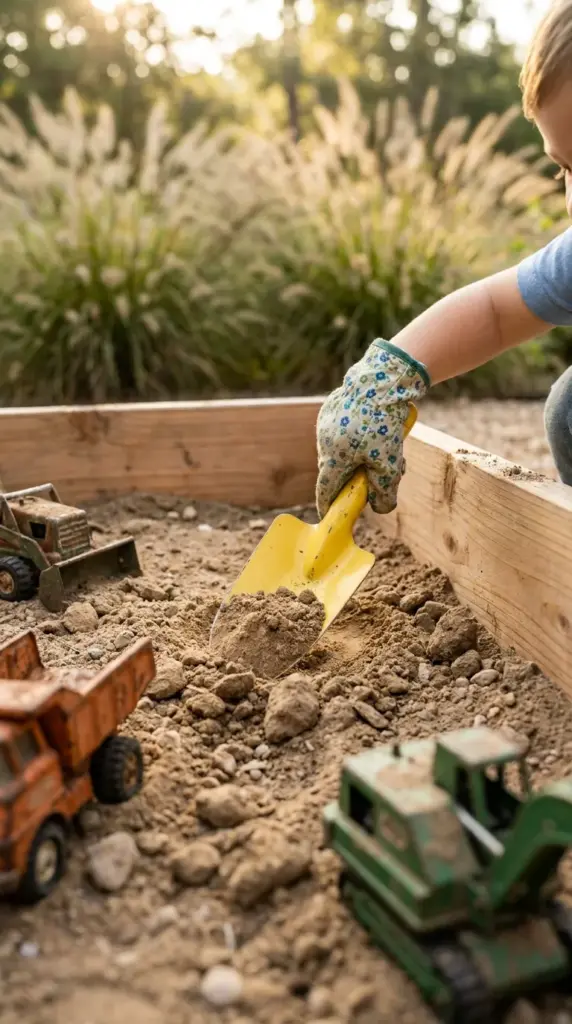
Instead of banishing my four kids from my flower beds, I created a designated kids digging patch where they are enthusiastically encouraged to make a massive mess.
Setting the Boundaries
The absolute secret to making this work in a small garden layout is giving the mess a very clear, undeniable physical boundary.
I used a few cheap, untreated cedar planks to build a simple three-by-three-foot frame tucked directly into a corner of our patio area.
We filled that frame to the brim with a 50/50 mix of basic topsoil and play sand, which keeps it wonderfully loose and easy for little hands to scoop.
By framing it out clearly, the dirt stays completely contained, and my kids know exactly where their chaotic territory ends and my careful garden design begins.
Burying the Treasure
To keep them deeply engaged for more than five minutes, you have to treat this zone like an ever-changing, top-secret archaeological dig.
I make it a habit to sneak out before breakfast and bury cheap plastic dinosaur bones, smooth river rocks, or even old spare keys for them to discover.
Providing a few sturdy, child sized garden tools and a couple of tin buckets turns a boring square of dirt into hours of wildly focused, imaginative play.
And yep, now that they have a safe place to completely wreck the dirt, we need to talk about the plants they are actually allowed to crush and smell, so hit the next button below because I’m starting with one of my favorite sensory wins.

GIPHY App Key not set. Please check settings