

 The Home Growns
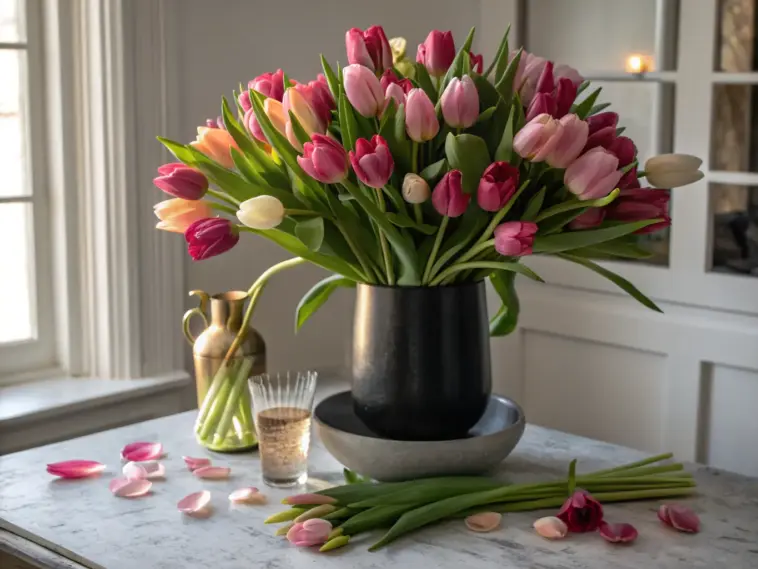
Did you know tulips can grow up to an inch taller after you cut them? I learned this the hard way when my gorgeous bouquet bent sideways overnight—ruining my dinner party centerpiece!
But here’s the good news: with a few clever tricks (yes, including that mysterious penny!), you can create jaw-dropping tulip arrangements that stay perky for days.
Whether you’re styling your Brooklyn brownstone, prepping for a Seattle spring wedding, or just craving a pop of color in your Chicago apartment, these 10 foolproof DIY ideas blend garden-fresh charm with serious interior design flair.
Let’s make those tulips work for you—not the other way around!
1. Why Tulips Bend (And Why That’s Actually Beautiful)
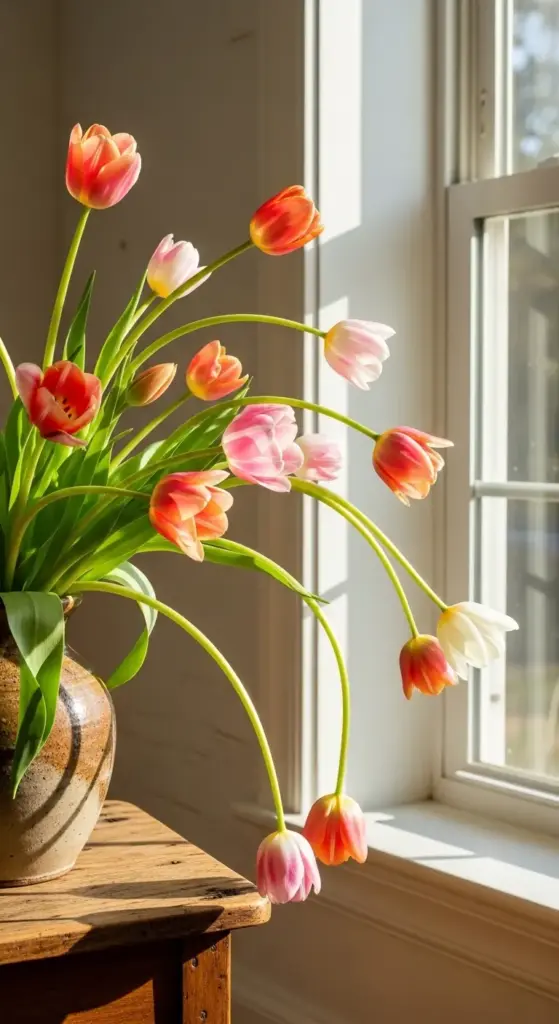
Let me tell you about the time I spent twenty minutes meticulously arranging a gorgeous bunch of pink tulips only to wake up the next morning and find them all doing the limbo toward my kitchen window.
I nearly cried. Seriously.
But then my florist friend laughed and said, “Honey, they’re not dying—they’re dancing.”
Tulips Are Literal Sun-Chasers
Here’s the cool science bit: tulips have this thing called phototropic movement.
That’s just a fancy way of saying they physically grow toward light sources even after being cut.
Unlike roses or lilies that kinda stay put, tulips keep living their best lives in your vase—stretching, bending, and repositioning themselves overnight.
I measured it once (yes, I’m that person) and found my tulips grew nearly three-quarters of an inch taller in just 36 hours.
Their cells actually elongate on the shaded side, gently curving the stem toward brightness.
It’s not a flaw—it’s biology in action.
The “Living Flower” Mindset Shift
For years I fought this natural movement.
I’d straighten stems constantly, use floral tape grids across vase tops, even weigh down heads with bobby pins (don’t ask).
Total control freak energy.
Then I visited this tiny flower shop in Seattle where the owner arranged tulips already bent in graceful arcs.
She called it “working with the flower’s personality instead of against it.”
Game changer.
Now I actually wait 12–24 hours after bringing tulips home before arranging them.
Let them stretch toward the light first, then trim stems and place them where their natural curve complements the space.
A slight bend against a white wall? Chef’s kiss.
Forced straightness in a rigid vase? Meh.
City Living Messes With Their GPS
Apartment dwellers, listen up—your lighting setup seriously affects tulip behavior.
In my old Chicago walk-up with a north-facing window, tulips bent dramatically because they were starving for photons.
But in my friend’s LA loft with floor-to-ceiling south windows? Barely a curve.
The weaker your natural light, the more extreme the bend as tulips desperately reach.
Pro tip: Rotate your vase 180 degrees every morning if you want more symmetrical movement.
Or lean into the drama—place them on a side table where their graceful lean becomes intentional design.
When Bending Crosses Into Trouble Territory
Not all drooping is cute though.
Watch for these red flags that mean your tulips need help:
Stems folding at sharp 90-degree angles near the base usually means water deprivation or bacterial gunk clogging uptake.
Heads nodding downward like sad puppies? That’s often ethylene exposure from nearby ripening fruit.
And if blooms feel papery or translucent? They’re simply past their prime—no trick will save them.
Healthy bending looks fluid and gradual.
Problematic drooping looks broken or exhausted.
Big difference.
Once you learn to read their body language, you’ll stop panicking every time they shift overnight.
They’re not failing—they’re flourishing in their own quirky way.
Which brings me to my favorite rescue trick I learned from a Dutch flower farmer…
Ready to discover why dropping a penny in your vase might just save your entire arrangement? Trust me—you’ll want to try this tomorrow morning. 😊


GIPHY App Key not set. Please check settings