

 The Home Growns
Choosing the Right Trellis Style for Your Tomato Varieties
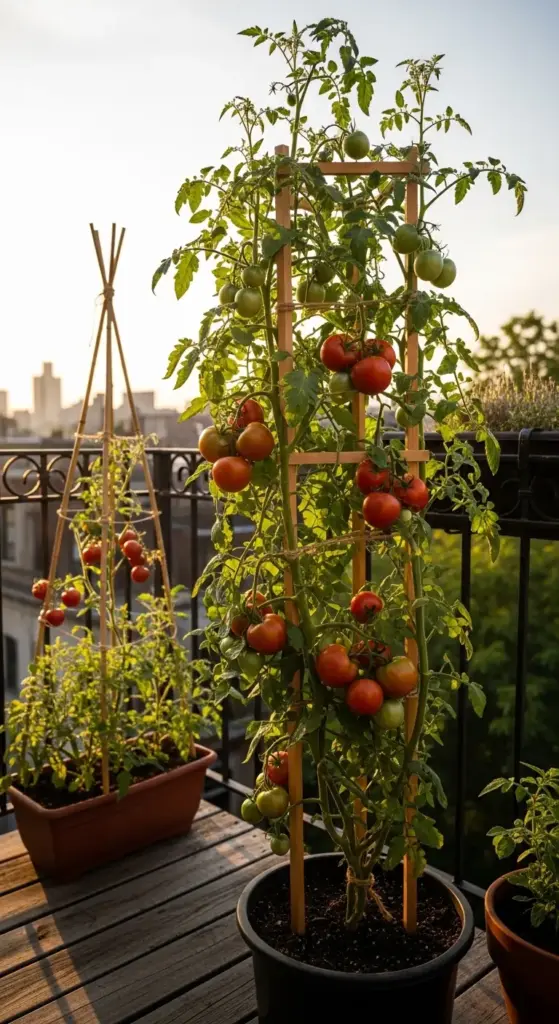
I made the biggest mistake of my gardening life one spring.
I planted a gorgeous ‘Brandywine’ heirloom in a flimsy wire cage I got at the big box store. By July? That cage was bent sideways like a drunk flamingo. Tomatoes smashed on the pavement. My heart sank.
Turns out not all tomatoes play by the same rules. And your trellis choice has to match your variety—or you’ll end up with broken stems and wasted harvests.
Indeterminate vs. Determinate: Know Your Tomato’s Personality
Indeterminate tomatoes just keep growing. And growing. And growing. We’re talking vines that can hit 8–10 feet tall if you let ’em.
These guys need serious vertical support—think sturdy stakes, tall trellises, or heavy-duty cages. Varieties like ‘Cherokee Purple,’ ‘Sungold’ cherry tomatoes, and most heirlooms fall in this category.
Determinate tomatoes, on the other hand, are the chill friends who know when to stop. They bush out to a certain height (usually 3–4 feet) and call it quits. Patio Princess or Roma types work fine with shorter cages or minimal supports.
Mix these up and you’re asking for trouble. I learned that the hard way when my ‘Brandywine’ snapped its cage in half during a light breeze. Embarrassing and heartbreaking.
Heavy Producers Need Heavy-Duty Backups
Let me be blunt: heirloom tomatoes are gorgeous but heavy. One ‘Brandywine’ fruit can weigh over a pound. Multiply that by dozens of tomatoes plus thick vines plus summer rain…
Yeah. Your structure better be solid.
I now use 8-foot cedar stakes buried 18 inches deep for my indeterminate heavyweights. Or cattle panels zip-tied to T-posts. Nothing wobbly. Nothing flimsy. Always overbuild—that’s the golden rule nobody tells beginners.
Your tomato vines will get shockingly heavy by late summer. Like, “I-can’t-believe-plants-weigh-this-much” heavy.


Petite Varieties, Petite Supports
Got a tiny balcony in Seattle or a fire escape garden in New York? Try compact varieties like ‘Tiny Tim’ or ‘Balcony Bliss.’
These little champs max out around 2 feet tall. They look adorable on minimalist ladder trellises or even simple bamboo teepees. No need for industrial-strength setups when your plant stays politely contained.
I grow ‘Patio Princess’ on my apartment railing using just three bamboo stakes lashed together. It’s cute, functional, and doesn’t violate my HOA rules. Win-win.
Match Height to Your Space Reality
Measure twice, build once—especially in small spaces.
Balcony railing only 3 feet tall? Don’t build a 7-foot trellis that blocks your view or violates rental rules. Lean-to designs that angle upward from the railing often work better.
Got a backyard fence you can attach to? Go tall! Train vines right up the fence line for maximum yield without eating into your play space.
I once built a gorgeous 6-foot obelisk for my Chicago patio… only to realize it blocked my kitchen window view. Had to tear it down and start over. Ugh. Learn from my oopsie.
Honestly, the right match between tomato type and support style makes all the difference. Get this step right and you’re halfway to a gorgeous, abundant harvest.
Coming up next: my favorite budget-friendly DIY trellis ideas using stuff you probably already have lying around. We’re talking old ladders, fallen branches, and even copper pipes—without spending a fortune at the garden center. You’ll be shocked what works!



GIPHY App Key not set. Please check settings