

 The Home Growns
The 5-Minute Flower Arranging Method for Total Beginners
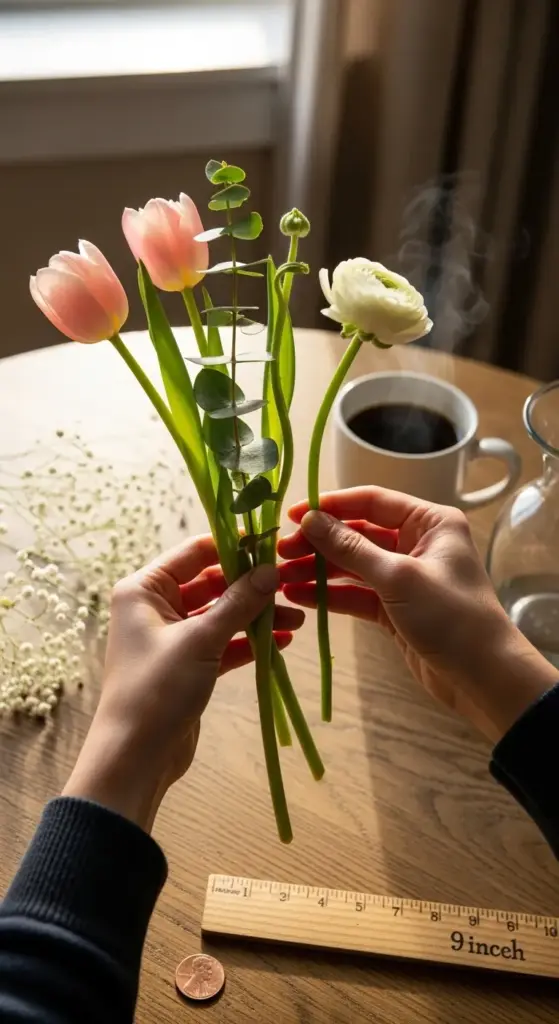
My first attempt took 45 minutes and looked like a sad salad.
Stems everywhere, water spilled on the counter, and my cat judging me from the doorway.
Then my florist friend laughed and showed me the real way beginners should start.
Turns out gorgeous flower arranging doesn’t require fancy skills—just a simple system.
Let me share the exact method I use every Sunday morning with my coffee.
It takes less time than scrolling Instagram and makes my whole apartment feel like a spa.
The Lazy Girl’s Spiral Technique
Forget complicated diagrams.
Just hold three stems in your non-dominant hand like you’re holding a softball.
Add one stem at a time, rotating your wrist slightly counter-clockwise after each addition.
That gentle twist is the secret—your stems naturally spiral without thinking.
I used to fight this and end up with flat, pancake-looking bouquets.
Now I let the flowers find their own happy positions.
When you’ve added 7–9 stems, secure with a rubber band before placing in water.
Voilà—floral design basics mastered in under three minutes.
The Golden Ratio Nobody Talks About
Here’s the math that actually matters.
Measure your vase height.
Multiply by 1.5.
That’s your ideal stem length before trimming.
A 6-inch vase needs 9-inch stems showing above the rim.
Too tall? Your arrangement looks frantic.
Too short? It disappears on the table.
I keep a little ruler in my junk drawer just for this.
Sounds nerdy but it prevents so much guesswork.
And always cut at a 45-degree angle—more surface area means happier spring flowers drinking all day long.


Build in Three Simple Layers
Greens go in first to create your shape.
I use eucalyptus or even rosemary from my kitchen windowsill.
Then add your focal blooms like ranunculus or tulips where your eyes naturally land.
Finally tuck in filler flowers like baby’s breath around the edges to hide mechanics.
This layering trick makes cheap bouquets look expensive instantly.
I learned this arranging grocery store tulips one Tuesday afternoon.
My $12 bouquet looked like I spent $60 at a florist.
Total confidence boost.
Rescue Moves for Common Disasters
Drooping tulips? Pierce the stem vertically just below the bloom with a straight pin.
Sounds weird but it works like a tiny spine brace.
Cloudy water after one day? Dump it out and add one penny plus half an aspirin to fresh water.
The copper and acid fight bacteria naturally.
Stems sliding everywhere? Criss-cross clear tape over the vase opening before adding flowers.
I keep tape in my vase cupboard specifically for this.
These little hacks saved my sanity during last spring’s entertaining season.
The 10-Second Refresh Routine
Every other morning while brushing my teeth, I recut stems underwater.
Just a half-inch off at that 45-degree angle.
Change the water completely twice a week.
Your arrangement will last 7–10 days instead of 3–4.
I set a phone reminder labeled “flower spa day” so I don’t forget.
Small effort, massive payoff for your DIY bouquets.
You’ve got this—honestly.
In the next section, I’ll show you how to match your arrangements to your home’s style so they look intentional instead of random. Think minimalist magic for your Brooklyn apartment or cottagecore charm for your cozy Seattle nook—let’s make your flowers belong.



GIPHY App Key not set. Please check settings