

 The Home Growns
Choosing the Perfect Spring Blooms for Long-Lasting Arrangements
I once bought the most gorgeous deep purple tulips at Whole Foods.
They looked like royalty in their display bucket.
By the next morning? Completely face-planted against the vase like they’d pulled an all-nighter.
Turns out I’d grabbed flowers past their prime without even realizing it.
Let me save you that heartbreak.
Picking the right spring flowers makes all the difference between a bouquet that lasts a week versus one that quits by Wednesday.
It’s not about spending more money.
It’s about knowing what to look for.
The Forgiving Five for Beginners
Some flowers are just made for newbies.
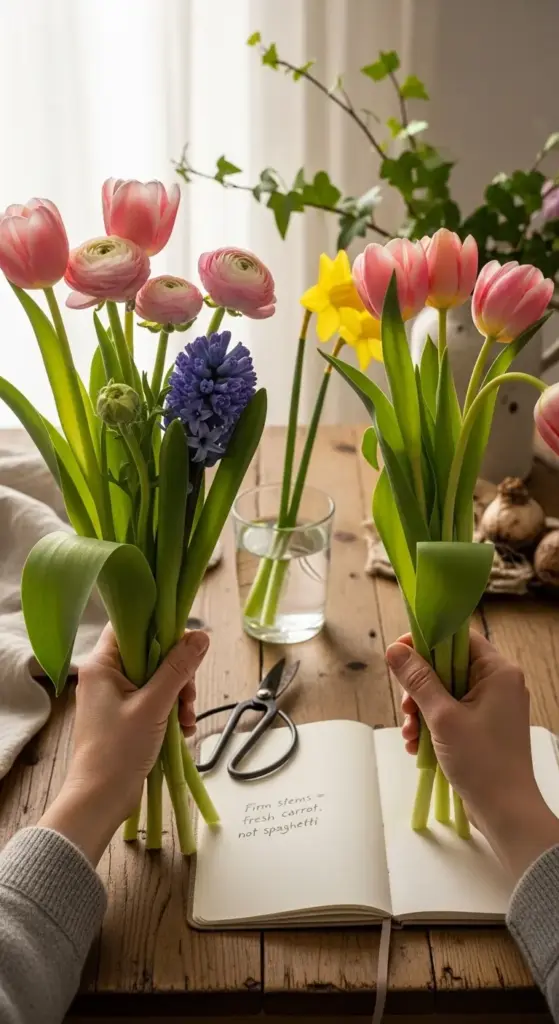
Tulips top my list—they actually keep growing in the vase which feels like magic even when your arrangement isn’t perfect.
Just know they’ll bend toward sunlight so rotate the vase daily.
Daffodils are tough cookies but come with a catch.
Their stems leak sap that can kill other flowers.
Always soak them alone for 24 hours before mixing into DIY bouquets.
Hyacinths smell like heaven and hold their shape beautifully.
Their dense flower clusters hide a multitude of arranging sins.
Ranunculus look fancy but play nice with beginners.
Those layered petals stay perky even if your stem cutting was messy.
And sweet peas? Delicate but dreamy.
They add that romantic trailing effect without demanding perfection.
Avoid peonies and anemones until you’ve practiced a bit—they’re divas that wilt if you look at them wrong.
Reading Flowers Like a Pro
Fresh flowers whisper clues if you know how to listen.
Check the stems first—they should feel firm like a fresh carrot not bendy like overcooked spaghetti.
Buds should be slightly closed with just a hint of color showing.
Fully open blooms might be stunning today but they’re already on their way out.
And those leaves? Perky and bright green all the way down.


Yellow or slimy leaves near the base mean old stock.
I learned this shopping at Chicago’s farmers market last April.
The vendor gently steered me away from droopy ranunculus toward crisper bunches.
That simple swap added four extra days to my arrangement’s life.
Worth every penny.
Color and Texture Magic
Your flower colors should match your room’s vibe.
Soft pastel florals like blush tulips and pale blue hyacinths create calm in bedrooms.
Save the vibrant spring mixes—hot pink ranunculus with orange tulips—for kitchen tables where energy matters.
And texture? That’s where beginners level up fast.
Always mix filler flowers like astilbe or waxflower with your main focal blooms.
The delicate sprays fill empty spaces so your arrangement looks abundant even with just seven stems.
I toss in a few sprigs of foraged greenery too.
Even simple ivy from a backyard bush adds dimension.
What’s Actually in Season (And Affordable)
Don’t fight Mother Nature.
March brings daffodils and early tulips to markets in NYC and Seattle.
April explodes with ranunculus, anemones, and the first sweet peas.
May? Peony season baby—but prices drop mid-month when supply floods in.
Lilacs appear briefly in late April depending on your zone.
Snag them fast for those gorgeous lilac bouquets that smell like childhood.
Pro tip: Ask vendors what’s locally grown.
Garden to vase flowers travel less and last longer than imports.
They’re often cheaper too since shipping costs less.
Your arrangement will thank you.
Ready to actually put these blooms together? In the next section I’ll walk you through my dead-simple 5-minute arranging method that works even when you’re juggling kids, coffee, and zero patience. No floral degree required—I promise!



GIPHY App Key not set. Please check settings