

 The Home Growns
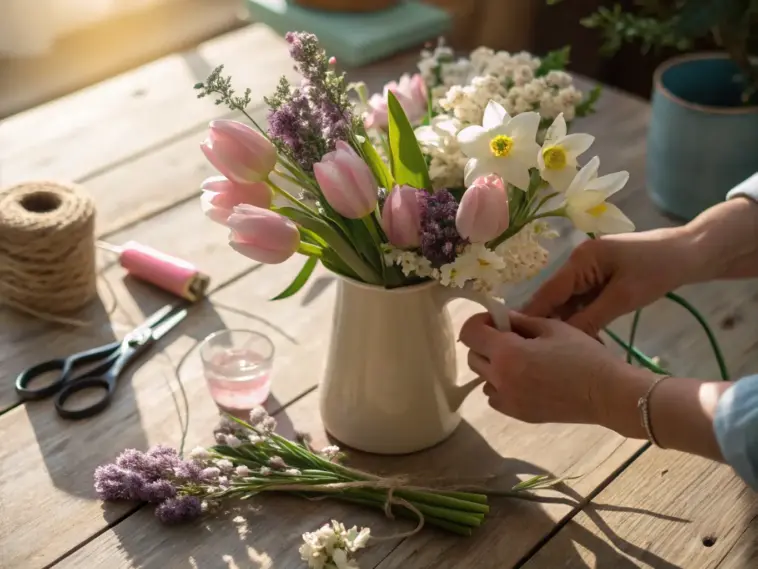
I still remember my first attempt at flower arranging—wilting tulips, muddy water, and a vase that looked more like a science experiment than home decor! 😅
But here’s the magic: 78% of people say fresh flowers instantly boost their mood and make a house feel like a home.
This spring, you don’t need a florist degree or expensive supplies to create jaw-dropping arrangements that wow your Instagram followers and guests alike.
Whether you’re prepping for a brunch party in your Brooklyn brownstone or simply craving that fresh-picked joy on your Seattle apartment windowsill, I’m sharing the exact beginner-friendly techniques that transformed me from floral fumbler to arrangement artist.
Let’s make your space bloom!
Essential Tools and Supplies You Already Own
Let me tell you about the time I spent $45 on fancy floral supplies for my first arrangement.
I showed up at the craft store feeling so professional.
Then I got home and realized I already owned everything I actually needed in my kitchen junk drawer.
What a waste! Don’t make my mistake.
You absolutely do not need a special trip to the florist supply shop to start creating beautiful spring flower arrangements.
Seriously—your home is already stocked with secret floral tools.
Let me show you what to grab instead.
Your Kitchen Is a Floral Supply Closet
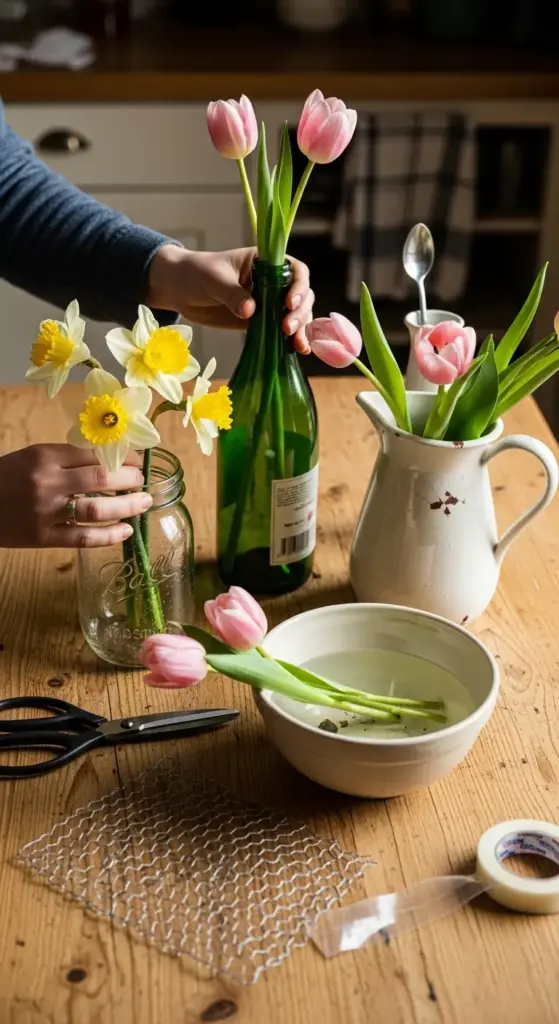
That mason jar collecting dust on your shelf? Perfect vase.
I’ve used everything from vintage teacups to empty olive oil bottles for mason jar arrangements that guests actually compliment more than expensive crystal.
Wine bottles with the labels soaked off make stunning tall vases for tulips.
Just run them through the dishwasher first—nobody wants to see last week’s chardonnay label next to your fresh seasonal blooms.
And those mismatched thrift store pitchers? Gold.
I found a chipped ceramic pitcher at a garage sale for 50 cents.
It now holds my favorite grocery store bouquets on the kitchen table every single week.
The imperfections make it feel lived-in and real.
Ditch the Expensive Floral Foam
Floral foam costs $8 and sheds little green crumbs everywhere.
Plus it’s not exactly eco-friendly which bothered me more than I expected.
Here’s what actually works better: crumpled chicken wire stuffed into your vase opening.
It holds stems exactly where you want them without chemicals.
No chicken wire? Clear tape stretched across the vase mouth in a grid pattern does the trick.


I call it the lazy florist’s secret weapon.
And my weirdest hack? The spoon trick.
Just rest a teaspoon across the top of a narrow vase—the bowl of the spoon catches stems at perfect angles.
It sounds ridiculous until you try it with daffodils.
Total game changer for keeping floppy stems upright.
Scissors Truth Bomb
You don’t need $30 floral shears to start.
Kitchen scissors work perfectly fine for soft-stemmed spring flowers like tulips and ranunculus.
Save the fancy shears for woody stems like lilac branches later.
But here’s the pro tip nobody tells beginners: always cut stems underwater.
Keep a small bucket or even a clean mixing bowl nearby while you arrange.
Why? Because air bubbles sneak into freshly cut stems within seconds.
Those bubbles block water uptake and your beautiful arrangement wilts by Tuesday.
I learned this the hard way after my first Mother’s Day bouquet drooped overnight.
So sad! Now I never skip the underwater cut.
It adds two minutes but doubles your flower’s lifespan easily.
H3: Where to Find Flowers Without Breaking the Bank
You don’t need a cut flower garden to start (though it’s lovely if you have one!).
Hit your local farmers market Saturday mornings—vendors often discount buckets of stems near closing time.
I scored an entire bucket of peonies for $12 last May in Chicago.
Grocery stores work great too—Trader Joe’s and Whole Foods have surprisingly fresh farmers market flowers most weeks.
Just check the water in the display buckets before buying.
Cloudy water means older stock.
And hey—if you have even one flowering bush in your yard? Snip a few branches responsibly.
Your first DIY bouquets will mean so much more when they came from your own space.
Ready to pick the perfect blooms? Next up I’ll share exactly which spring flowers forgive beginner mistakes (and which ones to avoid until you’ve practiced a bit). You’ll be shocked how easy it is to choose like a pro!

GIPHY App Key not set. Please check settings