

 The Home Growns
Beginner Garden Care: Watering, Feeding & Maintenance
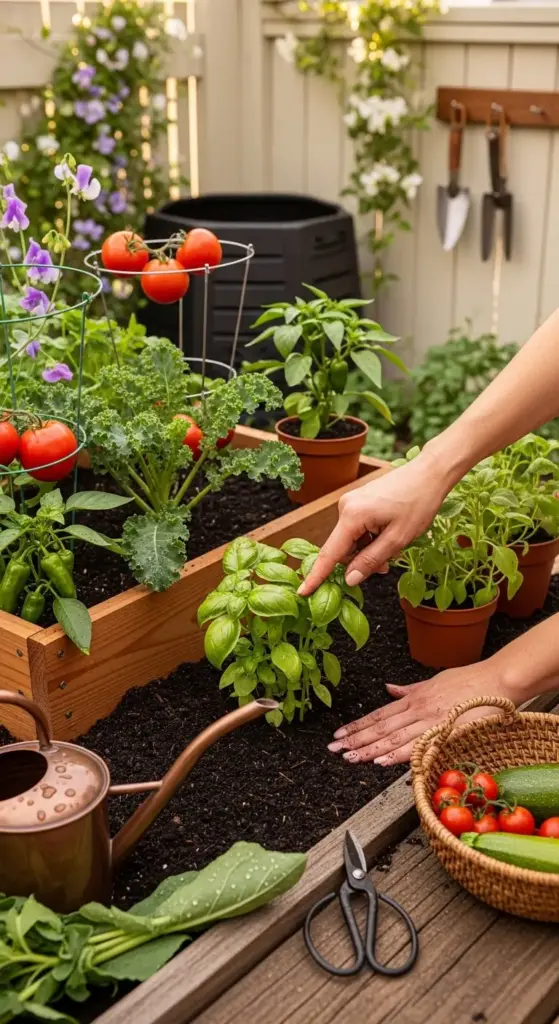
When I started my first small vegetable garden, I thought care just meant watering every day.
If plants looked sad, I gave them more water. Simple, right?
Well… not really.
I actually killed more plants from too much care than too little.
My first basil plant was basically drowned.
The leaves turned yellow, then limp, and then it was over.
That’s when I learned that garden care is more about balance than effort.
You don’t need to fuss over plants all day — you just need the right routine.
How Often to Water Small Gardens
Watering depends on the weather, the soil, and the type of plants.
But in most small space gardens, deep watering a few times a week works better than daily splashes.
I used to water lightly every morning.
The top soil stayed wet, but the roots stayed thirsty.
Now I follow a simple rule:
- Water deeply 2–3 times per week
- Check soil before watering
- Aim for about 1 inch of water weekly
I stick my finger about two inches into the soil.
If it feels dry, it gets watered. If not, I leave it alone.
It’s low-tech, but it works.
Signs of Overwatering vs Underwatering
This confused me for years.
Both problems can make plants look droopy.
Here’s what I’ve learned from experience:
Overwatering signs:
- Yellow leaves
- Soft, mushy stems
- Soil that smells sour
- Slow or stunted growth
Underwatering signs:
- Dry, crispy leaves
- Wilting during the day
- Soil pulling away from container edges
One summer, my peppers looked droopy, so I watered them more.
Turns out they were already overwatered.
Within days, the roots started to rot.
I felt awful, but it was a good lesson.
Organic Fertilizing Schedules
Plants in a high-yield vegetable garden need regular feeding.
Especially in containers or raised beds.
At first, I fertilized whenever I remembered.
Sometimes every week, sometimes not for a month.
The growth was uneven.
Some plants were huge, others barely grew.
Now I follow a simple organic fertilizing schedule:
- Mix compost into soil before planting
- Apply organic fertilizer every 3–4 weeks
- Water it in well after feeding
That routine keeps the plants growing steadily.
No big swings in growth or production.
Pruning and Harvesting Techniques
Pruning used to scare me.
Cutting parts off a healthy plant felt wrong.
But once I started pruning my tomatoes, the difference was obvious.
More airflow, fewer pests, and bigger fruit.


Basic pruning tips I follow:
- Remove yellow or damaged leaves
- Pinch suckers on indeterminate tomatoes
- Trim herbs regularly to encourage growth
Harvesting matters too.
If you pick vegetables often, plants produce more.
My zucchini once stopped producing.
Turns out I had missed a giant one hiding under the leaves.
After harvesting it, new flowers appeared within a week.
Managing Pests Naturally
Every organic vegetable garden deals with pests at some point.
It’s just part of the process.
My worst invasion was aphids on kale.
They covered the leaves like little green dots.
I almost gave up on that crop.
But a simple spray of water knocked most of them off.
Now I use gentle, natural pest control methods:
- Neem oil spray
- Insecticidal soap
- Hand-picking larger bugs
- Encouraging ladybugs and pollinators
Consistency matters more than strength.
Small treatments done regularly work best.
Preventing Common Plant Diseases
Most plant diseases come from moisture problems or poor airflow.
I learned that after crowding my plants too close together.
One rainy season, my tomatoes developed leaf spots.
The lower leaves were splashed constantly with wet soil.
Now I prevent disease by:
- Spacing plants properly
- Watering at the base, not on leaves
- Using mulch to reduce soil splash
- Removing diseased leaves quickly
These simple steps keep most vegetable plant diseases under control.
Seasonal Garden Cleanup Tips
End-of-season cleanup used to be something I ignored.
I’d just leave everything in place and deal with it later.
But pests and diseases can overwinter in old plant debris.
And that caused problems the next spring.
Now my seasonal garden maintenance routine is simple:
- Remove dead or diseased plants
- Add compost or mulch to beds
- Clean and store tools
- Rotate crops for the next season
It only takes an afternoon.
But it makes the next season much smoother.
Good garden maintenance isn’t about doing more.
It’s about doing the right things at the right time.
Once I settled into a simple routine, my garden felt easier to manage.
And the harvests became more reliable.
In the next section, we’ll talk about small vegetable gardens for urban women, with practical tips for growing food in apartments, balconies, and busy city life.
Click the “next” button below to see how city gardeners make it work in even the tiniest spaces. 🌱



GIPHY App Key not set. Please check settings