
 The Home Growns
Smart Planting Strategies to Maximize Yield
I used to think a high-yield vegetable garden was all about the layout.
But after a couple of disappointing seasons, I realized the real secret was how I planted, not just where.
My first year, I planted everything at once.
By mid-July, the garden looked empty, and I thought I had done something wrong.
Turns out, I just didn’t understand succession planting or timing.
The harvest was over because I hadn’t planned the next round.
Once I started using a few smart planting strategies, my small garden stayed productive for months.
Same space, but way more food.
Succession Planting for Continuous Harvest
Succession planting was a total game changer for my small vegetable garden.
Instead of planting once, you plant in waves.
For example, I now sow lettuce every 2–3 weeks.
That way, one batch is growing while another is ready to harvest.
My basic succession planting schedule looks like this:
- Week 1: Plant lettuce and radishes
- Week 3: Plant another round
- Week 5: Plant again
At one point, I had five different lettuce stages in the same bed.
It looked messy, but the harvest never stopped.
And honestly, that felt like a gardening superpower.
Crop Rotation to Maintain Soil Health
I didn’t believe in crop rotation at first.
It sounded like something only big farms needed.
So I planted tomatoes in the same spot two years in a row.
Bad idea.
The second year, the plants were smaller, and the yield dropped by almost half.
The soil had been drained of the nutrients tomatoes love.
Now I follow a simple vegetable crop rotation rule:
- Year 1: Fruit crops (tomatoes, peppers)
- Year 2: Leafy greens
- Year 3: Root crops
Then I repeat the cycle.
It keeps the soil healthier without much effort.
Seasonal Planting Calendars
Timing matters more than most beginners realize.
Planting at the wrong time can ruin a crop before it even starts.
I once planted spinach in late June.
Within two weeks, it bolted and tasted bitter.
Now I follow a simple seasonal planting calendar:
- Cool-season crops in spring and fall
- Warm-season crops after the last frost
For example:
- Lettuce, peas, and carrots in early spring
- Tomatoes, peppers, and cucumbers in late spring
- Kale and spinach again in early fall
Just paying attention to the season boosted my harvests a lot.
Using Heirloom vs Hybrid Seeds
Seed choice confused me for years.
Heirloom seeds and hybrid seeds sounded the same to me at first.
Here’s the simple version I learned:
- Heirlooms: better flavor, can save seeds
- Hybrids: more uniform, often higher yield
I like using heirloom tomatoes for taste.
But I often use hybrid cucumbers because they resist disease better.


A mixed approach usually works best in a high-yield garden.
Flavor and productivity both matter.
Starting Seeds Indoors in Late Winter
Starting seeds indoors gave me a huge head start.
But my first attempt was… rough.
I put seedlings on a windowsill and thought that was enough.
They grew tall, thin, and floppy.
Turns out, they needed more light than I gave them.
Most of them fell over before transplanting.
Now I start seeds like this:
- 6–8 weeks before the last frost
- In seed trays with light, fluffy mix
- Under a simple grow light
The seedlings come out stronger.
And the garden gets going faster in spring.
Hardening Off Seedlings Properly
This step was skipped by me once.
And I paid for it.
I moved my indoor tomato seedlings straight outside.
By the next day, the leaves looked burned and sad.
That’s called transplant shock.
It happens when plants aren’t used to sun, wind, and temperature swings.
Now I follow a simple hardening off routine:
- Day 1: 1 hour outside
- Day 2: 2–3 hours
- Day 3: Half a day
- Day 5–7: Full day outdoors
After a week, they’re ready for the garden.
Interplanting Fast and Slow-Growing Crops
This is one of my favorite space-saving planting techniques.
You pair quick crops with slower ones.
For example:
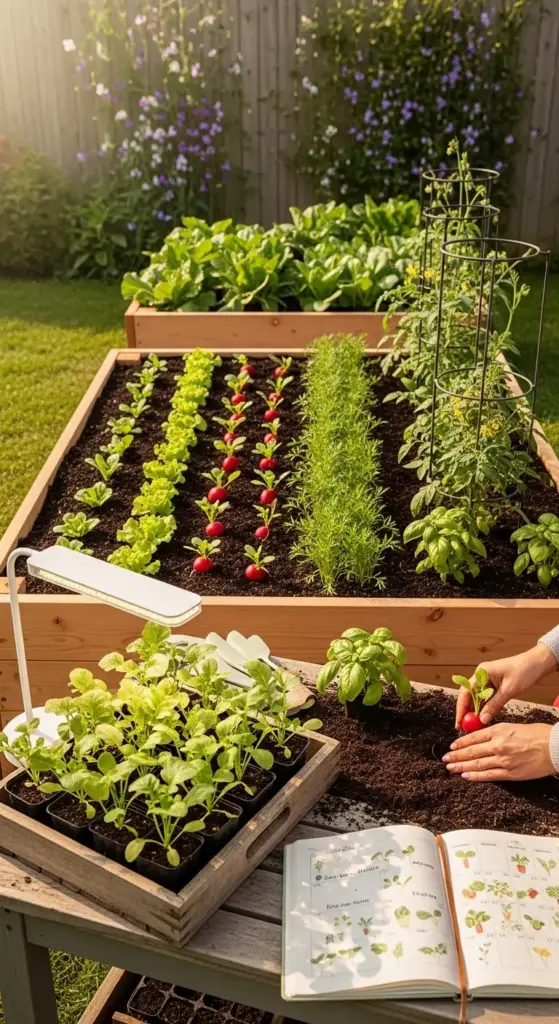
- Radishes between carrot rows
- Lettuce around young tomato plants
- Spinach near peppers
The fast crops are harvested before the slow ones need the space.
It’s like using the same real estate twice.
I once grew radishes between my pepper plants.
By the time the peppers got big, the radishes were already eaten.
No wasted space.
No empty soil.
These smart planting strategies don’t require more land or expensive tools.
Just a little planning and some patience.
Once I started using them, my small garden felt twice as productive.
And honestly, it made gardening more fun too.
In the next section, we’ll look at garden design tips that blend beauty and productivity, so your vegetable garden isn’t just useful… it’s gorgeous too.
Click the “next” button below to see how to turn your garden into a space you actually love spending time in. 🌸


GIPHY App Key not set. Please check settings