

 The Home Growns
7 High-Yield Layouts for Small Vegetable Gardens
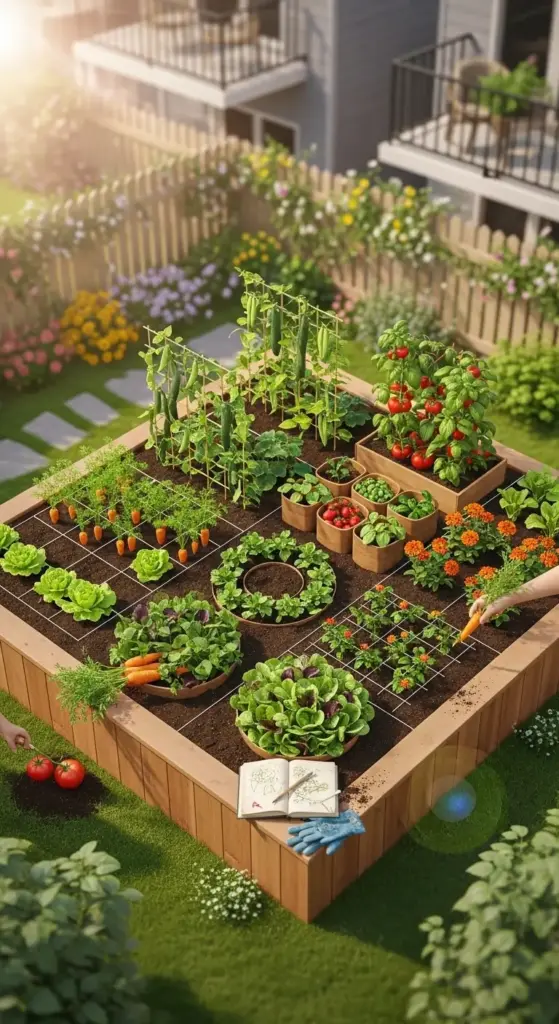
When I first started small space gardening, I thought layout didn’t matter much.
I just planted wherever there was room and hoped for the best.
That first season was chaos.
Tomatoes shaded my lettuce, cucumbers took over the peppers, and my carrots were so crowded they came out looking like twisted little fingers.
It wasn’t until I tried a structured high-yield garden layout that things finally started to click.
Same space, same seeds… but almost double the harvest.
Here are the seven layouts that actually worked for me, with all the little lessons learned along the way.
1. Square Foot Gardening Layout
The first time I tried square foot gardening, it felt like organizing a tiny kitchen pantry.
Everything had its place.
You divide the bed into 1×1 foot grids, and each square gets a specific crop.
It makes spacing super easy.
In my first grid, I planted:
- 16 carrots in one square
- 4 lettuce heads in another
- A patch of basil in the corner
It looked neat, and harvesting was oddly satisfying.
Like checking boxes off a to-do list.
This layout is great for:
- Lettuce
- Carrots
- Radishes
- Herbs
It really maximizes plant spacing efficiency.
And beginners tend to love the structure.
2. Vertical Garden Layout
Vertical growing changed everything for my small vegetable garden.
I didn’t realize how much space was being wasted on the ground.
One season, I added a trellis for cucumbers.
Same bed, same plants, but the yield nearly doubled.
Good crops for a vertical garden:
- Cucumbers
- Peas
- Pole beans
- Indeterminate tomatoes
I also hung a few planters with strawberries and herbs.
It looked cute, and the patio suddenly felt like a little green wall.
Vertical setups save ground space and improve airflow.
Fewer pests, fewer diseases… and way easier harvesting.
3. Raised Bed Intensive Planting
This layout is all about close spacing and companion planting.
Plants grow tightly together, almost like a living mulch.
My first intensive raised bed garden had tomatoes, basil, and onions all packed into a 4×4 space.
I was nervous it was too crowded.
But the soil stayed moist longer.
And weeds barely showed up.
Benefits I noticed:
- Better soil moisture retention
- Fewer weeds
- Higher yields per square foot
It felt messy at first, but the results were hard to argue with.
4. Container Cluster Layout
This one saved my garden during a move.
All I had was a small patio and a bunch of pots.
So I grouped my container garden by sunlight needs.
Sun-loving plants on one side, shade-tolerant ones on the other.
My setup looked like this:
- Tomatoes and peppers in the sunniest corner
- Lettuce and herbs near the wall
- A few strawberries in hanging pots
The best part?
Everything was portable.


When the weather got weird, pots were moved around.
It wasn’t elegant, but it worked.
5. Keyhole Garden Design
I built a small keyhole garden once out of curiosity.
It looked like a circular raised bed with a compost basket in the center.
Kitchen scraps were dropped into the middle.
The nutrients slowly fed the surrounding plants.
Honestly, I didn’t expect much.
But that bed produced the biggest zucchini I’d ever grown.
The design is great because:
- It recycles nutrients naturally
- Water gets distributed evenly
- It looks like a decorative garden feature
Neighbors kept asking about it.
It definitely stood out.
6. Salad Bowl Garden Layout
This is one of the easiest beginner garden layouts.
And probably the most rewarding.
You plant leafy greens very close together, almost like a living salad bowl.
Then you harvest small amounts at a time.
My first salad bowl garden had:
- Butterhead lettuce
- Arugula
- Spinach
- Kale
Within three weeks, I was harvesting enough for fresh salads every few days.
It felt like free groceries.
This layout works best in:
- Spring
- Fall
- Cooler climates
And it’s perfect if you want quick wins.
7. Companion Planting Grid
This layout focuses on plant partnerships.
Certain crops help each other grow better.
I once planted tomatoes alone in a bed.
They did okay, but pests were a constant issue.
The next season, I used a companion planting grid:
- Tomatoes with basil
- Marigolds along the edges
- Carrots tucked between rows
The difference was noticeable.
Fewer pests, healthier plants, and better flavor too.
Companion planting helps:
- Improve plant health
- Reduce pest pressure
- Maximize yield in small spaces
It’s like giving your plants a team instead of making them work solo.
Each of these high-yield vegetable garden layouts has its own personality.
Some are neat and structured, others feel more natural and relaxed.
The best one is the one that fits your space and your style.
There’s no perfect system, just the one that works for you.
In the next section, we’ll talk about smart planting strategies that keep your garden producing all season long.
Click the “next” button below to learn how to harvest more without adding extra space. 🌿


GIPHY App Key not set. Please check settings