

 The Home Growns
Organic Garden Care Tips to Prevent Pest Infestations
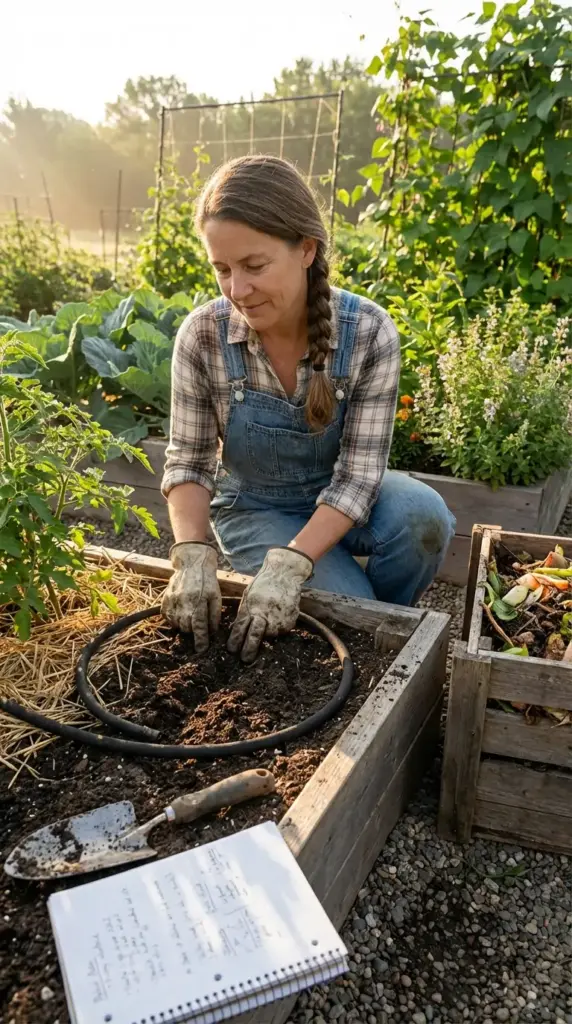
Here’s the mindset shift that changed everything for me as a gardener.
I used to think about pest control as something you do after the problem shows up. Bug appears, grab the spray, deal with it. Rinse and repeat all season long.
It was exhausting. And honestly, I was always one step behind.
The real turning point came when I stopped thinking about pest control as a reaction and started thinking about it as a system. A set of ongoing habits that make your garden so healthy and resilient that pests simply have a harder time getting a foothold in the first place.
Prevention isn’t glamorous. But it works.
Healthy Soil = Healthy Plants = Fewer Pests
This is the foundation of everything in organic gardening — and it’s the concept that took me the longest to fully appreciate.
Here’s the basic idea: healthy plants have stronger immune systems. Just like humans, plants that are well-nourished and growing in optimal conditions are significantly better at resisting pest attacks and recovering from damage.
Stressed plants, on the other hand, are basically sending out a dinner invitation to every pest in the neighborhood.
When a plant is struggling — whether from poor soil, nutrient deficiency, or compacted roots — it produces higher levels of simple sugars and amino acids in its tissue. And pests, particularly aphids and spider mites, are highly attracted to these compounds. They can literally sense a weakened plant.
So the single best thing you can do for pest prevention is invest in your soil.
Here’s what healthy soil actually looks like:
- Rich in organic matter — aim for soil that’s dark, crumbly, and smells earthy
- Teeming with microbial life — beneficial bacteria and fungi that support plant root health
- Well-draining but moisture-retentive — not waterlogged, not bone dry
- pH balanced for your specific plants — most vegetables thrive in a pH of 6.0 to 7.0
Get your soil tested. I know it sounds like extra work, but a basic soil test from your local cooperative extension office costs around $15 to $20 and tells you exactly what your soil needs. It’s one of the best investments I’ve made in my garden.
Building Soil Health the Organic Way
You can’t pour synthetic fertilizer on depleted soil and expect healthy plants. That’s like eating nothing but fast food and wondering why you feel terrible.
Real soil health is built over time, through consistent organic practices.
Top dress with compost regularly. Adding 2 to 3 inches of finished compost to your garden beds each season feeds the soil microbiome, improves drainage, and slowly builds the kind of rich, living soil that produces genuinely resilient plants. I do this every spring before planting and again in fall as a protective layer.
Use organic fertilizers instead of synthetic ones. Synthetic fertilizers deliver a quick hit of nutrients — mostly nitrogen — that causes rapid, soft growth. That soft new growth is exactly what aphids and mites target first. Organic fertilizers like fish emulsion, kelp meal, and worm castings release nutrients slowly, producing stronger, more pest-resistant plant tissue.
Stop tilling so much. I know tilling feels productive, but excessive tilling destroys the fungal networks in your soil — called mycorrhizae — that help plants absorb nutrients and water more efficiently. Less tilling means a healthier underground ecosystem, which translates directly to healthier plants above ground.
Watering Habits That Discourage Pests and Fungal Growth
How you water your garden has a massive impact on pest and disease pressure — and most people are doing it in a way that’s actively making things worse.
Overhead watering — using a sprinkler or watering can from above — is one of the biggest contributors to fungal disease in home gardens. When leaves stay wet for extended periods, you’re creating the perfect environment for powdery mildew, black spot, botrytis, and other fungal issues that weaken plants and make them more vulnerable to pest attack.
The better approach: water at the base of plants, not the foliage.
- Use a soaker hose or drip irrigation system to deliver water directly to the root zone
- If you’re hand watering, use a watering wand and direct the flow to the soil, not the leaves
- Water in the morning so any moisture that does splash onto leaves has time to dry before evening — wet leaves overnight is a recipe for fungal problems
How much and how often matters too.
Most vegetables need about 1 inch of water per week — but they do better with deep, infrequent watering than shallow, frequent watering. Deep watering encourages roots to grow down into the soil, making plants more drought-resistant and structurally stronger.
Shallow watering keeps roots near the surface, where they’re more vulnerable to heat stress, soil compaction, and — you guessed it — pests like fungus gnat larvae that live in the top layer of soil.
A simple trick I use: Stick your finger 2 inches into the soil. If it’s dry at that depth, it’s time to water. If it’s still moist, wait another day. It sounds basic, but it’s more reliable than any watering schedule.
Mulching, Composting, and Garden Practices That Reduce Vulnerability
Mulch is one of the most underappreciated tools in organic pest prevention — and it does about five different jobs at once.
A 2 to 3 inch layer of organic mulch around your plants:
- Regulates soil moisture — reducing the wet/dry cycles that stress plants
- Suppresses weeds — which compete with your plants for nutrients and can harbor pests
- Moderates soil temperature — keeping roots cooler in summer heat
- Prevents soil splash — which is a major way fungal spores spread from soil to plant leaves
- Slowly breaks down and feeds the soil — adding organic matter over time
Best mulch options for vegetable gardens:


- Straw — light, easy to apply, breaks down well (not hay — hay contains weed seeds)
- Wood chips — excellent for pathways and around perennial plants
- Shredded leaves — free if you have trees, and incredibly nutrient-rich as they decompose
- Grass clippings — great nitrogen source, but apply in thin layers to prevent matting
One thing to watch: Keep mulch 2 to 3 inches away from plant stems. Mulch piled against stems creates a moist, dark environment that slugs, earwigs, and fungal diseases absolutely love. Pull it back slightly and leave a little breathing room around each plant.
Composting is the other half of this equation.
A good compost pile is basically a pest prevention machine — it produces the rich, biologically active material that builds the healthy soil we talked about earlier.
If you’re not composting yet, start simple:
- Browns (carbon): dried leaves, cardboard, straw, wood chips
- Greens (nitrogen): kitchen scraps, fresh grass clippings, garden trimmings
- Aim for roughly a 3:1 ratio of browns to greens
- Keep it moist but not soggy, and turn it every week or two to speed up decomposition
A well-maintained compost pile can produce finished compost in as little as 6 to 8 weeks during warm weather. That’s free, incredibly rich soil amendment that you made from stuff you would have thrown away.
Seasonal Pest Patterns and How to Prepare in Advance
Pests are predictable. Once you’ve gardened through a few seasons, you start to notice that the same problems show up at roughly the same time every year.
That predictability is actually your biggest advantage — because it means you can prepare instead of react.
Here’s a general seasonal pest calendar for most U.S. growing regions:
Early Spring:
- Aphids emerge as soon as new growth appears — start preventative neem oil sprays early
- Fungus gnats peak in cool, moist soil conditions — let soil dry between waterings
- Slugs and snails are most active in cool, wet weather — apply diatomaceous earth around vulnerable seedlings
Late Spring / Early Summer:
- Whiteflies begin establishing colonies — introduce yellow sticky traps early
- Caterpillar eggs are being laid on brassica leaves — inspect undersides weekly and apply Bt at first sign of larvae
- Flea beetles attack seedlings aggressively — use row covers on young transplants
Midsummer:
- Spider mites explode in hot, dry conditions — this is their peak season, especially in cities like Dallas and Atlanta
- Japanese beetles emerge and feed heavily — hand-pick in early morning
- Squash vine borers attack cucurbits — use row covers until flowering, then remove for pollination
Late Summer / Fall:
- Aphid populations often spike again as temperatures cool
- Fungus gnats return as fall rains increase soil moisture
- Powdery mildew pressure increases as nights get cooler and days stay warm
Mark these windows on your calendar and start your preventative spray routine two weeks before each expected pest surge. You’ll be amazed at how much easier the season feels when you’re ahead of the problem instead of chasing it.
Keeping a Garden Journal to Track Pest Activity and Spray Effectiveness
This is the habit that separates good gardeners from great ones — and I’ll be honest, it took me way too long to start doing it.
A garden journal doesn’t have to be fancy. Mine started as a cheap spiral notebook I kept on the potting bench. Now I use a combination of a notebook and photos on my phone, but the format doesn’t matter. What matters is that you’re recording what’s happening in your garden over time.
What to track in your garden journal:
- Date and weather conditions when you spray — this helps you understand how rain, heat, and humidity affect your results
- Which pests you spotted, where they were, and how severe the infestation was on a simple 1 to 5 scale
- Which spray you used and at what dilution
- Results after 3 to 7 days — did the pest population decrease, stay the same, or get worse?
- What companion plants are in bloom and whether you notice more beneficial insect activity
- Any new pest damage you haven’t seen before — a quick photo and a note helps you identify it later
Why this matters for pest prevention:
After two or three seasons of journaling, you’ll have a personalized pest map of your own garden — which beds are most vulnerable, which plants attract the most problems, which sprays work best for your specific conditions.
That information is worth more than any generic gardening advice, including this article. Because your garden, your climate, and your specific pest pressure is unique to you.
One more journaling tip that’s been a game changer for me:
At the end of each growing season, spend 20 minutes doing a season review. Go back through your journal entries and ask yourself:
- What were my three biggest pest problems this year?
- What worked well and what didn’t?
- What would I do differently starting next spring?
Write those answers down and put them somewhere you’ll see them in February — when you’re starting to plan next season’s garden. That little habit has saved me from repeating the same mistakes year after year.
You’ve now got a complete organic pest prevention system — from healthy soil and smart watering to seasonal preparation and spray schedules.
But there’s one more important topic we need to cover before you’re fully equipped. In the next section, we’re talking about keeping your homemade sprays safe around kids, pets, and sensitive plants — because even natural ingredients need to be handled with care.
👉 Hit the Next button below — because knowing what to watch out for is just as important as knowing what works. 🌱🛡️

GIPHY App Key not set. Please check settings