

 The Home Growns
How to Apply Natural Bug Spray for Maximum Effectiveness
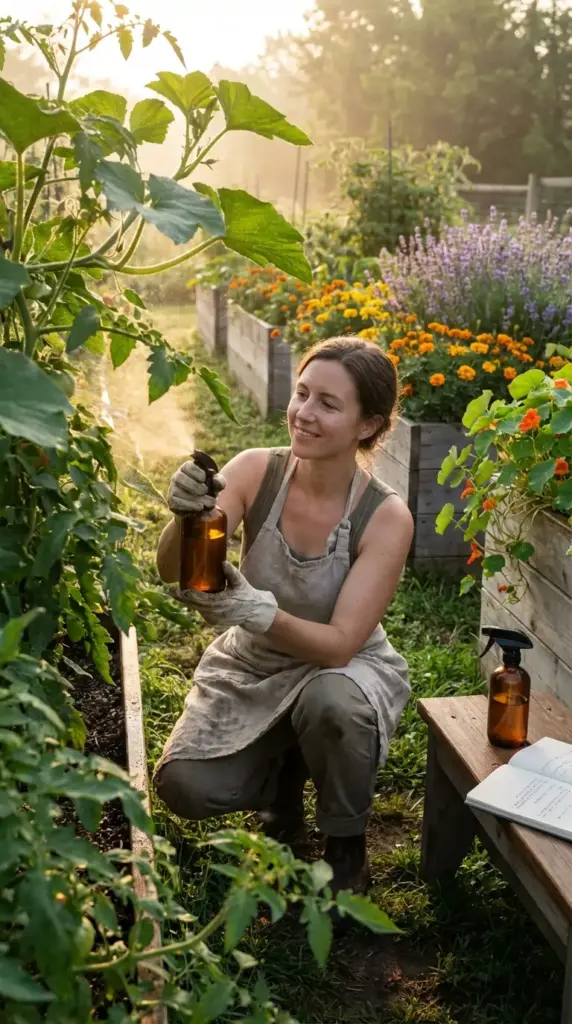
You can have the best homemade spray in the world and still get mediocre results.
I know because that was me for an embarrassingly long time. I was mixing up solid batches of neem oil spray, walking out to my garden, and just… spraying randomly. Top of the leaves, middle of the day, whenever I remembered to do it.
The results were underwhelming, to say the least.
It wasn’t until I got more intentional about the how and when that everything clicked. And honestly, the difference was night and day.
The Best Time of Day to Spray (This Matters More Than You Think)
Timing your spray application is probably the single most impactful thing you can do to improve results.
And most people get this wrong.
Spraying in the middle of the day — especially in direct sunlight — is one of the most common mistakes I see. Here’s why it’s a problem:
Heat and sunlight break down the active compounds in your spray before they even have a chance to work. Neem oil degrades rapidly in UV light. Essential oils evaporate almost instantly in high heat. And soap sprays can literally cook onto your leaves, causing phytotoxicity — which is just a fancy word for chemical leaf burn.
The two best windows for spraying are:
- Early morning, between 6am and 9am — temperatures are cool, there’s often a light dew on leaves that helps sprays adhere, and beneficial insects like bees are not yet fully active
- Early evening, after 5pm or 6pm — the sun is low, temperatures are dropping, and your spray has all night to work without evaporating
I personally prefer early morning. There’s something really peaceful about being out in the garden before the day gets busy, and I find I’m more thorough when I’m not rushing.
Always Target the Undersides of Leaves
If you’re only spraying the tops of leaves, you’re missing where most pests actually live.
This was a huge revelation for me. Aphids, spider mites, whiteflies — they all prefer the undersides of leaves. It’s shadier, more humid, and protected from rain and predators. Basically a five-star resort for garden pests.
Flipping leaves and spraying the undersides feels tedious at first. But once you make it a habit, it becomes second nature.
A few tips that make this easier:
- Use a spray bottle with an adjustable nozzle that you can angle upward — this lets you spray undersides without contorting yourself
- For larger plants, get low and look up through the canopy to spot clusters of pests before you spray
- Pay extra attention to new growth — the soft, tender leaves at the tips of stems are where aphids and mites congregate first
I once spent 20 minutes spraying a tomato plant from above, wondering why the aphids weren’t dying. Then I flipped a single leaf and found hundreds of them just hanging out, completely untouched. Never made that mistake again.
How Often Should You Reapply?
Consistency is everything with natural sprays — and this is where a lot of people give up too soon.
Unlike synthetic pesticides that can linger for weeks, homemade sprays break down quickly. That’s actually one of their biggest advantages for the environment — but it does mean you need to stay on top of reapplication.
Here’s the general schedule I follow:
- Preventative maintenance: Once every 7 to 10 days during active growing season
- Active infestation: Every 3 to 4 days until the problem is under control, then drop back to weekly
- After rain: Reapply within 24 hours — rain washes everything off, no matter how well it was applied
- After heavy dew: A light reapplication is a good idea, especially for neem oil sprays
Set a reminder on your phone. I’m serious. It sounds silly, but garden spray schedules are easy to forget when life gets busy, and skipping even one or two applications during an active infestation can let the pest population bounce right back.


Spot-Treating vs. Full Garden Application
Knowing when to spot-treat and when to go full coverage can save you a lot of time and spray.
Spot-treating means targeting only the affected plants or sections of your garden. This is the right approach when:
- You’ve caught an infestation early, before it spreads
- Only one or two plants are showing damage
- You’re dealing with a localized pest like a cluster of aphids on a single stem
Full garden application makes more sense when:
- You’re doing preventative maintenance at the start of the season
- A pest has spread across multiple beds or plant types
- You’re dealing with flying insects like whiteflies or fungus gnats that move freely between plants
I usually do a full application at the beginning and end of each growing season as a reset, then spot-treat as needed throughout. It keeps things manageable without wasting product.
Combining Sprays With Companion Planting for a Layered Defense
Natural sprays work even better when you pair them with companion planting — and this combination is honestly one of the most satisfying parts of organic gardening.
The idea is simple: certain plants naturally repel specific pests, so planting them strategically around your garden creates a living barrier that works 24/7, even when you’re not spraying.
Some of my favorite pest-repelling companion plant pairings:
- Marigolds planted around tomatoes and peppers → repel aphids, whiteflies, and nematodes
- Basil planted near tomatoes → deters thrips, aphids, and tomato hornworms
- Lavender along garden borders → repels moths, fleas, and flies while attracting beneficial pollinators
- Nasturtiums used as a trap crop → aphids love nasturtiums and will flock to them instead of your vegetables, making them easy to spot-treat
Think of companion plants as your passive defense layer and your homemade sprays as your active response team. Together, they create a system that’s genuinely hard for pests to overcome.
Tools and Equipment: What You Actually Need
You don’t need fancy equipment to apply natural bug sprays effectively. But having the right tools does make a real difference in coverage and consistency.
Here’s what I actually use and recommend:
For small gardens and container plants: A 32-ounce trigger spray bottle with an adjustable nozzle is all you need. Look for one with a comfortable grip if you’re spraying for more than a few minutes — your hand will thank you. Brands like Chapin or Solo make solid, inexpensive options that hold up well to regular use.
For medium to large garden beds: A 1 to 2 gallon handheld pump sprayer is a game changer. You pressurize it with a few pumps, and it delivers a consistent, fine mist that covers a lot of ground quickly. Chapin’s 1-gallon poly sprayer runs about $15 to $20 and is a workhorse. This is what I use for my neem oil applications because it gives me much better coverage than a trigger bottle.
For larger properties or raised bed setups: A backpack sprayer is worth the investment if you’re covering serious ground. They typically hold 4 gallons and distribute the weight evenly so your arm doesn’t give out halfway through. Expect to spend $40 to $80 for a decent one.
A few equipment tips I’ve learned the hard way:
- Rinse your sprayer thoroughly after every use — especially after neem oil or garlic sprays. Residue left in the tank can clog the nozzle or contaminate your next batch
- Label your spray bottles with the contents and date — you do not want to accidentally spray your seedlings with full-strength vinegar solution
- Use separate sprayers for different spray types if you can — keeping your neem oil sprayer separate from your soap sprayer prevents cross-contamination
- Check your nozzle setting before you spray — a stream setting wastes product and doesn’t give you the fine coverage you need. You want a fine mist for most applications
You’re building a really solid organic pest control system now — and we’re not done yet.
In the next section, we’re talking about one of the most beautiful and effective strategies in organic gardening: companion planting. We’ll go deep on which plants repel which pests, how to design your garden beds around them, and how to make your garden look gorgeous while keeping bugs at bay.
👉 Hit the Next button below — because a well-designed garden that fights its own pests? That’s the dream, and it’s totally achievable. 🌸🌿

GIPHY App Key not set. Please check settings