

 The Home Growns
Step-by-Step Recipes: How to Make Natural Bug Spray at Home
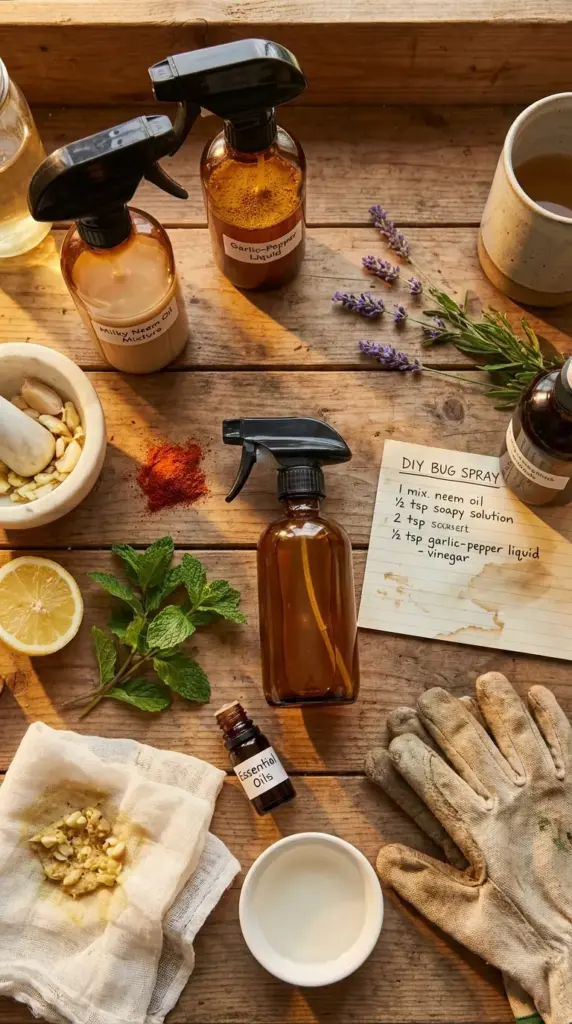
Okay, this is the section I wish I had when I first started making my own sprays.
I wasted so much time guessing at ratios, burning leaves with stuff that was too concentrated, and making batches that separated the second I stopped shaking them. So let me save you all of that frustration right now.
Recipe #1: Basic Soap and Water Spray (For Aphids and Mites)
This is your starter recipe — simple, fast, and surprisingly effective.
It takes about two minutes to make and works almost immediately on soft-bodied insects like aphids, spider mites, and whiteflies.
What you need:
- 1 to 2 teaspoons of pure liquid dish soap (Dawn original or Dr. Bronner’s castile soap)
- 1 quart of lukewarm water
- A clean spray bottle
How to make it: Add the soap to the water — not the other way around — to avoid creating a mountain of bubbles. Stir gently and pour into your spray bottle.
How to use it: Spray directly onto affected leaves, making sure to coat the undersides of leaves where aphids and mites like to hide. Leave it on for a few hours, then rinse with plain water to avoid any soap buildup.
Repeat every 4 to 7 days until the infestation clears up. I usually see results within the first two applications.
Recipe #2: Garlic and Pepper Spray (For a Wide Range of Pests)
This one is my personal go-to for general pest prevention. It smells intense, but it works on everything from beetles to caterpillars to aphids.
What you need:
- 4 to 6 cloves of fresh garlic, minced or crushed
- 1 tablespoon of cayenne pepper or hot sauce
- 1 teaspoon of dish soap
- 2 cups of water for steeping
- 1 additional quart of water for dilution
How to make it: Blend the garlic and cayenne with the 2 cups of water until smooth. Let the mixture steep overnight — this is important. The longer it steeps, the more potent it gets.
Strain it really well through a cheesecloth or fine mesh strainer. Leftover garlic chunks will clog your spray bottle, and trust me, that’s annoying to deal with mid-spray.
Add the strained liquid to your quart of water, mix in the dish soap, and pour into your spray bottle.
How to use it: Apply every 5 to 7 days, and always reapply after rain. Wear gloves — the cayenne will linger on your hands longer than you’d expect. 🌶️
Recipe #3: Neem Oil Emulsion Spray (The Heavy Hitter)
This is the most powerful recipe in this whole list. If you’ve got a serious infestation or you want a spray that works on multiple levels — killing on contact, disrupting reproduction, and preventing larvae from maturing — neem oil is your answer.
What you need:
- 2 teaspoons of cold-pressed neem oil
- 1 teaspoon of pure liquid dish soap or castile soap (this is your emulsifier)
- 1 quart of warm water (not hot — heat degrades the azadirachtin)
How to make it: This step is crucial and where most people mess up. Mix the neem oil and dish soap together first in a small bowl before adding water. This pre-emulsification step helps the oil actually blend into the water instead of just floating on top.
Then slowly add your warm water while stirring continuously. Pour into your spray bottle and shake before every single use — neem oil separates fast.
How to use it: Apply in the early morning or evening — never in direct midday sun. Neem oil can magnify sunlight and cause leaf burn if applied during peak heat. Spray the entire plant, including stems and soil surface, to target pests at every life stage.
Use once a week as a preventative, or every 3 days during an active infestation.


Recipe #4: Essential Oil Bug Spray Blend (Smells Amazing, Works Even Better)
This one is my favorite to make because honestly, it makes the whole garden smell incredible.
It’s especially effective against mosquitoes, gnats, flies, and ants — and it’s gentle enough to use around kids and pets once it dries.
What you need:
- 10 drops of peppermint essential oil
- 10 drops of lavender essential oil
- 5 drops of eucalyptus essential oil
- 5 drops of tea tree essential oil
- 1 teaspoon of dish soap or castile soap
- 1 quart of water
How to make it: Combine the essential oils with the soap first — just like the neem oil recipe, this helps them blend into the water more evenly. Add your quart of water, shake well, and you’re good to go.
Rotate your oil combinations every few weeks to prevent insects from adapting. Swapping peppermint for rosemary or adding a few drops of cedarwood oil keeps things unpredictable for pests.
How to use it: Spray around the perimeter of your garden beds, on plant stems, and along any entry points where ants or crawling insects tend to appear. Reapply every 5 to 7 days or after rain.
Recipe #5: Vinegar-Based Spray (For Ants and Soil Pests)
White vinegar is one of the best tools for disrupting ant trails and deterring soil-dwelling pests — but it needs to be used carefully around plants.
What you need:
- 1 part white vinegar
- 3 parts water
- 1 teaspoon of dish soap
- Optional: 5 drops of peppermint oil for extra ant-repelling power
How to make it: Mix everything together in your spray bottle. Simple as that.
How to use it: Avoid spraying this directly on plant leaves or stems — the acidity can cause damage, especially on more delicate plants. Instead, spray it on the soil surface, garden borders, pots, and pathways where ants and crawling pests travel.
For fungus gnats, pour a small amount of apple cider vinegar into a shallow dish, add a drop of dish soap, and place it near affected plants. The gnats are attracted to the smell and get trapped in the liquid. I’ve caught dozens overnight with this trick.
Dilution Tips: How to Avoid Burning Your Plants
Over-concentration is the number one mistake beginners make with homemade sprays. I’ve scorched more than a few leaves learning this lesson.
Here are the rules I follow now:
- Always start with the lowest concentration and increase only if needed
- Test on one or two leaves first and wait 24 hours before spraying the whole plant
- Avoid spraying stressed or drought-affected plants — they’re more sensitive to everything
- Never apply any spray in direct sunlight — early morning or evening only
- Rinse plants with plain water a few hours after applying soap-based sprays to prevent residue buildup
How to Store Homemade Sprays (And How Long They Actually Last)
Homemade sprays don’t have preservatives, so they don’t last forever. This is something a lot of people don’t think about until their spray starts smelling funky.
Here’s a general shelf life guide:
- Soap and water spray: Use within 1 to 2 weeks, stored in the fridge
- Garlic and pepper spray: Best used within 1 week — it ferments fast
- Neem oil spray: Use within 8 hours of mixing — neem oil degrades quickly once diluted
- Essential oil spray: Lasts up to 2 to 4 weeks if stored in a cool, dark place
- Vinegar spray: Most stable — lasts up to 4 weeks at room temperature
Always store sprays in dark glass or opaque bottles when possible. Light degrades the active compounds, especially in essential oils and neem oil. Label everything with the date you made it — future you will be very grateful.
You’ve got the recipes. You’ve got the ingredients. But do you know which bugs each spray works best against?
In the next section, we’re breaking down exactly which pests are terrorizing your garden and which natural spray will stop them in their tracks — because not every bug responds to the same treatment.
👉 Hit the Next button below — because spraying the wrong thing on the wrong pest is just wasting your time and your homemade spray! 🐛🌿



GIPHY App Key not set. Please check settings