

 The Home Growns
The Household Ingredients That Actually Repel Bugs
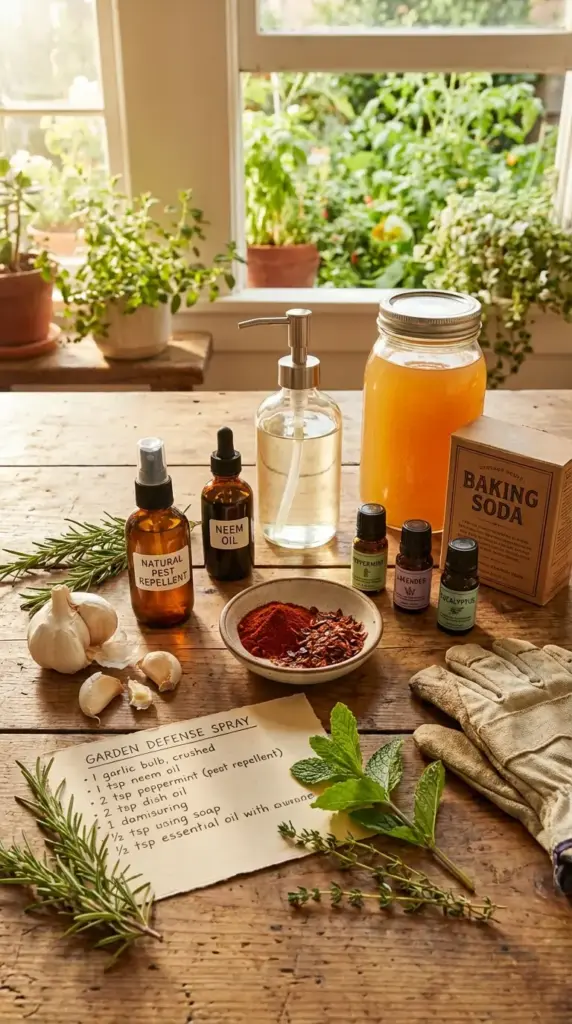
I remember standing in my kitchen one afternoon, staring at a cabinet full of random stuff — garlic, dish soap, some essential oils my sister gave me — thinking, there’s no way this is going to work.
Spoiler: it absolutely did. And now I’ll never go back to the chemical stuff.
Dish Soap: The Simplest Weapon You Already Own
Dish soap is probably the most underrated pest control tool in existence. And it works in a way that’s almost satisfying once you understand it.
Insects like aphids, spider mites, and whiteflies have a waxy, protective outer layer called a cuticle. When dish soap makes contact with that layer, it breaks it down — essentially causing the bug to dehydrate and die.
A simple mix of 1 to 2 teaspoons of pure liquid dish soap per quart of water is all you need. Just make sure you’re using a soap without added degreasers or bleach — those can burn your plants. Dawn original or castile soap like Dr. Bronner’s work great.
Garlic: Nature’s Most Powerful Pest Deterrent
Okay, garlic is seriously no joke in the garden.
Garlic contains a compound called allicin, which is released when it’s crushed or blended. That sharp, pungent smell is basically unbearable to most insects — and even some larger pests like deer and rabbits.
To make a basic garlic spray, blend 4 to 6 cloves of garlic with 2 cups of water, let it steep overnight, strain it well, and dilute it into a quart of water before spraying. The smell is intense. Fair warning — your garden will smell like an Italian restaurant for a day or two.
But honestly? Worth it. I’ve used this on my pepper plants and the difference was noticeable within a week.
White Vinegar and Apple Cider Vinegar: Double Trouble for Pests
Vinegar is one of those ingredients that does a little bit of everything. It’s acidic, it disrupts the scent trails that ants use to navigate, and it can deter a wide range of soft-bodied insects.
White vinegar works best for direct pest contact, while apple cider vinegar is great for trapping fungus gnats — just pour a small amount into a shallow dish, add a drop of dish soap, and watch it work overnight.
One important thing I learned the hard way: never spray straight vinegar directly on your plants. It’s acidic enough to damage or kill leaves. Always dilute it — about 1 part vinegar to 3 parts water is a safe starting point.
Neem Oil: The Gold Standard of Organic Pest Control
If I had to pick just one ingredient to keep in my organic gardening toolkit, it would be neem oil — no contest.
Neem oil comes from the seeds of the neem tree and contains an active compound called azadirachtin. This stuff is remarkable. It doesn’t just kill bugs on contact — it disrupts their hormonal system, preventing larvae from maturing and adults from reproducing. It essentially breaks the pest life cycle.


A standard neem oil spray is made with 2 teaspoons of neem oil, 1 teaspoon of dish soap, and 1 quart of warm water. The soap acts as an emulsifier to help the oil mix with the water. Shake it well before every use.
It’s effective against over 200 species of insects, including aphids, whiteflies, fungus gnats, and even some caterpillars. And it’s completely safe for bees once it dries — which is a huge deal for me.
Essential Oils: Small Bottles, Big Pest-Fighting Power
I’ll admit, I was skeptical about essential oils in the garden at first. It felt a little too Pinterest-y for me.
But the science is actually solid. Peppermint oil contains menthol, which overwhelms the sensory receptors of insects like ants, aphids, and beetles. Lavender oil repels moths, fleas, and flies. Eucalyptus is particularly effective against mosquitoes and gnats. And tea tree oil has both insecticidal and antifungal properties — so it pulls double duty.
A good all-purpose essential oil spray uses about 10 to 15 drops of your chosen oil per quart of water, with a teaspoon of dish soap to help it blend. Rotate between different oils to prevent pests from building up a tolerance — yes, that’s actually a thing.
Cayenne Pepper and Chili Flakes: Hot Stuff for Crawling Pests
Capsaicin — the compound that makes peppers hot — is a powerful natural insect deterrent. It irritates the digestive systems and sensory organs of crawling insects like ants, beetles, and caterpillars.
You can use it two ways: sprinkle dried chili flakes or cayenne powder directly around the base of your plants, or mix about 1 tablespoon of cayenne pepper per quart of water and spray it on leaves. Reapply after rain since it washes off pretty easily.
Just be careful when you’re mixing this one. I made the mistake of doing it without gloves once. My hands burned for hours. Learn from me on that one. 😅
Baking Soda: The Unsung Hero Against Fungal Issues
Baking soda doesn’t get nearly enough credit in the organic gardening world. It’s not primarily an insect repellent — but it’s incredibly effective against soft-bodied pests like mealybugs and against fungal diseases like powdery mildew and black spot.
The reason it works is simple: baking soda raises the pH on the surface of leaves, creating an environment where fungal spores and soft-bodied insects simply can’t survive.
Mix 1 teaspoon of baking soda with 1 quart of water and a few drops of dish soap. Spray it on affected leaves, focusing on both sides. Don’t overdo it though — too much baking soda can actually stress your plants and affect soil pH over time. Once or twice a week is plenty.
Now that you know what’s in your arsenal, the real fun begins. In the next section, we’re getting into step-by-step recipes for making your own natural bug sprays at home — exact measurements, mixing tips, and which recipe works best for which pest.
👉 Click the Next button below — because knowing your ingredients is one thing, but knowing how to combine them? That’s where the magic happens. 🌿



GIPHY App Key not set. Please check settings