

 The Home Growns
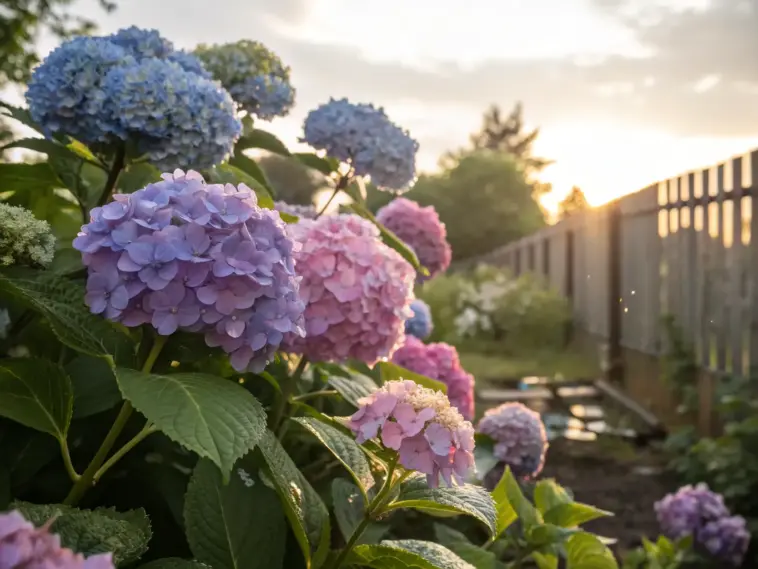
I still remember the first time I saw those giant, cloud-like hydrangea blooms at a friend’s Brooklyn brownstone garden party—they stopped me mid-sip! 😍
Did you know hydrangeas have been gracing gardens since the 1700s, yet they’re surprisingly easy for beginners to grow?
Whether you’re dreaming of a cottage-core backyard in Seattle, a chic patio garden in LA, or wedding-worthy blooms for your Atlanta home, these versatile shrubs deliver maximum wow factor with minimal fuss.
Forget intimidating gardening jargon—we’re breaking down everything from planting to that magical color-changing trick (yes, you can turn pink blooms blue!) in simple, joyful steps.
Let’s grow something beautiful together!
Choosing the Perfect Hydrangea Variety for Your Space
Let me tell you about my first hydrangea disaster. I bought a gorgeous pink mophead at a Brooklyn nursery without asking a single question.
Planted it in full afternoon sun on my tiny patio. By August? Crispy brown leaves and exactly zero blooms.
Turns out hydrangeas aren’t one-size-fits-all. Who knew?
The Big Five Types You Actually Need to Know
Mopheads are what most people picture—those big, round pom-pom blooms. They’re divas about heat though. In Dallas or Atlanta summers, they’ll wilt by noon if not shaded.
Lacecaps look more delicate with flat flower clusters. Honestly, I think they’re underrated! They handle partial shade beautifully under DC’s mature oak trees.
Panicle hydrangeas saved my Midwest gardening soul. These tough cookies bloom on new wood and laugh at Chicago winters. ‘Limelight’ is my forever favorite—creamy green flowers that age to pink.
Oakleaf hydrangeas earned their spot in my Southern friend’s Atlanta garden. Not just for summer blooms—their fall foliage turns deep burgundy while other hydrangeas look sad and bare.
Smooth hydrangeas like ‘Annabelle’ are the chill beginners’ best friend. They bounce back even after I accidentally whacked mine with a lawnmower. True story.


Matching Varieties to Your Light Situation
Here’s what nobody told me early on: morning sun with afternoon shade is hydrangea heaven. Period.
My Chicago neighbor grows panicles in full sun because their summers stay cooler. But try that in LA? You’ll be watering twice daily while your plants still look thirsty.
If your yard has dappled light under trees—like so many Washington DC properties—go for oakleaf or lacecap varieties. They actually prefer it.
Full shade? You’ll get leaves but few flowers. Learned that the hard way with a sad mophead tucked behind my garage.
Size Really Does Matter (Especially in Cities)
I once squeezed a standard hydrangea into a 4×4 foot corner beside my Philly row home. Big mistake.
Three years later, I was constantly hacking it back while it blocked my kitchen window. Hydrangeas don’t respond well to severe pruning—you’ll sacrifice next year’s blooms.
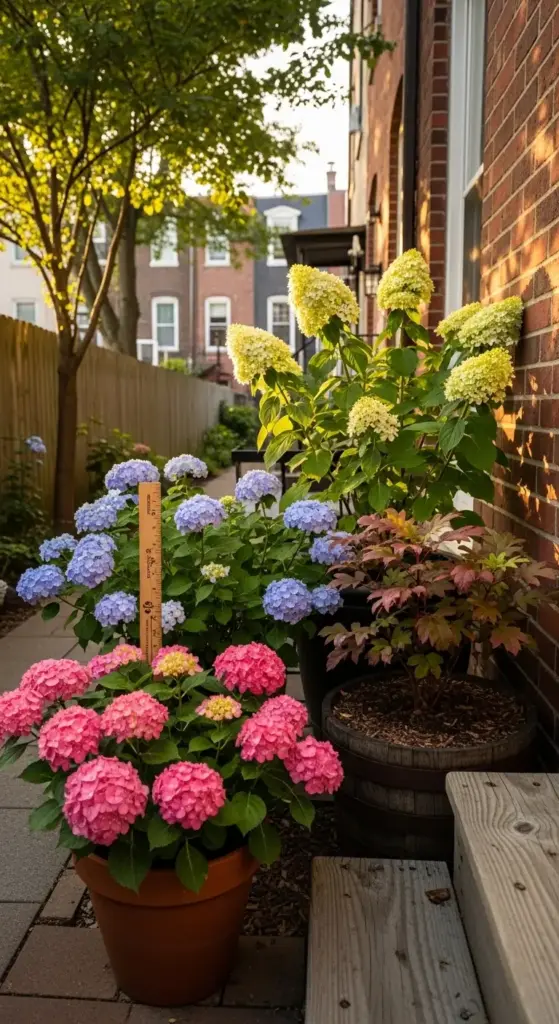
Thank goodness I discovered compact cultivars like ‘Little Lime’ and ‘Cityline Paris’. These stay under 4 feet wide—perfect for townhouse gardens or even large containers on NYC fire escapes.
For apartment dwellers? Dwarf varieties in whiskey barrels on balconies work surprisingly well. Just promise me you’ll check weight limits first. Don’t ask how I know.
Climate Considerations Beyond Hardiness Zones
Everyone obsesses over USDA zones (I’m zone 6b, by the way). But urban heat islands change the game.
My Minneapolis cousin grows panicle hydrangeas that survive -30°F winters. Meanwhile, my Dallas friend battles reflective heat from concrete that cooks roots even in zone 8.
Pro tip: In hot southern cities, mulch heavily and plant where buildings provide afternoon relief. In northern metros, prioritize panicle and smooth types—they handle cold snaps without bud damage.
Honestly? Starting with just one plant in a container lets you test locations before committing to in-ground planting. Which—spoiler alert—is exactly what we’re diving into next. Wait until you see my foolproof trick for avoiding the #1 planting mistake 90% of beginners make…



GIPHY App Key not set. Please check settings