

 The Home Growns
Hyacinth Care Essentials for Lush, Long-Lasting Blooms
I used to murder my hyacinths after they bloomed.
Like, I’d snip the whole plant down the second petals dropped. Thought I was being tidy!
Turns out I was starving next year’s flowers. Oops.
Let me save you from my rookie mistakes.
Watering Without Drowning Them
Stick your finger an inch into the soil before watering.
If it feels dry? Give it a gentle drink. If it’s damp? Walk away. Hyacinths would rather be slightly thirsty than sit in a puddle.
I killed a whole pot my second year by watering on a strict schedule instead of checking the soil. Learned that lesson the soggy way.
Outdoor bulbs usually survive on rain alone in spring—just supplement during weird dry spells. Indoor pots dry out faster near heaters, so check them twice weekly once growth starts.
Fertilizer? Keep It Simple
Honestly, most folks overcomplicate this.
A single sprinkle of bulb fertilizer or bone meal at planting time is plenty. That’s it. No need to fuss over them monthly like houseplants.
I tried feeding mine weekly “for extra blooms” once. Got floppy stems and zero extra flowers. Sometimes less really is more with these guys.
The Deadheading Dance
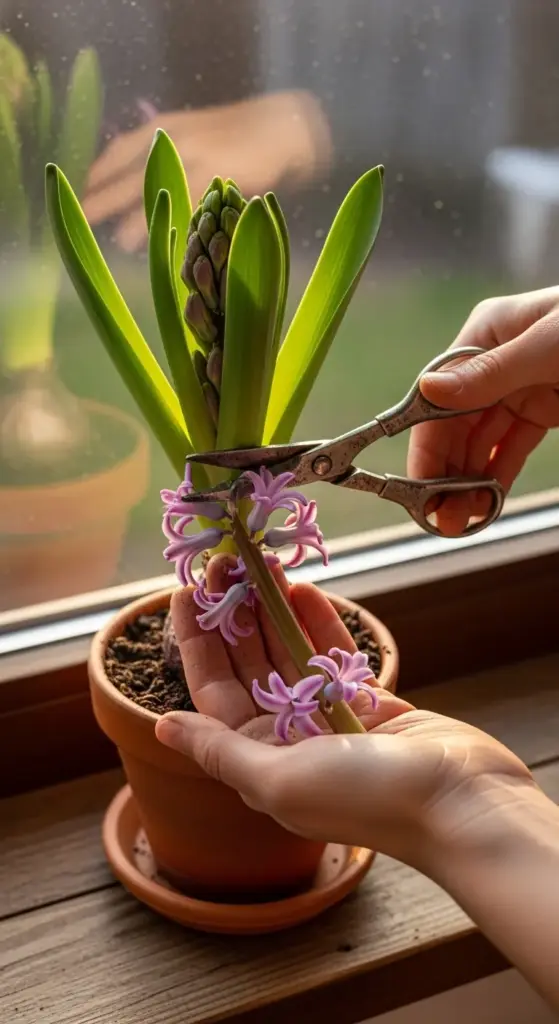
Snip off faded flower spikes the moment they look tired.
Use clean scissors and cut right below the bloom cluster. But leave every single leaf intact—this part is critical.
Those leaves are solar panels recharging your bulb underground. Chop them early and you’re basically canceling next spring’s show.
I tie fading foliage gently with a soft ribbon to keep it tidy while it yellows. Looks intentional instead of messy.


Let Foliage Fade on Its Own Time
This was my biggest “aha” moment.
After blooms fade, leaves need 6–8 weeks to slowly yellow and wither. During that time, they’re pumping energy down into the bulb for next year’s flowers.
I used to feel impatient watching those straggly green leaves linger. Now I tuck low companion planting like creeping thyme around them to hide the fading foliage naturally.
Patience pays off—bulbs cared for this way often multiply over time!
Squirrel Patrol & Aphid Attacks
Squirrels see freshly planted bulbs as all-you-can-eat buffets.
Lay chicken wire over planting areas before adding the final soil layer. It’s invisible once covered but stops digging paws cold. Works like a charm in my Chicago garden.
For aphids clustering on flower stems? A quick spray of soapy water (one teaspoon dish soap per quart of water) knocks them right off. Reapply after rain if needed.
Winter Prep for Cold Climates
If you garden where temps drop below zero, add a 2–3 inch layer of mulch after the ground freezes.
Timing matters—mulch too early and you trap warmth that confuses bulbs. Wait for that first hard frost, then blanket the bed with straw or shredded leaves.
My Minneapolis cousin swears by this trick. Her hyacinths come back stronger every single year despite brutal winters.
Caring for hyacinths isn’t about constant attention—it’s about doing a few simple things at the right moments. Water wisely. Feed once. Deadhead blooms but spare the leaves. Protect from pests. Then step back and let nature do its thing.
Honestly? These flowers ask for so little compared to what they give back.
Ready to style those gorgeous blooms? Next up, I’m sharing my favorite ways to weave hyacinths into your home decor and garden design—from mason jar centerpieces to cottage-core border ideas that’ll make your neighbors stop and stare. 👇


GIPHY App Key not set. Please check settings