

 The Home Growns
Indoor Hyacinth Growing Made Simple
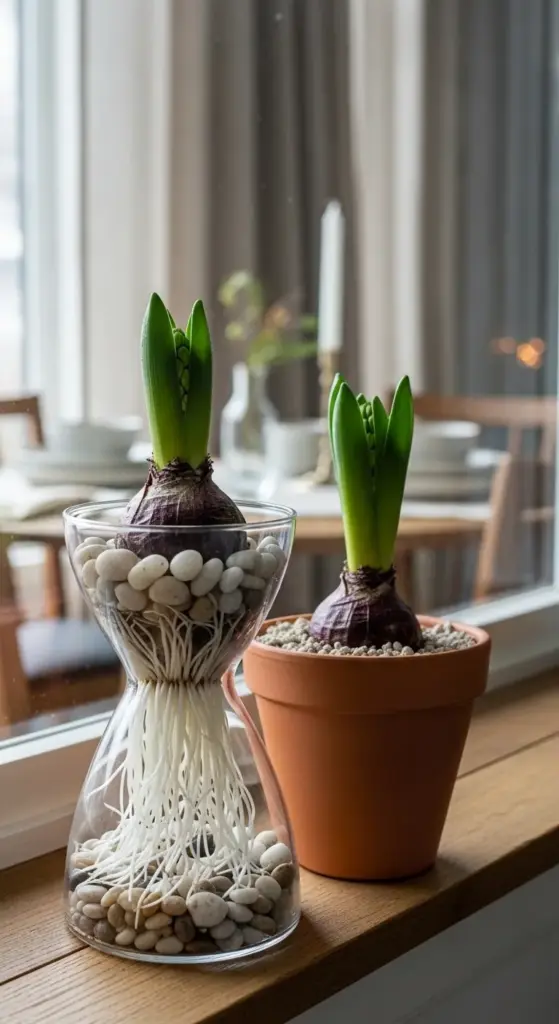
I used to think forcing bulbs indoors required some secret gardener handshake.
Turns out? It’s basically plant magic you can do while binge-watching your favorite show.
Let me walk you through my two favorite methods—the messy soil way and the clean water way. Both work beautifully.
Water Forcing: My Lazy (But Gorgeous) Method
Grab a hyacinth glass—those cute hourglass-shaped jars—or any narrow-necked vase you already own.
Fill the bottom with pebbles or glass marbles for stability. Then nestle your bulb on top so the very base just kisses the water surface. Seriously—don’t let water touch the bulb itself or it’ll rot. Learned that the hard way when my first attempt turned into a mushy science experiment.
Pop it in a dark closet or your fridge for 10–14 weeks. That chilling period is non-negotiable—hyacinths think they’re surviving winter before they’ll bloom.
I check mine every few weeks. When roots look thick and white and a green shoot pokes up 2–3 inches? Time for the big reveal.
Soil Method for Longer-Lasting Blooms
If you want flowers that stick around longer, go the soil route.
Use a pot with drainage holes—trust me, soggy bulbs are sad bulbs. Fill it halfway with a light potting mix (I mix in perlite for extra fluffiness). Place your bulb pointy-end up, then cover with soil leaving just the tippy-top peeking out. About 1 inch of soil over the bulb usually does it.
Water gently until moisture seeps from the bottom. Then—same deal—off to the dark and cold for that crucial chilling period.
Soil-forced hyacinths tend to rebloom slightly better if you plant them outside later. Bonus!


The Big Reveal: Bringing Bulbs Into Light
This part feels like Christmas morning.
After chilling, move your pot or jar to a cool room (around 60°F) with indirect light for 3–4 days. Don’t plop it in a sunny south window immediately—that shock causes leggy growth with weak, floppy stems.
I once rushed this step and ended up with pale, stretched stems that needed toothpick supports. Not cute.
Once leaves turn deep green and the flower spike firms up? Then you can move it to brighter light. Watch those buds swell over 10–14 days until—boom—explosion of color and scent.
My Favorite Styling Trick
Group three pots of different colors down the center of your dining table.
Pink Pearl, Blue Jacket, and Carnegie together create this effortless, magazine-worthy spread. Guests always ask where I bought the flowers. Their faces when I say “I grew these on my windowsill”? Priceless.
Plus, the fragrance makes your whole dinner party feel fancy without spending a dime on candles.
Honestly, indoor hyacinth growing is the perfect winter hobby. You’re basically tricking a bulb into thinking seasons passed—then getting rewarded with spring in January when you need it most.
Ready to take these beauties outside? Next up, I’ll show you how to plant hyacinths in your garden beds or containers for years of spring joy—plus my secret trick for keeping squirrels from digging up your bulbs! 👇


GIPHY App Key not set. Please check settings