

 The Home Growns
Budget Breakdown: How Much Do These DIY Garden Hacks Actually Cost?
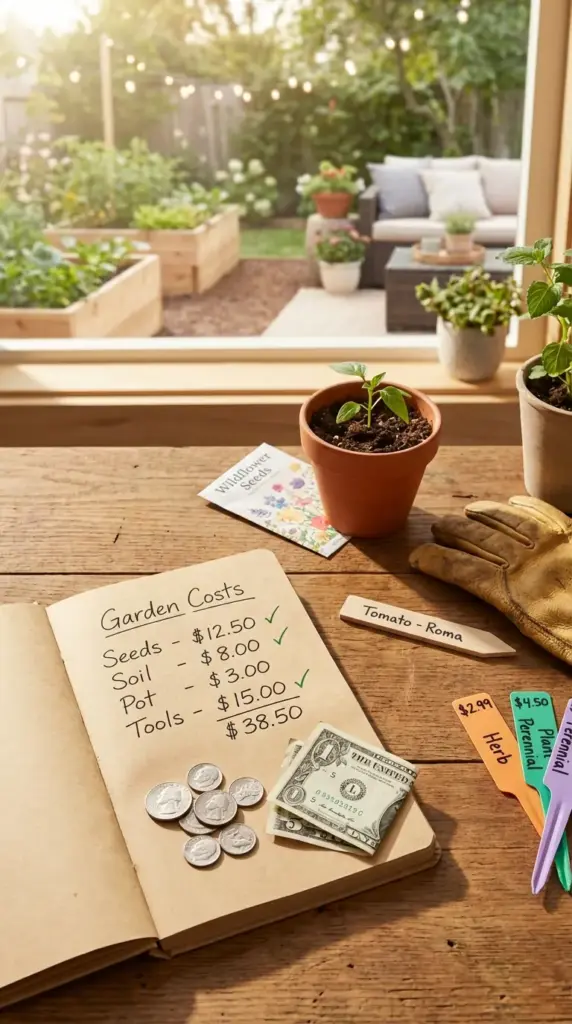
I want to be upfront with you about something.
When I first started transforming my backyard, I had no budget plan whatsoever. I just kept buying things that looked good at the garden center, clicking “add to cart” on pretty planters at 11pm, and telling myself it was all necessary.
Three months later I added it all up. I had spent over $800 without a single intentional purchase.
The garden looked okay. But I had no idea what I’d actually spent money on or whether any of it was worth it. That experience taught me something really important — a beautiful garden isn’t about spending more, it’s about spending smarter. And once I started approaching it that way, I got dramatically better results for a fraction of the cost.
Let’s break it all down.
Realistic Cost Estimates for Each Hack
Knowledge is power — especially when it comes to your wallet.
Here’s an honest, realistic breakdown of what each section of this guide actually costs when you approach it smartly.
Hack #1: Planning Your Garden Layout
This one should cost you almost nothing.
- Free garden design tools (iScape, Garden Planner, SmartDraw free tier): $0
- Graph paper and pencil for hand-drawn layouts: $1–$3
- Soil pH test kit to understand what you’re working with before you plant: $10–$15
- Consultation with your local cooperative extension office: Free — seriously, this resource is criminally underused
Total realistic budget for Hack #1: $0–$20
The planning phase is where you save the most money by avoiding costly mistakes later. Spend time here, not money.
Hack #2: Choosing the Right Plants
This is where budgets can spiral fast — and where smart shopping makes the biggest difference.
- Native perennial plants (the backbone of your garden, come back every year): $4–$12 per plant at local nurseries, often cheaper at big box stores
- Annual flowers for seasonal color: $2–$5 per plant, or $1.50–$3 per six-pack
- Herb starts (basil, rosemary, thyme, etc.): $3–$6 each, or grow from seed for $1–$2 per packet
- Vegetable seedlings: $3–$5 each, or again — seeds are dramatically cheaper
- Companion planting additions like marigolds: $4–$6 for a full flat
Total realistic budget for Hack #2: $50–$150 for a well-planted beginner garden
The single biggest money-saving move here? Buy perennials over annuals wherever possible. Perennials come back every year and spread over time, meaning your garden actually gets fuller and more beautiful while your plant budget goes down each season.
Hack #3: DIY Garden Beds and Borders
This is where the DIY approach saves you the most dramatic amount of money.
A professionally installed raised garden bed with soil and plants can cost $500–$1,500 depending on your market. In cities like New York or Los Angeles, even more.
Your DIY version of the same thing?
- Lumber for one 4×8 raised bed (untreated pine): $25–$40
- Lumber for one 4×8 raised bed (cedar): $60–$90
- Corner brackets and screws: $8–$15
- Landscape fabric: $15–$25 for a roll that covers multiple beds
- Soil mix (topsoil + compost + perlite): $40–$70 to fill one 4×8 bed
- Mulch (2–3 inch layer for one bed): $15–$30, or free from local tree services
- Border materials (repurposed bricks, bottles, branches): $0–$20
Total realistic budget for Hack #3: $100–$200 for one complete raised bed setup
Compare that to $500–$1,500 professionally installed. You’re saving hundreds of dollars on a single bed.
And if you source free mulch from a local tree trimming service and use repurposed border materials? You can get that number down to $60–$80 for the entire setup.
Hack #4: Garden Care and Maintenance
The good news here — most of your ongoing garden care costs very little.
- Drip irrigation starter kit: $25–$60 (one-time purchase)
- Digital water timer: $15–$25 (one-time purchase)
- Compost (one bag per season per bed): $5–$8, or free if you compost at home
- Neem oil (lasts a full season): $10–$15
- Organic fertilizer or worm castings: $10–$20 per season
- Basic tool set (trowel, pruners, hoe, gloves): $50–$80 total, bought once
Total realistic first-year budget for Hack #4: $130–$230
After year one, your ongoing annual maintenance cost drops to roughly $30–$60 — mostly just compost, mulch top-ups, and the occasional replacement plant. This is why gardening gets cheaper and more rewarding every year.
Hack #5: Styling Your Outdoor Living Space
This is the category with the widest budget range — because styling is deeply personal and the options are endless.
But here’s a realistic breakdown for creating a genuinely beautiful outdoor space without going overboard:
- Outdoor rug (polypropylene, weather-resistant): $50–$150
- String lights (48-foot strand, warm white): $20–$35
- Solar path lights (set of 8–10): $25–$45
- Outdoor throw pillows (set of 4): $30–$60 at HomeGoods or TJ Maxx
- One statement planter (focal point): $20–$60
- Stepping stones or path materials: $30–$80 depending on material
- Seasonal decor (pumpkins, mums, string lights, etc.): $20–$40 per season
Total realistic budget for Hack #5: $200–$450 for a fully styled outdoor living space
And honestly? If you shop at HomeGoods, TJ Maxx, IKEA, and Facebook Marketplace, you can cut that number nearly in half. I’ve found stunning outdoor furniture sets on Marketplace for $40 that retail for $300.
The Full Picture: What Does a Complete Backyard Transformation Actually Cost?
Let’s add it all up.
| Hack | Budget Range |
|---|---|
| Hack #1: Planning | $0–$20 |
| Hack #2: Plants | $50–$150 |
| Hack #3: Garden Beds & Borders | $100–$200 |
| Hack #4: Care & Maintenance (Year 1) | $130–$230 |
| Hack #5: Styling & Decor | $200–$450 |
| Total | $480–$1,050 |
A complete backyard transformation for under $1,100. Potentially well under, if you shop smart.
For context — a professional landscape designer charges $50–$150 per hour just for consultation. A full professional landscape installation in a mid-sized backyard typically runs $3,000–$15,000 depending on your city. In markets like NYC, LA, and DC, those numbers go even higher.
You’re looking at saving thousands of dollars by doing this yourself — and ending up with a space that’s more personal and more meaningful because you built it.
Where to Shop Smart: Local Nurseries vs. Big Box Stores vs. Online
This is a question I get asked constantly — and the honest answer is that each option has its place.
Local nurseries are where I buy my most important plants — the perennials and shrubs that form the backbone of my garden. Here’s why:
The plants are almost always healthier and better acclimated to your local climate. The staff actually knows what they’re talking about and can give you genuinely useful advice. And you’re supporting a local small business, which matters.


Yes, local nurseries are usually more expensive — sometimes 20–40% more than big box stores. But for plants you’re counting on to come back year after year, that quality difference is worth it.
Big box stores (Home Depot, Lowe’s, Walmart) are where I buy annuals, basic herbs, vegetable starts, soil, mulch, tools, and hardware. The plant quality is more variable — you have to look carefully and avoid anything that looks stressed, root-bound, or diseased. But the prices are significantly lower and the selection for basic supplies is excellent.
Pro tip: Big box store plants go on clearance at the end of each season — usually 50–75% off. Many of these plants are perfectly healthy and just need some water and care. I’ve rescued gorgeous perennials from the clearance rack for $1–$2 that are now thriving centerpieces in my garden.
Online plant retailers like Fast Growing Trees, Nature Hills Nursery, and Etsy plant shops are great for finding specific varieties you can’t source locally. Shipping live plants is tricky though — always read reviews carefully and order during mild weather, not in the heat of summer or dead of winter.
Amazon is fine for tools, irrigation supplies, lighting, and garden accessories. Not my first choice for plants, but for hardware and supplies it’s hard to beat the convenience and price.
Free Resources That Most Gardeners Don’t Know About
This section might be the most valuable thing in this entire guide.
There is a whole ecosystem of free gardening resources that most people have absolutely no idea exists — and tapping into even one or two of them can save you hundreds of dollars.
Seed swaps and seed libraries. Many public libraries now have seed lending libraries where you can borrow seeds, grow plants, collect seeds at the end of the season, and return them. Completely free. Search “[your city] seed library” to find one near you. Cities like Seattle, Chicago, and Philadelphia have particularly robust seed library networks.
Community gardens. Beyond just providing a plot to grow food, community gardens are incredible resources for knowledge, plant divisions, and free supplies. Experienced gardeners are almost always willing to share divisions of their perennials — meaning free, established plants for your garden. I’ve gotten hundreds of dollars worth of plants this way.
Facebook Buy Nothing groups and Marketplace. This is genuinely one of my top recommendations. Search for your neighborhood’s Buy Nothing group on Facebook and post that you’re starting a garden. People give away plants, tools, pots, soil, mulch, and garden furniture constantly. I’ve furnished entire garden beds from Buy Nothing groups alone.
Your local cooperative extension office. Every state in the U.S. has a cooperative extension service connected to a land-grant university — and they offer free soil testing, free plant identification, free pest diagnosis, and free gardening workshops. This resource is funded by your tax dollars and almost nobody uses it. Find yours at extension.org.
Nextdoor app. Neighbors post free plants, tools, and garden supplies regularly. It’s also a great place to find out what plants are thriving in your specific neighborhood microclimate — information that’s genuinely more useful than any gardening book.
Municipal composting programs. Many cities offer free or heavily subsidized compost to residents. Chicago, Seattle, and Minneapolis all have programs where you can pick up free compost at designated sites. Search “[your city] free compost program” — you might be shocked what’s available.
How to Prioritize Your Garden Investments for Maximum Visual Impact
If you’re working with a limited budget — and most of us are — sequence matters.
Here’s the order I’d recommend investing in, from highest to lowest impact per dollar spent:
1. Soil first, always. Nothing else matters if your soil is poor. Spend on compost and soil amendment before you spend on plants. Healthy soil grows healthy plants. Sick soil kills expensive ones.
2. Perennial plants over annuals. Spend your plant budget on perennials that come back every year and spread over time. Your garden gets better and your costs go down simultaneously.
3. Mulch. The visual transformation from bare soil to a freshly mulched garden bed is dramatic and immediate. It also saves water and suppresses weeds. High impact, low cost.
4. One focal point element. A birdbath, a statement planter, a garden arch — one well-chosen focal point elevates the entire space. Don’t spread your budget thin trying to do everything. Do one thing really well.
5. Lighting. String lights give you the highest atmosphere-per-dollar of anything you can buy for an outdoor space. Do this before you buy outdoor furniture.
6. Furniture and decor last. These are the finishing touches — important, but only impactful once the garden itself is established. Don’t buy a beautiful outdoor sofa to put in front of a sad, neglected garden.
The ROI of a Beautiful Backyard: What It Actually Means for Your Home
Let’s end this section with the number that might surprise you most.
According to the American Society of Landscape Architects, professional landscaping returns between 100% and 200% of its cost at resale. Meaning if you spend $5,000 on landscaping, you could see $5,000–$10,000 added to your home’s value.
But here’s what makes our DIY approach even more compelling.
If you spend $800–$1,100 doing this yourself — the budget we outlined above — and it adds even $5,000–$10,000 to your home’s perceived value in a competitive market like New York, Los Angeles, Chicago, or Washington DC?
That’s an ROI of 400–1,000%. On a DIY project you did yourself, on weekends, with your own hands.
A 2023 study by the National Association of Realtors found that standard lawn care and landscape upgrades had a 539% return on investment at resale — the highest ROI of any home improvement project studied. Higher than kitchen remodels. Higher than bathroom renovations. Higher than new flooring.
Let that sink in for a second.
Beyond resale value, there’s the daily value — the mental health benefits, the joy of stepping outside into a space you created, the pride of watching something grow because of your care and effort. That ROI is incalculable.
A beautiful backyard isn’t an expense. It’s an investment in your home, your health, and your happiness.
And you now have everything you need to make it happen. 🌿
Conclusion
Your dream backyard is so much closer than you think! With these 5 easy DIY garden hacks, you don’t need a big budget or a landscape degree to create something truly beautiful.
From smart garden planning and the right plant choices to stylish outdoor design touches, every step you take brings you closer to that lush, inviting space you’ve been dreaming about.
Start small, stay consistent, and don’t be afraid to get creative — because the best gardens are the ones that reflect you.
Now grab those gloves, pick one hack to start with this weekend, and let your backyard transformation begin! 🌿✨
Save this post, share it with a friend who needs garden inspiration, and tag us in your backyard glow-up photos!

GIPHY App Key not set. Please check settings