

 The Home Growns
Hack #5: Style Your Backyard Like It’s an Outdoor Living Room
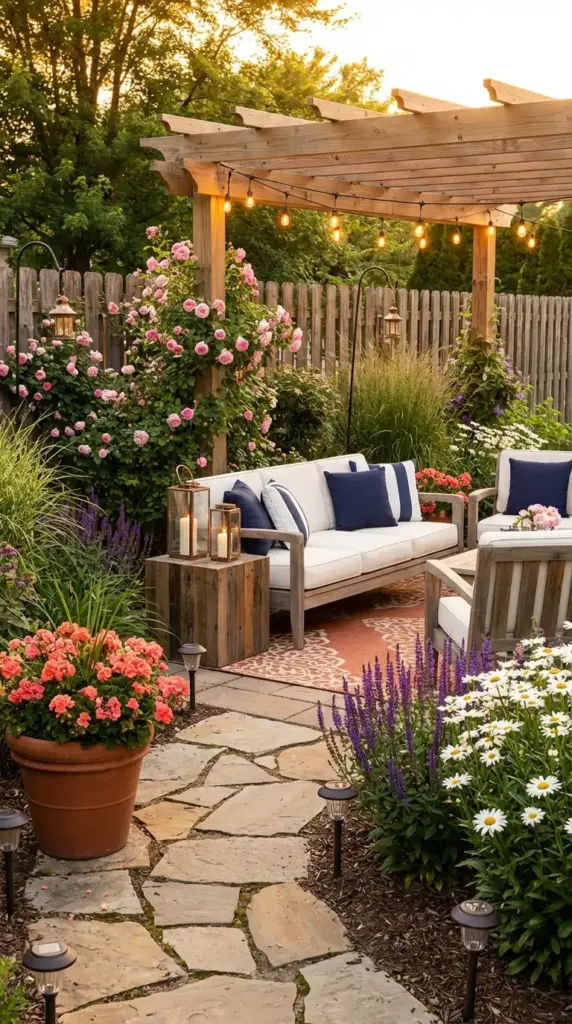
There was a moment a few summers ago when I looked at my backyard and realized something embarrassing.
I had spent months perfecting my plants, my soil, my irrigation system. But the space itself? It looked like a waiting room. A few mismatched chairs, a sad little table, and absolutely zero personality.
My living room had more thought put into it than my entire outdoor space. And that felt wrong.
That was the summer I started treating my backyard like a real room — with intention, with style, with layers. And the transformation was honestly shocking. Same plants. Same yard. Completely different feeling.
Designing Your Outdoor Space Like an Interior Designer Would
Here’s the mindset shift that changes everything.
Your backyard is just another room in your home. It has a floor (your lawn, patio, or deck), walls (your fences, hedges, or garden borders), and a ceiling (the open sky or a pergola overhead). Once you start seeing it that way, designing it becomes so much more intuitive.
Every well-designed room — indoors or out — has three things: a clear purpose, a focal point, and a cohesive style.
Define your purpose first. Is this space for quiet morning coffee? Weekend entertaining? A play area for kids? A dinner party setting? You can have multiple zones — but each area should have a clear intention. A cozy reading nook in one corner, an entertaining area near the back door, a garden bed as a backdrop. Think of it like an open-plan living space with distinct areas.
Choose a style and commit to it. This is where so many outdoor spaces go wrong — a little bit of everything ends up looking like nothing. Pick a direction:
- Modern minimalist — clean lines, neutral colors, architectural plants like ornamental grasses and agave, sleek black metal furniture
- Bohemian garden — layered textiles, mismatched vintage furniture, wildflower plantings, macramé and lanterns
- Coastal casual — weathered wood, navy and white accents, ornamental grasses, driftwood details
- Cottage romantic — climbing roses, soft pastels, wrought iron furniture, overflowing flower beds
- Urban contemporary — concrete planters, geometric shapes, bold tropical plants, statement lighting
None of these styles costs more than another. It’s about consistency of vision, not budget.
Blending Garden Design With Outdoor Furniture for a Cohesive Look
The biggest mistake people make with outdoor furniture? Buying it in isolation.
They pick a patio set they like at the store without thinking about how it connects to the garden around it. Then they wonder why the space feels disconnected and awkward.
Your furniture and your plants should be in conversation with each other.
If you have a lush, romantic cottage garden full of soft pinks and purples, a sleek modern aluminum furniture set is going to feel jarring. But a weathered teak bench or a wrought iron bistro set? Perfect.
If you’ve gone for a clean, modern garden with structured hedges and architectural plants, a rattan boho sofa set is going to look out of place. But a simple concrete bench or low-profile black metal chairs? Chef’s kiss.
Color coordination matters more outdoors than most people realize. Pick one or two accent colors from your garden and echo them in your outdoor cushions, throw pillows, or planters. If you have a lot of purple salvia and white shasta daisies, a navy and white outdoor cushion palette ties the whole space together beautifully.
Outdoor textiles have come SO far in recent years. Brands like Sunbrella make fade-resistant, weather-proof fabrics that look genuinely luxurious. You can find Sunbrella cushions and pillows at HomeGoods, TJ Maxx, and Wayfair for a fraction of what you’d pay at a specialty outdoor store.
Rugs are the secret weapon of outdoor design. An outdoor rug under your seating area instantly defines the space and makes it feel like a real room. Look for polypropylene rugs — they’re weather-resistant, easy to clean with a hose, and come in beautiful patterns. A good-sized outdoor rug runs about $50–$150 at most home stores and makes an enormous visual impact.
Lighting Ideas That Make Your Backyard Magical After Dark
This is the one that gets the most “oh WOW” reactions from guests.
Most people completely neglect outdoor lighting — and it’s such a missed opportunity. The right lighting can make a modest backyard feel like an enchanted garden. Seriously.
String lights are the foundation. I know, I know — everyone has string lights. But there’s a reason for that. Warm white Edison-style string lights draped overhead create an atmosphere that is genuinely magical. The key is how you hang them. Don’t just drape them along a fence. Create a canopy effect by running them from the house to a pergola, or between tall shepherd’s hooks placed around your seating area. Hang them at least 8–10 feet high for the best effect.
A 48-foot strand of outdoor string lights costs about $20–$35 on Amazon. For the impact they create, that might be the best money you spend on your entire backyard.
Solar path lights along garden borders and walkways serve double duty — they’re practical AND decorative. Modern solar lights have gotten genuinely good. Look for ones with warm white bulbs (not the harsh blue-white ones) and stainless steel or black metal finishes for a polished look. A set of 8–10 path lights runs about $25–$45.
Uplighting for drama. Place a solar or low-voltage spotlight at the base of a statement tree, a large ornamental grass, or a garden focal point and angle it upward. The shadows and light play created by uplighting at night is stunning — it adds depth and dimension that completely transforms the space after dark.
Lanterns and candles for intimate spaces. A cluster of hurricane lanterns with pillar candles on an outdoor dining table creates an atmosphere no electric light can replicate. Use citronella candles and you’re also keeping mosquitoes away. Functional and beautiful — always the best combination.
Smart outdoor lighting is worth considering if you entertain regularly. Philips Hue outdoor lights and similar smart systems let you control color, brightness, and timing from your phone. Set them to automatically come on at sunset. Change the color for different occasions — warm amber for a dinner party, soft blue for a relaxed evening. It sounds extra but once you have it, you’ll wonder how you lived without it.
Pathways, Focal Points, and Vertical Gardens That Add Visual Interest
These three elements are what separate a garden that looks designed from one that just looks planted.


Pathways do something really important in a garden — they give the eye a place to travel and give the body a place to go. A garden without a path feels static. A garden with a path feels like an experience.
You don’t need to pour concrete or hire a contractor. Some of the most beautiful garden paths are made from:
- Stepping stones set into the lawn or gravel — irregular flagstone looks particularly natural and organic
- Decomposed granite — a fine gravel material that compacts into a firm, walkable surface and costs about $40–$60 per cubic yard
- Mulch paths edged with metal or wood borders — casual, natural, and incredibly affordable
- Reclaimed brick laid in a herringbone or running bond pattern — classic, beautiful, and often free from demolition sites or Marketplace
Path width matters. A path should be at least 18–24 inches wide for a single person to walk comfortably. For a main garden path, aim for 36 inches so two people can walk side by side.
Focal points are the exclamation points of your garden design. Every outdoor space needs at least one — something that draws the eye and anchors the space.
Great focal point ideas that don’t require a huge budget:
- A large statement planter overflowing with dramatic plants
- A birdbath or small fountain — the sound of moving water adds an incredible sensory dimension to any garden
- A garden arch or arbor draped with climbing roses or clematis
- A sculptural plant like a Japanese maple, a large ornamental grass, or a topiary
- A painted accent wall or fence panel in a bold color that frames the garden
Pick one focal point per zone. More than that and nothing stands out.
Vertical gardens are particularly powerful in small spaces — they add lushness and greenery without taking up any floor space. Options range from simple wall-mounted pocket planters ($20–$40) to freestanding trellis panels to full living wall systems. Even a simple wooden trellis with a climbing plant trained up it adds incredible vertical interest for almost no cost.
Seasonal Decorating Ideas Tied to 2026 Home Decor Trends
Here’s something I love about outdoor spaces — they give you an excuse to redecorate four times a year.
And in 2026, the biggest home decor trends translate beautifully to outdoor spaces.
Earthy, natural tones are everywhere right now. Terracotta, warm sand, olive green, rust, and clay are dominating both interior and exterior design. Swap out any cool grey or stark white outdoor accessories for warmer, earthier tones and your space will instantly feel current and intentional.
Organic shapes and textures are replacing the sharp geometric lines of the last decade. Look for rounded planters, curved seating, and irregular natural stone rather than perfectly square or angular elements. Nature doesn’t do straight lines — and neither should your outdoor decor.
Seasonal refresh ideas by season:
🌸 Spring — Swap in pastel cushion covers, add fresh potted tulips and hyacinths to your entry and patio, hang a simple floral wreath on your garden gate or back door. Light, fresh, and welcoming.
☀️ Summer — Go bold with color. Bright tropical cushions, oversized potted cannas or elephant ears for drama, string lights for evening entertaining. This is the season to go all out.
🍂 Fall — This is honestly my favorite season for outdoor decorating. Pumpkins, gourds, ornamental kale, and mums in warm amber and burgundy tones. Swap string lights for warm amber Edison bulbs for a cozier feel. Add a chunky knit outdoor throw to your seating area.
❄️ Winter — Don’t abandon your outdoor space just because it’s cold! Evergreen branches, pinecones, and white lights keep the space feeling alive. A chiminea or fire pit extends outdoor living well into the colder months. In cities like Atlanta and DC where winters are mild, your outdoor space can be genuinely usable year-round with the right setup.
How to Create an Instagram-Worthy Garden That’s Authentically You
Okay, I want to be careful here — because there’s a difference between a garden that photographs well and a garden that feels good to be in.
The best outdoor spaces do both.
The secret to a truly photogenic garden isn’t perfection — it’s layers, texture, and personality. Here’s what that actually means in practice:
Layer your plants by height, texture, and color. Tall grasses behind medium flowering perennials in front of low ground covers. Smooth leaves next to feathery ones. Bold colors next to soft neutrals. This layering is what creates that lush, abundant look that makes people stop scrolling.
Add personal touches that tell your story. A vintage watering can you found at an estate sale. A hand-painted sign. A collection of interesting pots you’ve gathered over time. A wind chime your daughter made. These details are what make a garden feel like a person lives there — not just a set designer.
Create a “hero shot” corner. Pick one area of your garden and style it specifically for photos — a beautiful seating vignette, a lush garden wall, a colorful flower bed with a charming path. This becomes your go-to spot for photos and gives you a design goal to work toward.
Natural light is everything for garden photography. The golden hour — the hour after sunrise and the hour before sunset — gives your garden a warm, glowing quality that no filter can replicate. Step outside during those windows and your garden will look like a magazine spread.
And honestly? Don’t wait until your garden is “finished” to share it. The process is part of the story. The before photos, the in-progress shots, the first bloom of something you planted from seed — that’s the content people actually connect with. Perfection is less interesting than progress.
Your backyard transformation is within reach — and you now have everything you need to make it happen. 🌿✨
Keep going and hit “Next” below — because in the final section, we’re breaking down the real numbers behind these DIY garden hacks. How much does all of this actually cost? Where do you spend and where do you save? If you want to do all of this without blowing your budget, the next section is going to be your best friend. 💚🙌


GIPHY App Key not set. Please check settings