

 The Home Growns
Hack #2: Choose the Right Plants for Low-Maintenance, High-Impact Results
I killed a cactus once. A cactus.
If that’s not a sign that I was choosing the wrong plants for my space and lifestyle, I don’t know what is. And honestly, that little tragedy taught me the most important lesson in gardening: the right plant in the right place changes everything.
Once I stopped chasing pretty and started chasing smart plant choices, my garden went from a graveyard of good intentions to something I’m genuinely proud of.
The Best Beginner Plants That Actually Survive (And Thrive)
Here’s the truth — most beginner gardeners don’t fail because they lack skill. They fail because they pick plants that were never going to work for their climate in the first place.
Climate is everything. And the U.S. has a LOT of it.
If you’re in Seattle-Tacoma, you’re working with cool, wet winters and mild summers. Plants like hostas, ferns, astilbe, and rhododendrons are basically in heaven there. They love moisture and don’t mind the grey skies one bit.
If you’re in Atlanta or Dallas, you’re dealing with heat, humidity, and summers that feel like the surface of the sun. Your best friends are coneflowers (echinacea), black-eyed Susans, lantana, and ornamental grasses — tough, drought-tolerant beauties that laugh in the face of a heat wave.
For New York, Chicago, and Philadelphia — you’ve got four real seasons, which means you need plants that can handle both cold winters and hot summers. Daylilies, sedum, coreopsis, and Russian sage are absolute workhorses in these climates. Plant them once and they come back stronger every year.
The USDA Plant Hardiness Zone Map is your best friend here. Look up your zone before you buy a single plant. It’s free at planthardiness.ars.usda.gov and takes about 30 seconds.
Native Plants vs. Trendy Varieties — Let’s Be Real
Okay, I have to be honest about something.
I have been seduced by trendy plants at the garden center more times than I care to admit. Those gorgeous pampas grass plumes? Bought them. That exotic bird of paradise for my Chicago garden? Yep. Spent $40 on it. It lasted one season.
Native plants are not boring. That’s the biggest myth in gardening and I’m tired of it.
Native plants are species that naturally occur in your region — they evolved specifically for your soil, your rainfall, your temperatures. They require dramatically less water, less fertilizer, and less overall fuss than non-native varieties.
In the Mid-Atlantic and Northeast (DC, Philly, NYC), natives like wild columbine, Virginia bluebells, and Joe-Pye weed are stunning AND support local pollinators like bees and butterflies.
In the Southeast (Atlanta), beautyberry, coral honeysuckle, and native azaleas give you incredible color without the drama.
In the Pacific Northwest (Seattle), red flowering currant, Oregon grape, and sword ferns create lush, layered landscapes that look like something out of a nature documentary.
The rule I follow now: 70% native plants, 30% tried-and-true non-invasive varieties. That ratio gives you reliability AND a little room to play with something fun and new each season.
Companion Planting: Nature’s Pest Control System
This one genuinely felt like discovering a cheat code.
Companion planting is the practice of growing certain plants next to each other because they naturally benefit one another — and it is one of the most effective ways to keep pests away without spraying a single chemical on your garden.
Here are some combinations that actually work:
Basil + Tomatoes. This is the classic for a reason. Basil repels aphids, whiteflies, and tomato hornworms. Plant basil directly around your tomato plants — about 12 inches apart — and watch your pest problems shrink. Plus, they’re neighbors in the kitchen too. Convenient.
Marigolds + Pretty Much Everything. I plant marigolds around the border of almost every bed I have. They release a scent from their roots that repels nematodes and other soil pests. French marigolds specifically — the small, bushy ones — are the most effective. And they’re gorgeous. A flat of them costs about $4–$6 at most garden centers.


Lavender + Roses. Lavender repels aphids and attracts beneficial insects that eat the bad bugs. It also makes your garden smell absolutely incredible. This combo is basically a two-for-one deal.
Nasturtiums as a Trap Crop. This is a sneaky one. Nasturtiums attract aphids — on purpose — drawing them away from your more valuable plants. It’s like setting out a decoy. The aphids go for the nasturtiums, and your vegetables stay clean.
I haven’t used chemical pesticides in three years since I started companion planting seriously. That’s not an exaggeration.
Edible Gardens That Are Beautiful AND Functional
Here’s something the gardening world doesn’t market enough: edible plants can be just as gorgeous as ornamental ones.
This concept even has a fancy name — “foodscaping” — and it’s basically the idea of integrating food-producing plants into your decorative landscape design.
Herbs are the easiest entry point. Rosemary grows into a full, fragrant shrub. Purple basil is genuinely stunning as a border plant. Chives produce pretty little purple flowers that are also edible. These aren’t just functional — they’re beautiful.
For vegetables, rainbow chard with its bright red, yellow, and orange stems looks like something from an art installation. Kale has incredible texture and comes in deep purple varieties. Climbing beans on a trellis create a lush green wall that’s also feeding your family.
For fruits, strawberries make a wonderful ground cover — they spread, they flower, and then they give you fruit. Dwarf blueberry bushes have gorgeous fall color AND give you berries in summer. In warmer climates like Atlanta and Dallas, dwarf citrus trees in large containers are both a design statement and a fruit source.
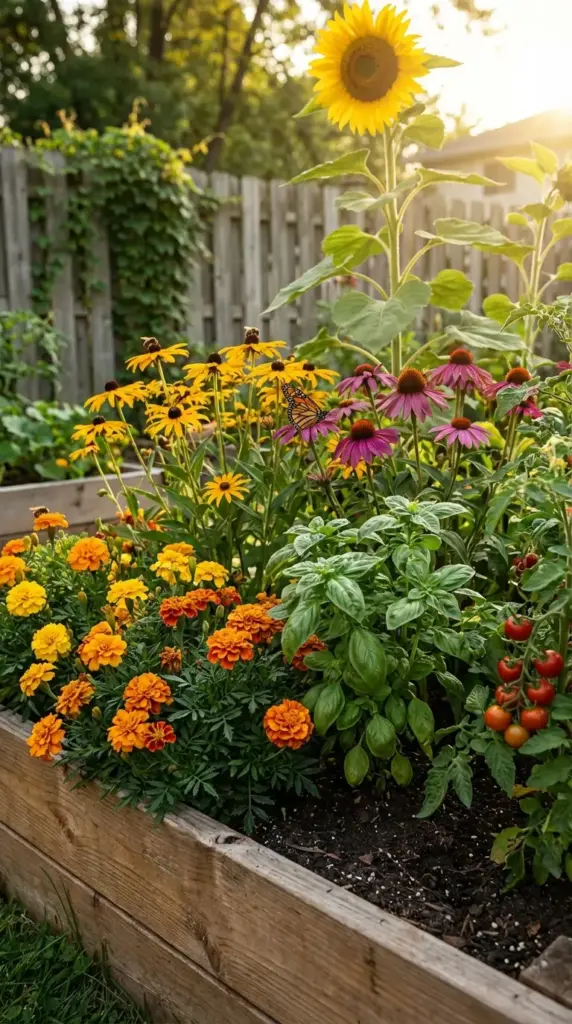
My personal favorite edible garden combo: a raised bed with cherry tomatoes, basil, parsley, and marigolds around the border. It looks intentional, smells amazing, and feeds me all summer long.
Kid-Friendly Plants That Make Gardening a Family Thing
If you’ve got little ones, gardening is honestly one of the best activities you can do together.
But — and this is important — you need the right plants. Some common garden plants are actually toxic to children and pets. Foxglove, oleander, and lily of the valley are beautiful but should be kept away from curious little hands.
Here are some kid-friendly plants that are safe, fun, and engaging for children:
Sunflowers are basically magic for kids. They grow fast — you can see progress week to week — and they get TALL. Kids love measuring them. Plant a giant variety like ‘Mammoth’ and they can grow up to 12 feet high. My niece still talks about the summer her sunflower was taller than her dad.
Strawberries are an instant hit because kids can eat them straight from the plant. There’s something deeply satisfying about that for little ones. And honestly, for adults too.
Cherry tomatoes like ‘Sun Gold’ or ‘Sweet 100’ are sweet enough that kids actually want to eat them — which feels like a parenting miracle. Let them pick their own and suddenly vegetables are exciting.
Lamb’s ear is a plant kids can’t stop touching. The leaves are soft and fuzzy like velvet. It’s completely safe, incredibly hardy, and spreads easily to fill space. Zero maintenance, maximum sensory fun.
Pumpkins and gourds are perfect for a fall garden project. They grow quickly, the vines are dramatic and exciting, and the payoff at the end — an actual pumpkin — is something kids remember for years.
Gardening with kids doesn’t have to be perfect or Pinterest-worthy. Let them dig, let them make a mess, let them plant something in the wrong spot. The point is that they’re outside, engaged, and learning where food actually comes from. That’s worth more than a tidy garden bed.
You’re building something really special here. 🌱
Don’t stop now — hit “Next” below to get into Hack #3, where we’re diving into DIY garden beds and borders on a budget. I’m talking step-by-step instructions, creative upcycled planter ideas, and the exact materials that won’t break the bank. If you love a good before-and-after, this section is going to be your favorite yet. 🙌

GIPHY App Key not set. Please check settings