

 The Home Growns
Hack #1: Plan Your Garden Layout Like a Pro (Without the Designer Price Tag)
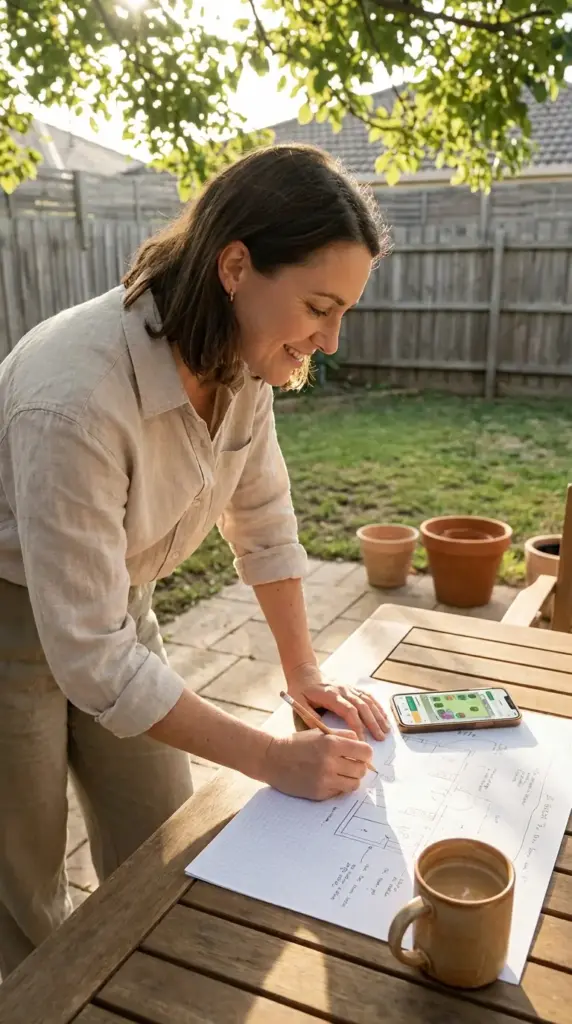
I spent $300 on a “garden consultation” once. The lady showed up, walked around my yard for 45 minutes, and handed me a printed diagram that looked like something I could’ve made in Microsoft Paint.
Never again.
That was the day I decided to figure this out myself — and honestly? It was one of the best decisions I’ve ever made for my backyard.
Free Tools That Do the Heavy Lifting For You
Here’s the thing nobody tells you: professional-grade garden planning tools are available completely free online.
Garden Planner by Gardena and SmartDraw both let you drag and drop plants, beds, and pathways onto a scaled map of your actual yard. You just enter your yard dimensions and start playing around.
My personal favorite though? iScape — it’s an app that uses your phone’s camera to overlay garden designs directly onto a photo of your real backyard. It’s like trying on clothes, but for your landscape. Genuinely fun to use.
And if you’re more of a pen-and-paper person, just grab some graph paper and assign each square a specific measurement — like 1 square = 1 foot. Old school, but it works just as well.
Picking the Right Garden Type for YOUR Life
This is where most beginners go wrong. They see a gorgeous cottage garden on Pinterest and try to recreate it — without realizing it requires constant maintenance and a very specific climate.
Don’t do that to yourself.
Here’s a quick breakdown of the most popular garden types and who they’re actually best for:
- Raised bed gardens are perfect if you have poor soil quality or limited mobility. They’re also great for growing vegetables and herbs in a controlled environment. Expect to spend around $50–$150 to build one basic 4×8 raised bed.
- Container gardens are a lifesaver for urban spaces. If you’re in a New York apartment or a Philly row home with a tiny patio, containers let you garden literally anywhere. You can move them around, swap out plants seasonally, and create a surprisingly lush look in a small footprint.
- Cottage gardens are romantic and full of texture — think lavender, roses, and wildflowers spilling over each other. Beautiful, yes. But they need regular attention and work best in cooler, wetter climates like Seattle-Tacoma.
- Zen-inspired gardens are low maintenance and incredibly calming. Gravel, moss, ornamental grasses, and a few carefully placed stones. If you’re a busy woman who wants beauty without the upkeep, this style deserves serious consideration.
Be honest with yourself about how much time you actually have. A garden that fits your lifestyle will always look better than one you’re constantly fighting to maintain.
Small Space? No Problem — Urban Garden Tips That Actually Work
Listen, I know what it’s like to look at a tiny concrete backyard and feel defeated.
But some of the most creative garden designs I’ve ever seen came out of small urban spaces in cities like Chicago, Philadelphia, and New York. Constraints force creativity — and that’s not just a motivational quote, it’s genuinely true in gardening.
Here are a few tricks that work really well in tight spaces:
Go vertical. A simple vertical garden wall or trellis can turn a bare fence into a lush green backdrop. Climbing plants like clematis, jasmine, or even cucumbers take up almost zero floor space.
Layer your plants by height. Put tall plants at the back, medium in the middle, and low ground covers at the front. This creates the illusion of depth and makes even a narrow bed look full and intentional.


Use odd numbers. Plant in groups of 3 or 5, never 2 or 4. This is a designer trick that makes arrangements look natural instead of stiff. I don’t fully understand the science behind it, but it works every single time.
Steal These Tricks From Architects and Interior Designers
Okay, this is where it gets really fun.
Garden design and interior design use the exact same principles — and once you see it, you can’t unsee it.
Think about how a good living room is designed. There’s a focal point (usually the sofa or fireplace), there are pathways that guide your eye through the space, and there’s a balance between open areas and filled ones.
Your garden works the same way.
Pick one focal point — a statement tree, a birdbath, a bold planter — and design everything else around it. Then create a clear pathway (even just stepping stones) that draws people through the space. It instantly makes your garden feel designed, not just planted.
Also, scale matters. A tiny little flower bed in the middle of a large lawn looks lost and awkward. Just like a small rug in a big room. Size your garden beds proportionally to your yard — aim for beds that are at least 3–4 feet deep to look substantial.
Color Blocking With Plants: The Art World’s Best-Kept Garden Secret
This one blew my mind when I first learned it.
Color blocking — the design technique of pairing bold, contrasting solid colors together — works just as beautifully in a garden as it does in fashion or home decor.
Instead of mixing every color randomly (which can look chaotic), try planting in intentional color zones.
A block of deep purple salvia next to a mass of bright yellow rudbeckia (black-eyed Susans). A row of white shasta daisies against a backdrop of dark green boxwood hedges. The contrast is striking and looks incredibly intentional — even if it took you 20 minutes to plan.
Stick to 2 or 3 colors maximum per garden bed. Any more than that and it starts to look busy. Think of it like putting together an outfit — a few well-chosen pieces always look better than throwing everything on at once.
And don’t forget foliage color! Silver-leafed plants like lamb’s ear, deep burgundy heuchera, and bright chartreuse sweet potato vine add color without a single flower. They’re also incredibly low maintenance. Total win.
Feeling inspired? Good — because we’re just getting started. 🌿
Go ahead and hit “Next” below — in the next section, we’re talking about exactly which plants to choose for low-maintenance, high-impact results. Whether you’re dealing with Atlanta heat, Seattle rain, or anything in between, I’ve got you covered. You’re going to want to bookmark this one. 🙌

GIPHY App Key not set. Please check settings