

 The Home Growns
Companion Planting in Small Spaces: Balconies, Raised Beds & Urban Gardens
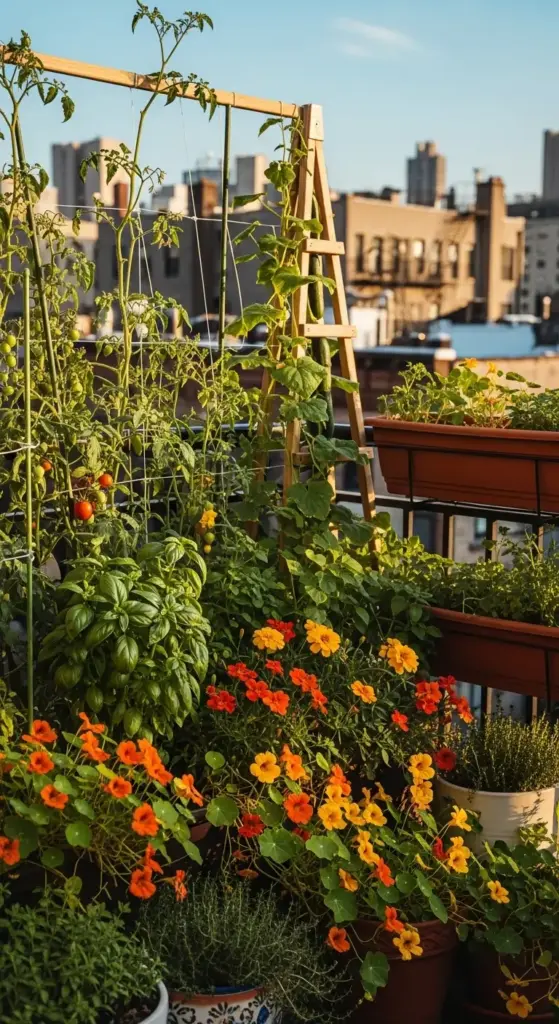
I used to think you needed a big backyard to have a “real” garden.
Spoiler: you absolutely do not.
Some of the most productive, beautiful companion planting gardens I’ve ever seen were growing on a Brooklyn fire escape, a Chicago rooftop, and a Seattle apartment balcony barely big enough to fit two chairs.
Small spaces don’t limit your garden. They just make you smarter about it.
Maximizing Small Urban Spaces With Smart Companion Planting
The number one mistake urban gardeners make is thinking in terms of square footage instead of volume.
Your garden doesn’t just grow outward. It grows up, down, and in layers — and once you start thinking that way, even a 6-foot balcony becomes a surprisingly productive growing space.
Think in Three Layers
Every small companion garden should have three distinct growing layers working simultaneously:
- Canopy layer — tall plants like staked tomatoes, trellised cucumbers, or dwarf sunflowers
- Mid layer — medium-height plants like peppers, basil, and marigolds
- Ground layer — low-growing companions like lettuce, thyme, nasturtiums, and chives
When all three layers are working together, you’re producing food and managing pests across the entire vertical space — not just the soil surface.
A single 4-foot wide by 6-foot tall trellis with cucumbers climbing it, basil growing at its base, and nasturtiums trailing along the front edge is doing the work of a garden bed three times its footprint.
Prioritize High-Value, Compact Companions
In a small space, every single plant needs to earn its spot.
Ask yourself two questions before adding anything to your container or raised bed:
- Does this plant produce food or provide a meaningful companion benefit?
- Does it stay compact enough to share space without taking over?
Plants that answer yes to both questions are your urban garden MVPs. We’ll get into the specific combos in a moment.
Use Every Surface
Urban gardeners have surfaces that traditional gardeners don’t think about:
- Railings — perfect for railing planters with trailing nasturtiums or herbs
- Walls and fences — install pocket planters or mount window boxes for vertical herb gardens
- Overhead structures — pergolas and trellises turn dead air space into productive growing space
- Stairs and steps — stagger containers of different heights for a layered, designed look
I’ve seen a Philadelphia row house stoop transformed into a gorgeous cascading herb and flower garden using nothing but a few well-placed containers and some climbing beans on a simple trellis. It stopped people on the sidewalk.
Best Compact Companion Planting Combos for Containers and Raised Beds
Container companion planting has its own rules — and the most important one is this: not all companion planting combinations that work in the ground translate perfectly to containers.
In containers, root competition is more intense, nutrients deplete faster, and moisture fluctuates more dramatically. You need combinations that are genuinely compatible at close range.
Here are the ones that actually work:
The Patio Tomato Trio
Perfect for: large containers (15+ gallons), small raised beds, balconies
- 1 dwarf or patio tomato variety (try ‘Tumbling Tom’, ‘Patio’, or ‘Bush Early Girl’)
- 2 to 3 basil plants tucked around the base
- 2 to 3 French marigolds filling the remaining space
This is the most reliable small-space companion combination I know. The basil and marigolds repel aphids, whiteflies, and spider mites — all of which love container tomatoes — while the whole arrangement looks intentional and beautiful.
Use a minimum 15-gallon container for this combo. Tomatoes have deep root systems and will underperform in anything smaller.
Feed with liquid fish emulsion or kelp fertilizer every two weeks — container plants deplete nutrients much faster than in-ground plants.
The Salad Bowl Combo
Perfect for: window boxes, shallow containers, small raised bed sections
- Loose-leaf lettuce varieties (try ‘Black Seeded Simpson’ or ‘Oak Leaf’)
- Chives tucked throughout
- Nasturtiums trailing over the edges
- Radishes direct-sown between lettuce plants as quick-maturing gap fillers
This combination is gorgeous — the varied leaf shapes and colors of different lettuce varieties, the purple chive flowers, and the bright orange and yellow nasturtiums create a container that looks more like a floral arrangement than a vegetable garden.
Chives deter aphids that commonly attack lettuce. Nasturtiums act as a trap crop. Radishes mature in 22 to 28 days and can be harvested and replaced continuously throughout the season.
Harvest lettuce leaves from the outside in — never pull the whole plant — and it will keep producing for months.
The Herb Companion Tower
Perfect for: tiered planters, stacked containers, vertical pocket gardens
Layer these herbs together in a tiered planter for maximum companion benefit in minimum space:
- Top tier: Basil (needs most sun)
- Middle tier: Chives + parsley
- Bottom tier: Thyme + oregano (drought-tolerant, happy with less direct sun)
These herbs companion beautifully — basil and chives repel aphids and whiteflies, thyme deters cabbage worms and whiteflies, and parsley attracts beneficial insects including parasitic wasps.
And you have a fully functional culinary herb garden in about 3 square feet of space. That’s a win by any measure.
The Compact Three Sisters
Perfect for: 4×4 raised beds, large deep containers
The traditional Three Sisters planting needs more space than most urban gardeners have — but there’s a compact version that works beautifully in small raised beds:
- Dwarf corn variety (‘Tom Thumb’ or ‘Strawberry Popcorn’) — grows only 3 to 4 feet tall
- Bush beans instead of pole beans — no climbing required, stays compact
- Bush acorn squash or patio zucchini — much more contained than traditional squash varieties
Plant in a 4×4 raised bed with corn in the center, beans surrounding it, and squash filling the corners. It’s a fully functional Three Sisters system in 16 square feet.
The Pollinator Balcony Box
Perfect for: railing planters, window boxes, apartment balconies
This combination doesn’t produce food directly but creates a beneficial insect habitat that supports any food plants you have nearby:
- Sweet alyssum — continuous tiny white flowers that attract lacewings and hoverflies
- French marigolds — pest deterrence and pollinator attraction
- Lavender — repels pests, attracts bees, smells incredible
- Dwarf zinnias — long-blooming, colorful, beloved by butterflies and bees
If you only have room for one container on your balcony, make it this one. It will support every other plant in your space and make your outdoor area smell and look absolutely beautiful.
Vertical Gardening Ideas That Incorporate Companion Plants Beautifully
Vertical gardening is the urban gardener’s secret weapon — and it’s having a major aesthetic moment right now.
Done well, a vertical companion garden looks like intentional living wall art. Done poorly, it looks like a tangled mess. Here’s how to do it well.
Trellis Companion Planting
A simple A-frame trellis or cattle panel arch transforms a small raised bed into a dramatically productive growing space.
Train cucumbers or pole beans up the trellis. Plant nasturtiums and marigolds at the base. Let sweet alyssum carpet the ground beneath.
The trellis creates shade on one side — use that shaded area intentionally by planting lettuce or spinach there. Lettuce bolts in full summer sun, so the trellis shade actually extends your lettuce season by weeks.
A cattle panel arch — two raised beds facing each other with a curved metal panel arching between them — is one of the most beautiful and functional structures in a small garden. Cucumbers, beans, or small squash varieties grow up and over the arch, creating a living tunnel that is genuinely stunning.
Wall-Mounted Pocket Planters
Felt or fabric pocket planters mounted on a fence or wall can hold herbs, strawberries, lettuce, and companion flowers in a completely vertical footprint.
Plant basil and chives in upper pockets where they get maximum sun. Put lettuce and parsley in middle pockets where they appreciate some afternoon shade. Let trailing nasturtiums spill from lower pockets for color and pest deterrence.
The whole setup can cover a 4-foot by 6-foot wall section and produce a surprising amount of food and companion benefit.
Tiered Raised Bed Staircases
If you have a sloped balcony or a set of outdoor stairs, tiered raised beds that step up like a staircase are both incredibly functional and visually striking.


Tallest plants go on the highest tier — shortest on the lowest. Each tier gets full sun exposure. And the whole structure looks like it was designed by a landscape architect.
City-Specific Tips for Urban Companion Gardeners
Every city has its own gardening challenges — and knowing yours makes a huge difference.
New York City
NYC gardeners deal with limited space, wind exposure on upper floors, and variable microclimates between neighborhoods.
Wind is the biggest challenge for balcony and rooftop gardeners above the 5th floor. Tall plants like staked tomatoes and corn can get battered and broken in strong gusts.
Solutions:
- Use dwarf and compact varieties that stay under 3 feet tall
- Install windbreak fabric or position containers behind existing railings and walls
- Choose wind-tolerant companions like marigolds, thyme, and chives that handle exposure well
- Community gardens are abundant in NYC — GreenThumb manages over 500 community gardens across the five boroughs and is a fantastic resource for urban gardeners
Chicago
Chicago’s brutal winters and short growing season (last frost around May 1, first frost around October 15) mean urban gardeners need to maximize every single week of the growing season.
Solutions:
- Start seeds indoors under grow lights in late February to get a head start
- Use season extenders — row covers, cold frames, and cloches — to push your season 4 to 6 weeks in both directions
- Choose fast-maturing companion combinations — look for varieties with days-to-maturity under 70 days
- Raised beds warm up faster than in-ground soil in spring — a significant advantage in Chicago’s slow-warming climate
- The Chicago Botanic Garden offers excellent urban gardening resources and workshops at chicagobotanic.org
Seattle
Seattle’s cool, wet climate is a dream for cool-season crops but challenging for heat-lovers like tomatoes and peppers.
Solutions:
- Focus companion planting around cool-season powerhouses — kale, broccoli, lettuce, peas, and root vegetables thrive in Seattle’s climate
- For tomatoes, choose early-maturing varieties like ‘Siletz’ or ‘Stupice’ that set fruit in cooler temperatures
- Slugs are a serious problem in Seattle — use diatomaceous earth, copper tape around container rims, and encourage ground beetles as discussed in the pest control section
- Raised beds with good drainage are essential — Seattle’s rainfall can waterlog flat in-ground beds
- The Seattle Tilth Cultivar (now Tilth Alliance) is an incredible local resource for Pacific Northwest organic gardening
Philadelphia
Philadelphia sits in a mid-Atlantic sweet spot — warmer than New York, with a slightly longer season and generally milder winters.
Solutions:
- Take advantage of the longer season by planting two full rounds of cool-season crops — one in early spring and one in late summer for fall harvest
- Heat and humidity in July and August can cause fungal issues — space plants generously and water at the base, never overhead
- Philadelphia has a strong community garden network through the Pennsylvania Horticultural Society — their resources for urban gardeners are excellent
- Row house gardens and front stoops are a Philadelphia tradition — container companion gardens on front steps are completely on-brand for the city’s aesthetic
How to Make a Small Garden Look Intentional and Designed
This is where the design-lover in you gets to shine.
A small garden that looks cluttered and chaotic is usually the result of random plant placement — not too many plants. You can have a lot going on in a small space and still have it look gorgeous if you follow a few simple design principles.
Commit to a Color Palette
Pick two or three colors and stick to them throughout your container arrangement.
A palette of deep green, bright orange, and purple — achieved with dark basil, marigolds, and chive flowers — looks incredibly sophisticated and intentional.
A white, green, and yellow palette using sweet alyssum, various herbs, and dwarf yellow marigolds feels fresh, clean, and modern.
Random color everywhere reads as chaos. A curated palette reads as design.
Use Odd Numbers
This is a classic design principle that works just as well in gardens as it does in interior decorating.
Group plants in threes and fives rather than twos and fours. Odd numbers feel more natural and dynamic. Even numbers feel static and formal — which can work in a very structured potager-style garden but feels stiff in most small urban spaces.
Vary Container Heights Dramatically
Don’t line up containers of the same height in a row. It looks like a lineup, not a garden.
Use a tall container, a medium container, and a low wide planter grouped together. Add a hanging planter above for a fourth level. The variation in height creates visual movement and makes the whole arrangement feel intentional and layered.
Leave Breathing Room
The instinct in a small space is to fill every inch. Resist it.
Negative space — areas without plants — actually makes the plants you do have look more intentional and beautiful. A single stunning container of companion plants with some open space around it looks designed. The same container crammed between six other containers of equal size looks cluttered.
Less is genuinely more in small space garden design.
Add One Statement Plant
Every well-designed small garden needs one focal point — one plant or container that draws the eye and anchors the whole arrangement.
A standard-trained rosemary topiary in a beautiful ceramic pot. A dwarf olive tree underplanted with trailing thyme and marigolds. A tall trellis covered in climbing nasturtiums.
One statement. Everything else supports it.
Community Garden Companion Planting: Etiquette and Ideas
Community gardens are one of the most underrated resources available to urban gardeners — and they come with their own wonderful social ecosystem.
But they also come with unwritten rules that are worth knowing before you show up with your companion planting plans.
Respect Plot Boundaries
This sounds obvious, but sprawling companion plants like nasturtiums, squash, and borage can creep into neighboring plots if you’re not careful.
Use physical barriers — a small edging strip or a row of stones — to keep trailing plants within your plot. Check weekly during peak growing season when things spread fast.
Your neighbor’s plot is their space. Treat it accordingly.
Communicate About Shared Pest Management
If you’re using companion planting for pest control and your neighbor is using chemical sprays, those approaches can conflict — chemical sprays kill the beneficial insects your companion plants are working to attract.
Have a friendly conversation early in the season. Most gardeners are genuinely open to learning about organic pest control alternatives when approached warmly and without judgment.
You might end up converting your whole community garden to companion planting. It happens.
Share Your Knowledge — and Your Seeds
Community gardens thrive on shared knowledge and generosity.
Bring seed packets to share. Offer divisions of your perennial companion plants — chives, lavender, and thyme divide easily and make wonderful gifts to neighboring plot holders.
Post a small companion planting chart on the community bulletin board if your garden has one. People are always curious and grateful for practical information.
Great Companion Planting Combinations for Community Garden Plots:
Community garden plots are typically 10×10 or 10×20 feet — enough space for a genuinely comprehensive companion planting layout.
A 10×10 plot I’d design like this:
- Back section (north side): Tomatoes staked, with basil and marigolds interspersed
- Middle section: Peppers with spinach as living mulch, marigolds throughout
- Front section (south side): Lettuce, chives, nasturtiums, and radishes
- Corner accent: One borage plant to attract beneficial insects across the whole plot
Productive, beautiful, completely chemical-free, and genuinely impressive to your fellow community gardeners.
👇 Hit “Next” below to explore how companion planting connects to something even bigger — your health, your home, your family, and the kind of intentional lifestyle so many of us are working toward. This final content section ties everything together in a way that might just inspire you to get outside and start digging this weekend. 🌿🏡



GIPHY App Key not set. Please check settings