

 The Home Growns
Companion Planting for Pest Control Without Chemicals
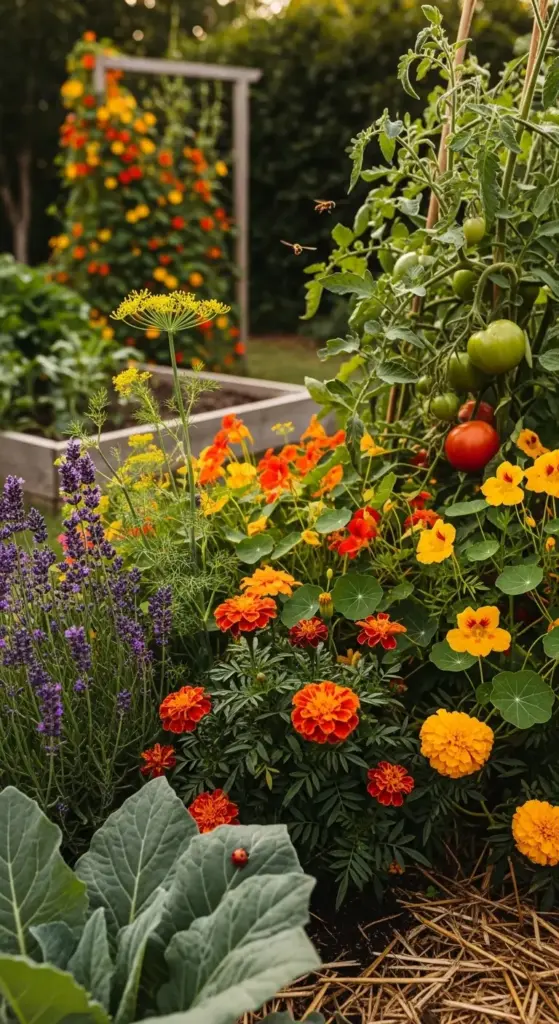
I’ll never forget the summer I declared full-on war against aphids.
I was out there with store-bought sprays, neem oil, dish soap solutions — trying everything. My tomatoes looked stressed, my basil was struggling, and honestly? I was exhausted. I spent more time fighting pests than actually enjoying my garden.
Then a neighbor — a retired teacher who had been gardening for 30 years — walked over, looked at my setup, and said “honey, you’re missing the plants that do this work for you.”
That conversation changed everything.
How Plants Naturally Repel Pests
Here’s what most people don’t realize about chemical-free pest control — nature already built the system.
Plants have been defending themselves against insects for millions of years. They produce volatile organic compounds — essentially airborne chemical signals — that confuse, repel, and deter pests without any human intervention.
When you strategically place these plants throughout your garden, you’re essentially borrowing their defense systems for your more vulnerable crops.
It’s not magic. It’s just really good biology.
The three main mechanisms at work in companion planting pest control are:
- Scent masking — strong-smelling plants like garlic and basil overwhelm a pest’s ability to locate its target crop
- Trap cropping — certain plants are more attractive to pests than your vegetables, drawing them away deliberately
- Beneficial insect attraction — flowering companions lure predatory insects that eat the pests you’re trying to eliminate
Understanding which mechanism each companion plant uses helps you place them strategically rather than just randomly.
The Best Pest-Deterrent Companion Plants
Let’s get specific — because broad advice doesn’t actually help you in the garden.
Marigolds: The Non-Negotiable Companion
I put marigolds in every single bed I plant. Every one.
French marigolds (Tagetes patula) are the variety you want for pest control — not African marigolds, which are beautiful but less effective. French marigolds are smaller, bushier, and pack a much more powerful pest-deterrent punch.
Here’s what they actually do:
- Their roots release a compound called alpha-terthienyl that is toxic to soil nematodes — microscopic worms that destroy root systems from underground
- Their strong scent confuses and deters whiteflies, aphids, and thrips above ground
- They repel Mexican bean beetles and squash bugs when planted nearby
- They attract hoverflies — whose larvae are voracious aphid predators
For maximum effectiveness, plant French marigolds every 12 inches throughout your vegetable beds — not just around the perimeter. The perimeter-only approach is one of the most common companion planting mistakes I see.
A border of marigolds around the outside of your bed looks pretty, but it leaves the interior plants completely unprotected. Distribute them. It makes a real difference.
Nasturtiums: The Brilliant Trap Crop
Nasturtiums are one of the cleverest tools in the companion planting toolkit — and they’re also one of the most beautiful.
They work primarily as a trap crop, meaning aphids, whiteflies, and cucumber beetles are more attracted to nasturtiums than to your vegetables. The pests go to the nasturtiums instead, leaving your crops alone.
But here’s the part that makes nasturtiums truly genius — once the pests congregate on the nasturtiums, they become easy targets for beneficial predatory insects like ladybugs and lacewings that come to feed on them.
You’re essentially setting a trap and then calling in reinforcements. It’s a two-step pest management strategy in one plant.
Plant nasturtiums:
- At the base of cucumber and squash trellises to intercept cucumber beetles
- Along the edges of tomato beds to catch whiteflies before they reach your plants
- Near roses to draw aphids away from your blooms
And the bonus — nasturtium flowers and leaves are completely edible. They have a peppery, slightly spicy flavor that’s incredible in salads. A pest trap you can eat. Honestly unbeatable.
Lavender: The Multi-Tasking Companion
Lavender is one of those companion plants that does so many things simultaneously that it almost feels unfair.
Its strong floral scent — the same one we find so relaxing — is deeply offensive to a surprisingly long list of garden pests:
- Fleas and ticks avoid lavender-planted areas entirely
- Moths and flies are repelled by its volatile oils
- Aphids and whiteflies avoid it consistently
- Deer and rabbits generally won’t go near it
At the same time, lavender is one of the best pollinator-attracting plants you can grow. Bees absolutely love it — and more bees in your garden means better pollination and bigger harvests across every crop you’re growing.
Plant lavender:
- Along the borders of vegetable beds as a fragrant, beautiful barrier
- Near roses to deter aphids and attract pollinators simultaneously
- At garden entrances or pathways where brushing against it releases its oils — and smells absolutely incredible
In colder climates like New York, Chicago, and Minneapolis, grow lavender in containers that can be brought indoors over winter. In warmer zones like LA, Atlanta, and Dallas, it’s a perennial that comes back reliably every year.
Dill: The Beneficial Insect Magnet
Dill is one of the most underrated companion plants in the entire garden — and I think it’s because people only think of it as a culinary herb.
But dill’s umbrella-shaped flower clusters — called umbels — are absolute magnets for beneficial insects. Specifically:
- Parasitic wasps (Braconid and Ichneumon wasps) — these tiny, non-stinging wasps lay their eggs inside caterpillars and aphids, killing them from the inside. Brutal but effective.
- Lacewings — whose larvae consume up to 200 aphids per week
- Hoverflies — whose larvae eat aphids while the adults pollinate your flowers
- Ladybugs — which consume aphids, mites, and whitefly eggs voraciously
Plant dill near tomatoes, cabbage, and broccoli for the best pest protection. Just remember — mature dill can inhibit tomato growth, so harvest it regularly and don’t let it go fully to seed right next to your tomatoes.
Also keep dill away from carrots — they’re in the same plant family and will cross-pollinate, affecting the flavor of both.
Attracting Beneficial Insects: Your Garden’s Natural Pest Control Army
This is the part of companion planting that genuinely feels like magic once you experience it.
When your garden has the right flowering companions, beneficial insects move in and start doing pest control work for free, around the clock, without any effort from you.
Ladybugs
A single ladybug can consume up to 5,000 aphids over its lifetime. Five thousand.
They’re attracted to gardens that have:
- Dill, fennel (in its own container), and yarrow in flower
- Marigolds and nasturtiums where aphid populations congregate
- A water source — even a shallow dish with pebbles and water placed near garden beds
Don’t buy ladybugs from garden centers — they’re typically wild-caught and will fly away within 24 hours of release. Instead, create habitat that attracts local ladybug populations naturally. They’ll stay because they want to be there.
Lacewings
Green lacewings are arguably even more effective than ladybugs for aphid control — their larvae are sometimes called “aphid lions” because of how aggressively they hunt.
Lacewing larvae also eat:
- Thrips
- Whitefly eggs and larvae
- Small caterpillars
- Spider mite eggs
Attract lacewings by planting dill, coriander, angelica, and sweet alyssum throughout your garden. Sweet alyssum in particular is one of the best lacewing-attracting plants available — it’s low-growing, covered in tiny white flowers, and works beautifully as a ground cover companion between taller vegetable plants.
Ground Beetles
These nocturnal beetles are incredible slug and snail predators — and they’re completely overlooked by most gardeners.


They live in the soil and leaf litter at the base of plants, hunting at night. Encourage them by:
- Mulching your beds — they love living under straw and wood chip mulch
- Avoiding soil disturbance — tilling destroys their habitat
- Leaving some leaf litter at garden edges as shelter
You’ll probably never even see them working. But you’ll notice the difference.
Dealing With Common Pests Organically
Even the best-planned companion garden will occasionally have pest problems. That’s just gardening.
Here’s how to handle the most common ones without reaching for chemicals:
Aphids
Aphids are the pest I get asked about most — and for good reason. They reproduce incredibly fast. A single aphid can produce up to 80 offspring per week under ideal conditions.
First response: A strong blast of water from your hose knocks aphids off plants and disorients them enough that many don’t find their way back. Do this in the early morning so foliage dries quickly.
Second response: Introduce or attract ladybugs and lacewings using the companion plants above.
Third response: If populations are severe, spray with insecticidal soap (1 tablespoon of pure castile soap per quart of water). It suffocates aphids on contact without harming beneficial insects once dry.
Check the undersides of leaves — that’s where aphid colonies hide. Most people spray the tops of leaves and wonder why it’s not working.
Slugs
Slugs are a particular problem in cool, moist climates — Seattle gardeners, I’m looking at you.
Companion planting approach: Plant rosemary, wormwood, and fennel (in its container) around bed perimeters — slugs strongly dislike their scent and texture.
Physical barriers: Sprinkle diatomaceous earth around the base of vulnerable plants. It’s a fine powder made from fossilized algae that damages the soft bodies of slugs and snails without harming anything else. Reapply after rain.
The beer trap method: Bury a shallow container (like a tuna can) level with the soil surface and fill it with cheap beer. Slugs are attracted to the yeast, fall in, and drown. It works embarrassingly well.
Encourage ground beetles — as mentioned above, they’re natural slug predators and do significant overnight work.
Whiteflies
Whiteflies are tiny, moth-like insects that cluster on the undersides of leaves and suck plant sap — causing yellowing, wilting, and eventually plant death if left unchecked.
Companion planting approach: Marigolds, nasturtiums, and basil all deter whiteflies effectively. Plant them densely near susceptible crops like tomatoes, peppers, and cucumbers.
Yellow sticky traps placed near affected plants catch adult whiteflies before they lay eggs. They’re inexpensive, non-toxic, and genuinely effective as a monitoring and control tool.
Reflective mulch — silver or metallic plastic mulch laid on the soil surface — confuses whiteflies by reflecting light upward and disrupting their ability to locate host plants. It sounds strange but it really works.
Tomato Hornworms
These enormous green caterpillars can strip a tomato plant overnight. They’re masters of camouflage and genuinely hard to spot.
Companion planting approach: Borage and dill attract parasitic wasps that lay eggs on hornworm larvae — effectively using the hornworm as a host for their young. Nature is wild.
Manual removal: Check plants in the early morning or evening when hornworms are most active. Use a blacklight flashlight at night — hornworms glow under UV light, making them surprisingly easy to spot. Drop them into soapy water.
Interplant with basil — hornworms strongly dislike the scent of basil and will avoid plants growing near it.
Creating a Balanced Garden Ecosystem That Manages Itself
This is the ultimate goal of companion planting for pest control — a garden that reaches a natural equilibrium where pest populations are kept in check by predator populations without constant human intervention.
It takes two to three seasons to fully establish. I want to be honest about that.
The first season, you’re building the foundation. The second season, beneficial insect populations start to establish. By the third season, you’ll notice something remarkable — pest problems become significantly less severe because your garden has developed its own immune system.
Here’s how to accelerate that process:
Plant a diversity of flowering companions that bloom at different times throughout the season. Beneficial insects need nectar and pollen sources from early spring through late fall to maintain stable populations. A garden that only flowers in summer leaves them without food for months.
Good sequence for continuous bloom:
- Early spring — chives, borage, pansies
- Late spring/summer — marigolds, nasturtiums, dill, basil
- Late summer/fall — lavender, chamomile, sweet alyssum, zinnias
Reduce or eliminate soil disturbance. Every time you till, you destroy the habitat of ground beetles, beneficial nematodes, and the fungal networks that support plant health. The less you disturb your soil, the more alive it becomes.
Tolerate a small amount of pest damage. This sounds counterintuitive, but a garden with zero pests also has zero food for beneficial predators. A small aphid population keeps your ladybug colony fed and present. Perfect is the enemy of balanced.
Safe for Families, Children, and Pets
This is the part that matters most to me personally — and I suspect it matters to you too.
When you use companion planting as your primary pest control strategy, you’re creating a garden that is genuinely, completely safe for everyone in your family.
No residue on your vegetables. No chemicals drifting onto your lawn where your kids play. No risk to your dog who thinks every garden bed is a personal buffet. No worrying.
The EPA estimates that 90% of pesticide exposure in children occurs through food — meaning the food grown in chemical-free gardens is meaningfully safer for little ones whose developing bodies are far more sensitive to pesticide residues than adults.
And beyond safety — there’s something deeply satisfying about knowing that the food coming out of your garden was grown entirely without synthetic chemicals. That the tomato your kid picks and eats straight off the vine is as clean and pure as food can possibly be.
That’s what companion planting makes possible. Not just a more productive garden — a safer, healthier, more intentional one.
👇 Hit “Next” below to discover how to make companion planting work in even the tiniest spaces — balconies, rooftop containers, and urban raised beds included. If you’ve ever thought your space was too small to garden meaningfully, this next section is going to change your mind completely. 🌿🏙️



GIPHY App Key not set. Please check settings