

 The Home Growns
Seasonal Companion Planting: What to Grow and When
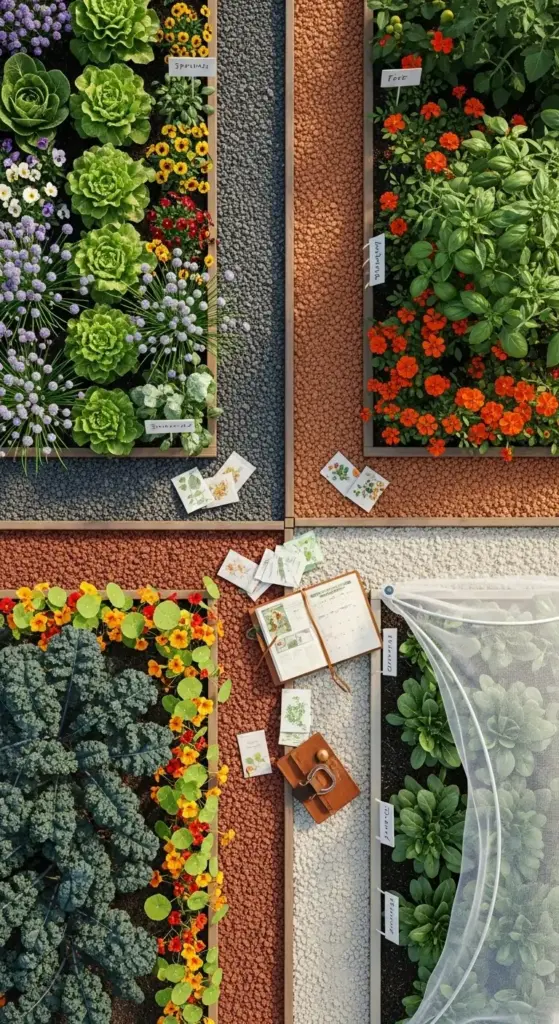
One of the biggest “aha” moments I had as a gardener was realizing that the growing season doesn’t have to end in August.
I used to pull everything out after summer and just… wait for spring. Months of perfectly good growing time, completely wasted.
Once I started thinking about my garden in four distinct seasonal chapters — each with its own companion planting combinations and rhythms — everything changed. My harvests extended by months. My soil got healthier. And honestly, my garden became something I engaged with all year long.
Let me walk you through exactly how to do that.
Spring Companion Planting: Cool-Weather Crops That Love Each Other
Spring is honestly my favorite season in the garden.
Everything feels possible. The soil is waking up, the days are getting longer, and there’s this electric energy that makes you want to get your hands dirty immediately.
But spring gardening has its own rules — and the most important one is this: cool-season crops are your best friends right now.
The Spring Companion Planting Sweet Spot
Cool-season vegetables thrive when daytime temperatures are between 45°F and 65°F. Once temperatures consistently hit 75°F and above, most of them bolt — meaning they go to seed and turn bitter almost overnight.
So the goal in spring is to get these crops in the ground as early as possible and let them do their thing before summer heat arrives.
Best Spring Companion Planting Combinations:
Lettuce + Chives + Pansies
This is a beautiful, productive spring trio that works in raised beds, containers, and even window boxes.
Chives repel aphids — which are absolutely relentless on spring lettuce — while their purple flowers attract early pollinators. Pansies are edible, cold-hardy, and add that gorgeous pop of color that makes a spring garden look intentional and designed.
Plant lettuce seeds about 6 inches apart, tuck chive clumps every 12 inches throughout the bed, and let pansies fill the edges. It looks like a magazine spread and it actually works.
Spinach + Strawberries + Borage
This combination is chef’s kiss for early spring.
Spinach is one of the first crops you can direct sow — as early as 4 to 6 weeks before your last frost date, when soil temperatures reach just 35°F to 40°F. It’s incredibly cold-hardy and grows fast.
Strawberries wake up early in spring too, and borage — that beautiful blue-flowered herb — is said to improve strawberry flavor while repelling pests like tomato hornworms and cabbage worms.
Plant borage about 18 inches away from strawberries since it gets fairly large. It self-seeds prolifically too, so once you plant it once, it tends to come back on its own every year. Free plants. Always a win.
Peas + Carrots + Radishes
The classic spring combination that’s been working for generations — and for good reason.
Peas fix nitrogen in the soil, which feeds the heavy-feeding carrots growing alongside them. Radishes are the ultimate companion for carrots — they loosen the soil as they grow, making it easier for carrot roots to push downward, and they mature in just 22 to 28 days, acting as a natural row marker while your slower carrots develop.
Direct sow peas 4 to 6 weeks before last frost, carrots 3 to 5 weeks before last frost, and radishes anytime after soil is workable. They’re practically foolproof.
Spring Planting Timeline by City:
| City | Last Frost Date | Start Cool-Season Crops |
|---|---|---|
| New York, NY | April 7–15 | Late February (indoors) / Mid-March (outdoors) |
| Chicago, IL | April 19–May 7 | Early March (indoors) / Early April (outdoors) |
| Seattle, WA | March 15–24 | Late January (indoors) / Early March (outdoors) |
| Philadelphia, PA | April 7–15 | Late February (indoors) / Mid-March (outdoors) |
| Minneapolis, MN | May 7–15 | Mid-March (indoors) / Late April (outdoors) |
Summer Companion Planting: Heat-Loving Pairings That Thrive Together
Summer is when the garden really shows off.
The tomatoes are climbing, the basil is lush, the marigolds are blazing orange and yellow — and if you’ve planned your companion combinations well, the whole bed just hums along like a well-oiled machine.
But summer also brings the most pest pressure of any season. Aphids, spider mites, squash vine borers, tomato hornworms — they all show up right when your garden is at its most productive.
This is where strategic summer companion planting earns its keep.
Best Summer Companion Planting Combinations:
Tomatoes + Basil + Borage + Marigolds
This is the ultimate summer companion planting combination — and I’ve been using some version of it for years.
- Basil repels thrips, aphids, and whiteflies while potentially enhancing tomato flavor
- Borage deters tomato hornworms and attracts beneficial predatory insects like parasitic wasps that eat hornworm eggs
- Marigolds repel nematodes in the soil and confuse whiteflies above ground
Plant basil 12 to 18 inches from tomato stems. Tuck marigolds throughout the bed every 12 inches or so — not just around the border. And let borage grow freely near the back of the bed where it won’t shade smaller plants.
This combination basically creates its own pest management system. I haven’t used a single pesticide on my tomatoes in years.
Cucumbers + Nasturtiums + Dill
Cucumbers are magnets for cucumber beetles — and cucumber beetles are absolutely devastating if left unchecked.
Nasturtiums act as a trap crop, meaning cucumber beetles are actually more attracted to nasturtiums than cucumbers — so they go to the nasturtiums instead. It’s a brilliant, completely natural misdirection strategy.
Dill attracts beneficial insects like lacewings and parasitic wasps that prey on cucumber pests. Just make sure your dill is in its early growth stage near cucumbers — mature dill can actually inhibit cucumber growth once it flowers and goes to seed.
Plant nasturtiums at the base of cucumber trellises where they’ll trail attractively and do their pest-distracting job simultaneously. Beautiful and functional.
Peppers + Basil + Spinach
This is a combination I stumbled onto almost by accident — and it’s become one of my summer staples.
Basil repels aphids and spider mites from peppers the same way it does for tomatoes. Spinach planted at the base of pepper plants acts as a living mulch — shading the soil, retaining moisture, and keeping soil temperatures cooler during summer heat spikes.
Peppers actually prefer slightly cooler root zones even though they love hot air temperatures. The spinach provides exactly that. It’s a subtle relationship but a really effective one.
Squash + Nasturtiums + Marigolds + Beans (Three Sisters Variation)
Summer squash and zucchini are incredibly productive — sometimes too productive, honestly — but they’re vulnerable to squash vine borers and squash bugs, which can wipe out an entire plant seemingly overnight.
Surround your squash with nasturtiums and marigolds to confuse and deter these pests. Add beans nearby to fix nitrogen in the soil, since squash are heavy feeders that deplete nutrients quickly.
Check the undersides of squash leaves every few days in midsummer for squash bug egg clusters — they’re copper-colored and laid in neat rows. Remove them immediately by hand or with tape. Catching them early is everything.
Fall Companion Planting: Extending Your Harvest Season
Here’s the secret most gardeners don’t discover until their third or fourth season — fall is actually one of the best times to garden.
Pest pressure drops dramatically. Temperatures cool down to that sweet spot that cool-season crops love. And there’s something deeply satisfying about harvesting fresh vegetables while your neighbors have already packed it in for the year.
Don’t leave your garden beds empty in fall. That’s just wasted potential.
The Fall Planting Window


The key to successful fall companion planting is counting backwards from your first fall frost date.
Most cool-season crops need 45 to 70 days to mature. Add about 2 weeks to that number to account for the slower growth that happens as days shorten and temperatures drop. That gives you your last safe planting date for fall crops.
For example:
- New York (first frost around October 15–25) → Plant fall crops by late August
- Chicago (first frost around October 10–20) → Plant by mid-August
- Seattle (first frost around November 1–15) → Plant by mid-September
- Philadelphia (first frost around October 15–25) → Plant by late August
Best Fall Companion Planting Combinations:
Kale + Nasturtiums + Garlic
Kale is one of the most cold-hardy vegetables you can grow — it actually gets sweeter after a frost, as the plant converts starches to sugars in response to cold.
Plant garlic alongside kale in fall (garlic is traditionally planted in October for a summer harvest) to deter aphids, which can be problematic on brassicas in cool weather. Nasturtiums continue blooming well into fall in most climates, adding color and continuing their pest-deterrent work.
A fall kale bed with nasturtiums trailing along the edges is genuinely one of the prettiest things in a garden.
Broccoli + Dill + Chamomile
Broccoli is a fall superstar — it produces better in cool weather than in summer heat, and the heads are tighter and more flavorful.
Dill attracts beneficial insects that prey on cabbage worms and aphids — the two biggest threats to fall brassicas. Chamomile is a gentle companion that improves the health of plants growing nearby and attracts pollinators even in cooler temperatures.
Plant broccoli transplants in late summer, spacing them 18 to 24 inches apart. Tuck dill and chamomile between plants and along the bed edges.
Spinach + Arugula + Chives
This is the ultimate fall salad garden combination — and it’s incredibly low maintenance.
All three crops are cold-hardy, fast-growing, and genuinely delicious together in a bowl. Chives deter aphids and add a mild onion flavor to your harvest. Arugula matures in just 35 to 40 days, making it one of the fastest fall crops you can grow.
Direct sow spinach and arugula seeds ½ inch deep and keep the soil consistently moist until germination. In cooler climates, cover with a row cover fabric to extend the season by 4 to 6 weeks — sometimes all the way into December.
Year-Round Companion Planting for Warmer Climates
If you’re gardening in Los Angeles, Atlanta, or Dallas, you are sitting on a serious advantage that colder-climate gardeners genuinely envy.
Your mild winters mean you can grow food twelve months a year with the right planning. Twelve months. That’s not a typo.
Los Angeles (Zones 10a–10b)
LA gardeners can grow cool-season crops like lettuce, kale, spinach, and broccoli all winter long — while the rest of the country is buried in snow.
Summer in LA brings intense heat and drought conditions, so water-wise companion planting becomes especially important. Pair heat-tolerant crops like peppers, eggplant, and sweet potatoes with low-growing ground cover companions like thyme and oregano that shade the soil and reduce moisture evaporation.
In winter, transition to brassicas, root vegetables, and leafy greens with companions like garlic, dill, and chamomile.
Year-round gardening in LA is genuinely one of the great joys of living there.
Atlanta (Zones 7b–8a)
Atlanta has a long growing season with hot, humid summers and mild winters — which means fungal disease is your biggest ongoing challenge.
Choose companion plants that improve air circulation and have antifungal properties. Basil, garlic, and chives all have natural antifungal compounds. Space plants generously — don’t be tempted to overcrowd beds just because you have a long season.
Atlanta gardeners can typically grow two full seasons — spring/summer and fall/winter — with a brief midsummer pause during the most intense heat.
Dallas (Zone 8a)
Dallas has a similar profile to Atlanta but with less humidity and more intense summer heat — temperatures regularly hit 100°F+ in July and August.
During peak summer, focus on heat-tolerant companion combinations: okra with basil, sweet potatoes with thyme, peppers with marigolds. These crops actually thrive in Dallas summers.
In fall, Dallas gardeners can plant cool-season crops as late as October and harvest well into January and February in mild years. That’s an extraordinary growing window.
How to Transition Your Companion Garden Between Seasons Gracefully
This is the part that separates good gardeners from great gardeners.
The transition between seasons isn’t just about pulling out old plants and putting in new ones. It’s about maintaining soil health, preserving beneficial insect populations, and setting up your next season for success.
Step 1: Don’t Pull Everything at Once
When your summer crops finish, resist the urge to do a complete garden cleanout in one day.
Leave some spent flower stalks standing for a week or two — they provide habitat for beneficial insects and their eggs. Leave bean and pea roots in the ground rather than pulling them — those nitrogen-fixing root nodules will break down and feed your fall crops.
Gradual transitions are gentler on your garden ecosystem.
Step 2: Feed Your Soil Between Seasons
Every time you remove a crop, you’re removing nutrients that were stored in that plant’s biomass.
Before planting your next season’s crops, add:
- 1 to 2 inches of fresh compost worked into the top layer
- A light application of balanced organic granular fertilizer
- A cover crop if you have a bed that will sit empty for more than 3 to 4 weeks
Cover crops like clover, winter rye, or buckwheat protect bare soil from erosion, suppress weeds, and add organic matter when turned under. They’re one of the most underused tools in home gardening.
Step 3: Overlap Your Seasons Intentionally
The most productive gardens I’ve ever seen use a technique called succession planting — where new crops are started before old ones finish.
Start your fall transplants indoors or in a shaded nursery area 4 to 6 weeks before your summer crops finish. That way, the moment a summer bed opens up, your fall transplants are ready to go in immediately.
No wasted days. No empty beds. Just continuous production.
Step 4: Keep Some Companion Plants Going Year-Round
Certain companion plants can stay in your garden through multiple seasons and continue providing benefits year-round.
- Chives are perennial — plant them once and they come back every year
- Garlic planted in fall is ready to harvest in early summer
- Marigolds self-seed prolifically — let a few go to seed in fall and they’ll sprout again in spring
- Thyme, oregano, and lavender are perennial herbs that provide year-round pest deterrence and pollinator support
Building a backbone of perennial companion plants means your garden gets smarter and more effective every single year — with less work from you.
👇 Hit “Next” below to learn how companion planting becomes your most powerful tool for chemical-free pest control — including the specific plants that repel the most common garden pests and how to create a garden ecosystem that essentially manages itself. This section is a game changer. 🌿🐛




GIPHY App Key not set. Please check settings