

 The Home Growns
Essential Organic Gardening Supplies for Companion Planting Success
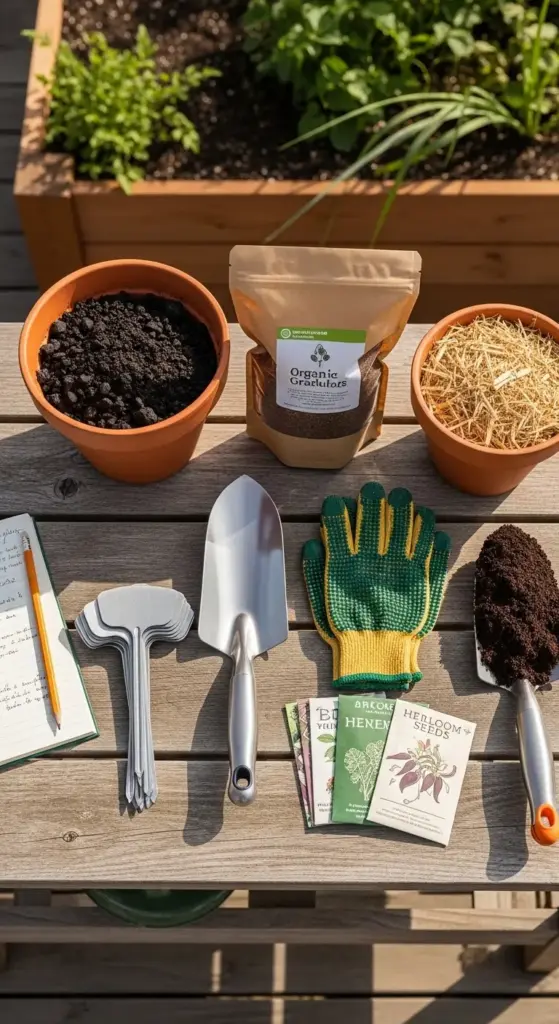
Let me save you from the mistake I made my first season — walking into a garden center with no list and walking out with $200 worth of stuff I didn’t need.
It happens to everyone. Garden centers are basically designed to make you impulse buy.
But here’s the truth — you don’t need a ton of fancy supplies to build a thriving companion planting garden. You need the right supplies. And once you know what those are, shopping gets a whole lot easier.
Must-Have Tools That Actually Get Used
I’ve owned a lot of gardening tools over the years. Most of them collect dust.
These are the ones that actually earn their space in my garden shed:
A Good Trowel
This is the one tool I’d tell you to actually spend money on. A cheap trowel bends, rusts, and breaks at the worst possible moment — usually when you’re elbow-deep in a planting project.
Look for a stainless steel trowel with an ergonomic handle — the kind with depth markings etched into the blade. Those markings are genuinely useful when you’re planting bulbs or seeds at specific depths. The Fiskars Ergo Trowel (around $15–$18) is a solid mid-range option that holds up really well.
Garden Markers
Okay, this one sounds minor but it is not minor.
When you’re companion planting, you have multiple varieties going into the same bed. Without markers, you will forget what’s planted where. And then you’ll accidentally pull a seedling thinking it’s a weed.
Ask me how I know.
Reusable metal plant markers are worth the small investment — they don’t fade in the sun the way plastic ones do. You can find a set of 50 on Amazon for around $12. Write on them with a pencil (not pen — pen fades) and you can wipe them clean and reuse them every season.
Raised Bed Kits
If you’re gardening in an urban space — New York, Chicago, Seattle, LA — a raised bed kit is honestly one of the best investments you can make.
For beginners, I recommend the Greenes Fence Cedar Raised Garden Bed (starts around $60–$80 for a 4×4). Cedar is naturally rot-resistant, it looks beautiful, and it doesn’t leach chemicals into your soil the way some treated woods can.
Avoid pressure-treated lumber for food gardens. The chemicals used in treatment can migrate into your soil over time — and that’s the opposite of what we’re going for with an organic garden.
Other Tools Worth Having:
- Hand pruners — for harvesting and deadheading companion flowers like marigolds
- A watering wand with a gentle shower setting — overhead watering with too much pressure can damage delicate seedlings
- Kneeling pad — your knees will thank you, I promise
- Garden gloves — look for ones with reinforced fingertips; thin gloves tear within a season
The Best Organic Soil Amendments for Companion Gardens
Here’s something I wish someone had told me earlier — the soil is everything.
You can have perfect plant pairings and still get a disappointing harvest if your soil isn’t right. Healthy, living soil is the foundation that makes companion planting actually work.
Compost
This is non-negotiable. Compost adds organic matter, feeds beneficial soil microbes, and improves both drainage and moisture retention — all at the same time.
If you’re buying bagged compost, look for aged compost rather than “garden soil” blends, which are often mostly peat and not nearly as nutrient-rich. Wiggle Worm Soil Builder Pure Worm Castings is one of my absolute favorites — it’s gentle, incredibly nutrient-dense, and safe for even the most sensitive seedlings.
Mix 2 to 3 inches of compost into the top layer of your bed before planting each season.
Worm Castings
Speaking of worm castings — these are basically liquid gold for your garden.
They’re packed with beneficial microorganisms, nitrogen, phosphorus, and potassium in a form that plants can absorb immediately. Mix them directly into your planting holes when transplanting seedlings, or top-dress your beds mid-season for a gentle nutrient boost.
A 15-pound bag runs about $20–$25 and goes a long way.
Organic Granular Fertilizer
For companion planting gardens, I like using a balanced organic granular fertilizer at the start of the season rather than synthetic liquid feeds.
Espoma Garden-Tone (4-6-6 NPK) is one I’ve used for years. It feeds slowly over time, which means you’re not getting that artificial growth surge that actually makes plants more attractive to pests. Slow and steady really does win the race here.
Azomite (Trace Minerals)
This one is a little more advanced, but worth knowing about.
Azomite is a natural mineral powder mined from ancient volcanic ash deposits. It adds over 70 trace minerals back into depleted soil — minerals that most commercial fertilizers completely ignore.
A little goes a long way. Sprinkle about 1 pound per 100 square feet into your bed before planting. Your plants will feel the difference, even if you can’t see it immediately.


Seed Sourcing: Where to Find Heirloom and Organic Seeds
This matters more than most people realize — and the seed industry is not all created equal.
Heirloom seeds are open-pollinated varieties that have been passed down for generations. They’re not genetically modified, they tend to have better flavor, and you can save seeds from your harvest to replant next year. That’s a big deal for organic gardeners.
Here are the seed sources I actually trust and use:
- Baker Creek Heirloom Seeds — Incredible variety selection, all heirloom, beautifully curated. Their catalog is basically a coffee table book.
- Seed Savers Exchange — A nonprofit dedicated to preserving heirloom varieties. Buying from them supports a genuinely important mission.
- Johnny’s Selected Seeds — More professional-grade, but excellent quality and great for companion planting varieties specifically.
- Local farmers markets — Seriously underrated seed source. Local growers often sell seeds that are already adapted to your specific climate — and that head start matters.
Avoid buying seeds from big box stores when you can. The variety selection is limited, the seeds are often older, and germination rates tend to be lower.
Mulching Materials That Support Companion Planting
Mulch is one of those things that does so much quiet, invisible work in your garden.
It retains soil moisture, regulates soil temperature, suppresses weeds, and as it breaks down, it feeds your soil. For a companion planting garden, the right mulch can actually enhance the relationships between your plants.
Straw Mulch
This is my go-to for vegetable beds. It’s lightweight, easy to apply, breaks down slowly, and doesn’t compact the way some other mulches do.
Apply 2 to 3 inches around your plants, keeping it a few inches away from the base of stems to prevent rot. A standard straw bale costs around $8–$12 at most garden centers and covers a surprising amount of ground.
Make sure you’re buying straw, not hay. Hay contains seeds that will sprout in your garden. Ask me how I know. Again.
Wood Chip Mulch
For perennial companion planting beds or pathways between beds, wood chips are excellent.
They break down more slowly than straw, which makes them better for long-term beds. They also create a beautiful, finished look that makes your garden feel intentional and designed.
The Back to Eden gardening method — which uses deep wood chip mulch to mimic a forest floor — has a huge following for good reason. It dramatically reduces watering needs and builds incredibly rich soil over time.
You can often get free wood chips through the ChipDrop program, where local arborists drop off fresh chips rather than hauling them to a dump. Completely free. Totally worth signing up.
Shredded Leaves
If you have trees in your yard, you’re sitting on a free mulch goldmine every fall.
Shredded leaves break down quickly, add organic matter to your soil, and are especially loved by earthworms — which means better soil structure and natural aeration. Run them over with a lawn mower to shred them before applying.
Affordable vs. Splurge-Worthy: Where to Spend and Where to Save
Let’s be real — gardening can get expensive fast if you’re not intentional about it.
Here’s my honest breakdown:
Save Your Money On:
- Basic plastic nursery pots — plants don’t care how pretty their temporary home is
- Watering cans — a basic one works just as well as a designer one
- Seed starting mix — store brand is fine for most seeds
- Garden twine — jute twine from the dollar section works perfectly
Worth the Splurge:
- A quality trowel and pruners — cheap ones break and frustrate you
- Cedar raised bed kits — they last 10–15 years vs. 2–3 for cheap alternatives
- Organic compost and worm castings — this is your soil foundation, don’t skimp
- Heirloom seeds from reputable sources — better germination, better flavor, better results
The general rule I follow: spend more on things that touch the soil or last multiple seasons. Save on everything else.
Where to Shop for Organic Gardening Supplies
You’ve got more options than you might think — and some of them are way better than others.
Local Independent Nurseries
This is always my first stop. Local nurseries carry plants and seeds that are already suited to your regional climate — which matters enormously whether you’re gardening in humid Atlanta, dry Los Angeles, or cold Minneapolis.
The staff at independent nurseries are also usually genuinely knowledgeable in a way that big box store employees often aren’t. Don’t be afraid to ask questions.
Farmers Markets
Beyond seeds, farmers markets are a great place to find starter plants, organic compost, and locally made garden amendments. You’re also supporting small growers in your community — which feels good and is good.
Trusted Online Retailers
For supplies that aren’t available locally, here’s where I shop online:
- Amazon — for tools, markers, and basic supplies (read reviews carefully)
- Gardener’s Supply Company — excellent raised bed kits, quality tools, and great customer service
- True Leaf Market — affordable organic and heirloom seeds in bulk
- Arbico Organics — for organic pest control, beneficial insects, and soil amendments
You don’t need to buy everything at once. Start with the basics — good soil, a solid trowel, quality seeds, and some mulch. Build from there as your garden grows.
👇 Hit “Next” below to get into the actual step-by-step planting process — from assessing your space all the way to setting up your care routine. This is where everything we’ve talked about comes together into a real, actionable plan you can start this weekend. 🌿



GIPHY App Key not set. Please check settings