

 The Home Growns
How to Design a Beautiful Companion Planting Garden Layout
Can I tell you something I used to believe that was completely wrong?
I thought a productive vegetable garden and a beautiful garden were two different things. Like you had to choose — either your garden looks good, or it actually works.
Spoiler: that’s totally false.
Start With Function First, Then Layer in the Beauty
The biggest mistake I see new gardeners make is starting with aesthetics and trying to make the plants fit.
Start with your companion planting combinations first — then arrange them in a way that looks intentional and gorgeous. When you work in that order, everything just clicks.
Think of it like decorating a room. You pick your furniture for function first, then you style around it.
Using Color, Texture, and Height to Create Visual Interest
This is where gardening starts to feel like art — and honestly, it’s my favorite part.
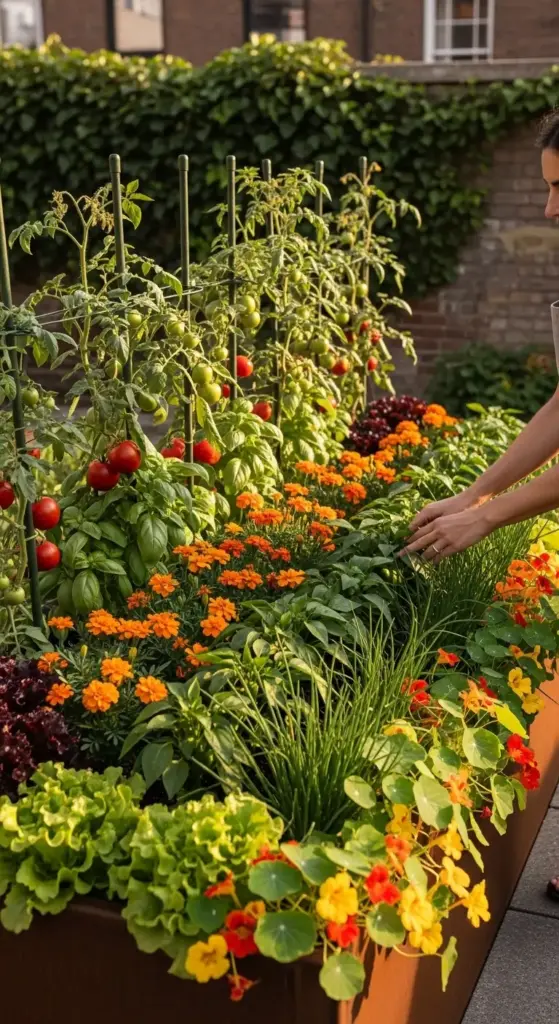
Height layering is the single most impactful design move you can make in a garden bed. Tall plants like corn, sunflowers, or staked tomatoes go in the back. Medium-height plants like peppers, basil, and marigolds fill the middle. Low-growing plants like thyme, strawberries, and lettuce hug the front edge.
It creates depth. It makes even a small bed look lush and intentional.
For color, think in combinations the way a florist would.
Deep purple basil next to bright red tomatoes. Golden marigolds tucked between green pepper plants. Pale lavender flowers edging a bed of dark kale. These aren’t accidents — they’re choices that make your garden look designed, not just planted.
Texture matters too. Mix fine, feathery foliage like dill or fennel (in its own container, remember!) with broad, bold leaves like squash or nasturtiums. That contrast is what gives a garden that layered, editorial look.
Raised Bed Layouts vs. In-Ground Gardens for Urban Spaces
If you’re gardening in New York, Chicago, Los Angeles, or any other city, you’re probably working with limited space — and that’s actually fine.
Raised beds are honestly ideal for urban companion planting. They give you complete control over your soil quality, they warm up faster in spring, and they make it so much easier to plan intentional plant pairings without interference from surrounding soil.
A standard 4×8 foot raised bed is the sweet spot for most urban gardeners. It’s large enough to fit a meaningful companion planting layout, but small enough that you can reach every corner without stepping inside the bed.
Here’s a simple 4×8 raised bed companion planting layout that works beautifully:
| Back Row | Tomatoes (staked) + Basil tucked between |
|---|---|
| Middle Row | Peppers + Marigolds alternating |
| Front Row | Lettuce + Chives + Nasturtiums along the edge |
It’s functional, it’s colorful, and it looks absolutely intentional.
For in-ground gardens — more common in suburban areas of Dallas, Atlanta, or Seattle — you have more room to play with. Consider creating curved beds instead of straight rows. Curves feel more natural, more designed, and they actually make your yard look larger.
Incorporating Companion Plants Into Existing Flower or Herb Gardens
Here’s something I love telling people who think they have to start from scratch — you probably don’t.
If you already have a flower bed or an herb garden, you can weave companion plants right into what’s already there.
Marigolds slot into almost any existing flower bed without looking out of place — they just look like part of the design. Nasturtiums trail beautifully along borders and add that cottage-garden wildness that’s so popular right now.
Tuck garlic bulbs between your roses this fall. Plant lavender along the edge of a vegetable bed. Add a pot of basil right next to your patio tomatoes.
Small additions. Big impact. You don’t need a full garden overhaul to start companion planting.
Tools and Apps to Help You Map Out Your Garden Design
Okay, I am a huge advocate for planning on paper or digitally before a single seed hits the soil.


Here are the tools I actually use and recommend:
Planter App — This is my personal favorite for companion planting specifically. It has a built-in compatibility checker that tells you which plants work well together and which ones to keep apart. It’s visual, intuitive, and genuinely fun to use.
Garden Planner by Vegetable Garden Planner — More detailed and great for larger gardens. You can drag and drop plants onto a grid and it automatically flags incompatible pairings.
Graph paper and colored pencils — Don’t underestimate this. Sometimes the most effective planning tool is the most analog one. I still sketch my beds by hand every spring before I finalize anything digitally.
Whichever method you choose, the goal is the same — know what’s going in where before you start digging.
Garden Style Inspiration: Find Your Aesthetic
This is the part where I want you to get a little dreamy with me. 🌸
Because your companion planting garden doesn’t just have to be productive — it can have a whole vibe.
Cottage Garden Style
This is the style that looks like it grew wild but was actually very intentionally planted.
Think overflowing raised beds, flowers and vegetables mixed together freely, soft colors, and that beautiful organized chaos aesthetic. Nasturtiums, lavender, roses with garlic, marigolds, and climbing beans all fit perfectly into a cottage garden layout.
It’s romantic. It’s lush. And it photographs beautifully — which, let’s be honest, matters.
Kitchen Garden Style (Potager Garden)
This is the classic French-inspired potager garden — a formal, structured layout where vegetables, herbs, and flowers are arranged in geometric patterns.
Square or rectangular beds divided by neat pathways. Each section dedicated to a specific companion planting combination. Symmetry, repetition, and intentional color blocking are the hallmarks of this style.
It’s incredibly satisfying to look at, and it makes harvesting feel like a whole experience rather than just a chore.
Modern Minimalist Style
For the gardener who loves clean lines and a more curated aesthetic — this one’s for you.
Think raised metal beds (Corten steel is having a major moment right now), a limited color palette of greens with one or two accent colors, and very intentional plant placement with breathing room between groupings.
Stick to a tight companion planting plan — maybe just tomatoes, basil, and marigolds in one bed, and lettuce, chives, and nasturtiums in another. Less is more. And it looks absolutely stunning.
The Bottom Line on Garden Design
A beautiful companion planting garden isn’t an accident — it’s a plan.
But here’s the good news: once you understand the combinations that work, designing around them is genuinely fun. It’s one of those rare things where being strategic and being creative lead you to exactly the same place.
Your garden can be productive AND Pinterest-worthy. Don’t let anyone tell you otherwise.
👇 Click “Next” below to get into the exact supplies and tools you need to bring your companion planting garden to life — from the best organic soil amendments to the gardening tools worth actually spending money on. We’re keeping it practical, budget-friendly, and totally worth your time. 🌱


GIPHY App Key not set. Please check settings