

 The Home Growns
The Best Companion Planting Combinations Every Gardener Should Know
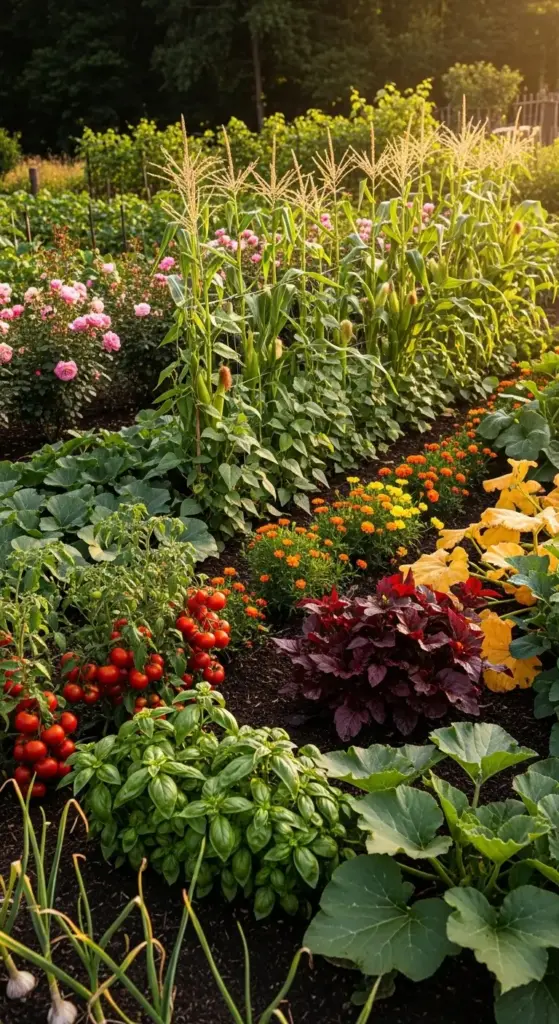
Okay, this is the section I wish someone had handed me when I first started gardening.
I spent two full seasons just randomly planting things wherever they fit — and wondering why my yields were so disappointing. Turns out, placement matters a lot more than I realized.
Once I started being intentional about plant pairings, everything shifted. More blooms, bigger harvests, and way fewer pest problems. Let me share the combinations that actually made a difference.
The Three Sisters: The OG Companion Planting Combo
If you only try one companion planting method this season, make it this one.
The Three Sisters planting method — corn, beans, and squash — is a Native American growing technique that’s been perfected over thousands of years, and it still holds up today.
Here’s how the magic works:
- Corn grows tall and acts as a natural trellis for the beans to climb.
- Beans are nitrogen-fixing plants, meaning they pull nitrogen from the air and deposit it into the soil — feeding the corn and squash naturally.
- Squash spreads its big, wide leaves across the ground, shading the soil to retain moisture and suppress weeds.
Plant your corn first, about 12 inches apart in a block (not a single row — blocks help with pollination). Once the corn is about 4 inches tall, plant your beans around the base. Then add your squash seeds about a foot away from the corn.
It’s a whole little ecosystem in one garden bed. I was honestly amazed the first time I tried it.
Tomatoes + Basil: The Power Couple of the Vegetable Garden
This is probably the most well-known companion planting combination out there — and for good reason.
Basil repels thrips, aphids, and tomato hornworms by emitting a strong scent that confuses and deters pests. Plant basil about 12 to 18 inches away from your tomato plants for the best effect.
But here’s the part that surprised me — some gardeners swear that growing basil near tomatoes actually improves the flavor of the fruit.
The science on that is still debated, but honestly? My tomatoes have tasted better every year since I started pairing them with basil. Coincidence? Maybe. But I’m not stopping.
Also — fresh basil steps away from your tomatoes while you’re cooking? That’s just a bonus that never gets old.
Roses + Garlic: Beauty Meets Function
Okay, this one is for my design-loving gardeners who want their outdoor space to look gorgeous and work hard at the same time.
Planting garlic around the base of your rose bushes is one of the best natural aphid deterrents you can use. Garlic emits sulfur compounds that repel aphids, Japanese beetles, and even some fungal diseases like black spot — which is basically every rose gardener’s nightmare.


Plant garlic cloves about 4 inches deep and 6 inches away from the base of each rose bush in the fall, and they’ll be ready to protect your roses come spring.
And the best part? Garlic plants are low-growing and unobtrusive — they won’t mess with the visual aesthetic of your garden at all. Your roses still get to be the star of the show.
Carrots + Onions: The Quiet Protectors
This pairing doesn’t get nearly enough credit, and I think about that a lot.
Carrots and onions protect each other from their two biggest enemies — carrot flies and onion flies. The strong scent of onions masks the smell of carrots from carrot flies, and vice versa.
It’s mutual pest protection at its finest.
Plant them in alternating rows, about 4 inches apart, and let them do their thing. It’s one of those combinations that just works quietly in the background while you focus on everything else.
Marigolds: The Universal Garden Companion
If there’s one plant I’d tell every single gardener to add to their beds, it’s marigolds.
These cheerful little flowers are basically a natural pesticide in plant form. They release a compound called alpha-terthienyl from their roots, which repels nematodes — microscopic soil pests that destroy root systems. Above ground, their scent deters whiteflies, aphids, and even rabbits.
Plant French marigolds (Tagetes patula) throughout your vegetable beds — not just around the border. Tuck them between tomatoes, peppers, cucumbers, and squash.
And honestly? They make your garden look so much prettier. That pop of orange and yellow against green foliage is just chef’s kiss. 🌼
Quick-Reference Companion Planting Pairing Chart
Here’s a simple cheat sheet to save or pin for your next planting day:
| Plant | Best Companions | Why It Works |
|---|---|---|
| Tomatoes | Basil, Marigolds, Carrots | Pest repellent, flavor boost |
| Corn | Beans, Squash | Nitrogen fixing, weed suppression |
| Roses | Garlic, Lavender | Aphid and beetle deterrent |
| Carrots | Onions, Rosemary | Mutual fly repellent |
| Cucumbers | Nasturtiums, Dill | Repels cucumber beetles |
| Peppers | Basil, Spinach | Pest confusion, ground cover |
| Lettuce | Tall flowers, Chives | Shade, slug deterrent |
| Squash | Nasturtiums, Marigolds | Pest barrier, pollinator attraction |
Print it out. Stick it on your fridge. You’ll thank yourself later.
Now that you know the dream teams of the garden world — what about the combinations that can actually wreck your plants?
👇 Click “Next” below to find out which plants should never share a garden bed — including one surprisingly common pairing that could be silently sabotaging your harvest right now.



GIPHY App Key not set. Please check settings